A terrifying shooting in April has put security planning, press access, and the risks surrounding major political events back under scrutiny as the rescheduled...
White House Correspondents’ Dinner Shooting Recall Puts Security and Press Freedom Back in Focus
A terrifying shooting in April has put security planning, press access, and the risks surrounding major political events back under scrutiny as the rescheduled dinner approached, with White House Correspondents’ Association scholarship recipients Kaitlin Bender-Thomas and Madison Maynard reflecting on what happened.
Key Takeaways- The April shooting renewed attention on event security at major Washington gatherings.
- The incident raised questions about how organizers balance access, safety, and press freedom.
- Coverage of the rescheduled dinner is shaped by both trauma and accountability.
- The episode has broader implications for public safety, media work, and event planning.
The shooting described by Bender-Thomas and Maynard did not happen in a courtroom or during a police operation, but it still sits squarely in the public-safety and justice domain. Any attack tied to a high-profile political event becomes more than a news story. It becomes a question of security failures, emergency response, agency coordination, and the legal consequences that may follow.
Their comments also highlight a less visible issue: how violence at elite political events affects young journalists and scholarship recipients entering the profession. For those still building careers, the memory of gunfire can linger long after a venue has reopened. The fact that the White House Correspondents’ Association moved ahead with a new date does not erase the fear that followed April.
What happened
Bender-Thomas and Maynard spoke about the emotional impact of the April shooting as they looked ahead to the rescheduled dinner. Their remarks were not simply about a single frightening night. They reflected a larger reality for journalists who work around power: the setting may appear controlled, but it is never immune from sudden violence.
The White House Correspondents’ Dinner has long been a high-profile gathering with layers of security. That includes venue screening, coordination with law enforcement, and advance planning for VIP travel and media access. Yet the April shooting showed how even tightly managed events can be vulnerable if a weapon enters the wrong place at the wrong time.
For attendees, especially newer journalists and students, the aftermath can be disorienting. The event that usually symbolizes access and civic ritual instead becomes a reminder of how quickly a public space can turn dangerous. In that sense, the shooting is part of the same broader category of incidents that force institutions to reconsider crowd control, threat assessment, and crisis response.
It is the kind of episode that forces a hard look at how high-profile events are protected. For background on similar issues, see our coverage of event security and public safety policy, press access and civil liberties, and law enforcement response to mass-casualty threats.
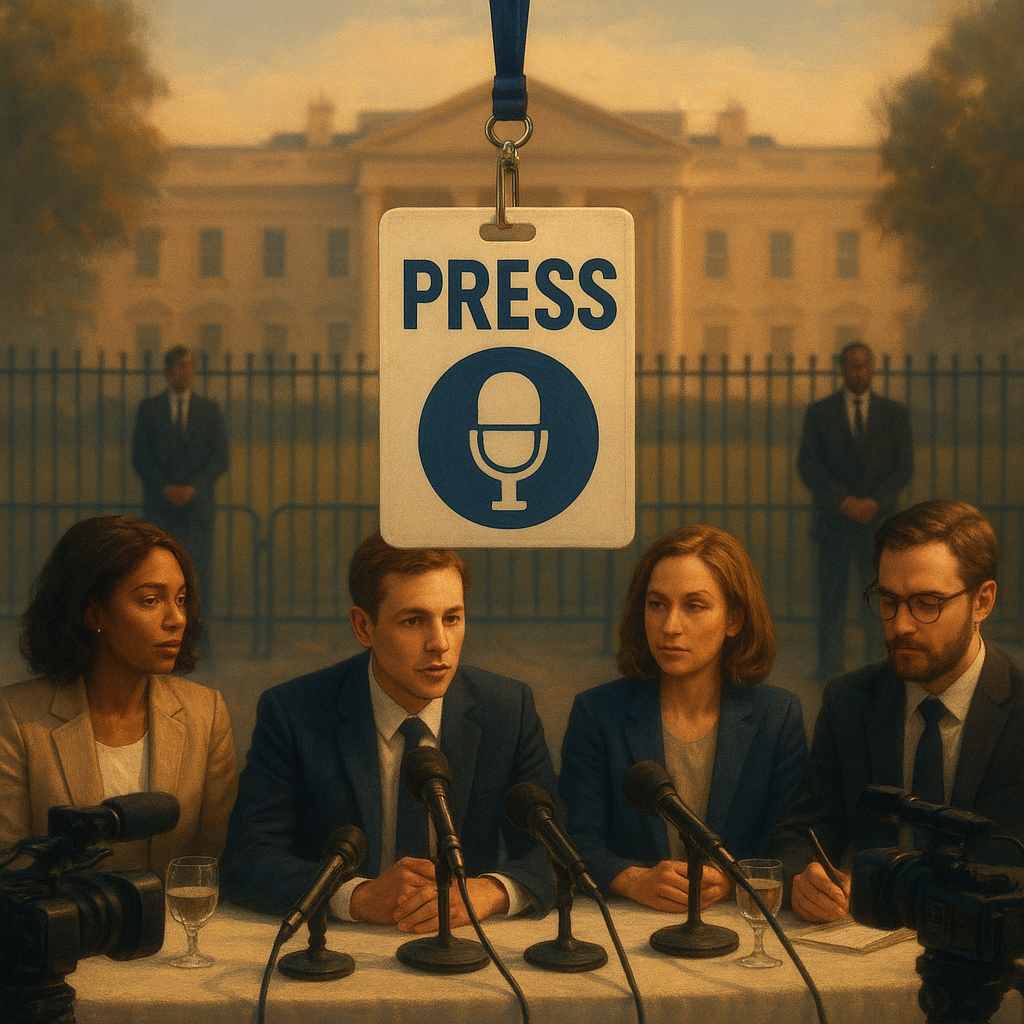
The emotional aftereffects matter. Reporting after a shooting often focuses on who was injured, what weapon was used, and how police responded. But for people in the room, the memory is sensory and lasting: the sound, the confusion, the rush to find cover, the uncertainty about whether more shots are coming. That is especially true at a ceremony or dinner where the expectation is ceremony, not crisis.
The rescheduled event therefore carries a different weight. It is not just a calendar adjustment. It is an attempt to reclaim normalcy while acknowledging that normalcy has limits. Officials can rescreen guests and revise protocols, but they cannot fully restore the feeling of invulnerability that many attendees had before April.
Legal context and charges or proceedings
Any shooting at a public event raises immediate legal questions. Depending on the circumstances, prosecutors may look at weapons offenses, assault charges, unlawful entry, reckless endangerment, or more serious counts if evidence supports them. If someone was targeted because of status, race, viewpoint, or another protected characteristic, civil-rights and hate-crime statutes can also come into play.
Even before formal charges are filed, investigators usually begin by reconstructing the timeline: where the shooter entered, how the weapon was obtained, whether security screening failed, and whether anyone else helped plan or facilitate the act. That evidence drives the charging decision. It can also shape whether local prosecutors, federal agents, or both take the lead.
In incidents linked to political events, federal interest is common. The Secret Service may become involved if protectees or protected venues are implicated. The FBI may assist with firearms tracing, digital evidence, and motive analysis. Local police generally handle the first hours after the shooting, but the case can quickly move into a joint investigation if the facts justify it.
The legal stakes go beyond the person who pulled the trigger. If there were serious failures in security staffing, contractor oversight, or venue compliance, investigators may ask whether negligence played a role. Most security lapses are not crimes by themselves, but they can become relevant in civil litigation, administrative review, or policy reform.
There is also a media-law angle. When journalists are the ones present at a shooting, institutions must account for not only physical harm but also the chilling effect on press access. If reporters believe attending political events exposes them to unmanaged danger, coverage suffers. That has consequences for transparency and democratic oversight.
The legal system often moves more slowly than public memory. Investigations can take months. Charging decisions may be delayed by forensic work, witness interviews, and cross-agency review. If an indictment follows, the case may then proceed through detention hearings, discovery disputes, motion practice, and perhaps a plea agreement or trial.
That slower pace is frustrating for victims and witnesses, but it is also the normal rhythm of serious criminal cases. In politically sensitive incidents, prosecutors often try to avoid speculation and speak only when the evidence is ready.
Law enforcement or court response
Law enforcement’s first job in a shooting is to secure the scene, care for the injured, and identify the shooter. After that comes the harder work: figuring out whether the act was spontaneous, planned, or connected to another person or group. That distinction matters for charging and for public safety.
If the shooting occurred in the context of a major Washington event, investigators likely reviewed surveillance footage, door logs, credential records, and communications among security staff. They also would have spoken with attendees, venue employees, and any officers assigned to the perimeter. These cases are built from fragments. A single camera angle or text message can change the understanding of what happened.
The court response, if charges are filed, would likely center on pretrial detention and the danger the defendant may pose to the public. Judges in violent-gun cases often consider the severity of the offense, flight risk, prior history, and the strength of the evidence. In political-event shootings, the public-interest factor can also weigh heavily in arguments over release conditions.
It is worth noting that law enforcement response is not just about prosecution. After a shooting, agencies often conduct after-action reviews. Those reviews look at response times, communication breakdowns, command structure, and any missed warning signs. The goal is not only accountability but prevention.
If the shooting exposed weaknesses in venue screening or interagency coordination, those findings may lead to new protocols for future dinners and other public events. That may include more detailed credential checks, better coordination with the Metropolitan Police Department and federal partners, or changes to perimeter management.

These reviews matter because public trust depends on visible competence. When the people responsible for security can explain what failed and how it will be fixed, confidence can recover. When agencies stay silent, rumors rush in to fill the gap.
There is also a practical consequence for journalism itself. Reporters covering politics often work in crowded, fast-moving spaces where they are expected to move in and out of secure areas. After a shooting, news organizations may revisit their own safety protocols, including badge handling, evacuation planning, and communication with editors in the field. That internal response is a form of occupational safety, and it is increasingly relevant as violence against public-facing workers rises.
Community and policy implications
The broader policy question raised by April’s shooting is straightforward: how can public events remain open without becoming unsafe? There is no perfect answer. Stronger security can reduce risk, but too much restriction can limit press access, chill public participation, or create bottlenecks that themselves become dangerous.
That balance is especially delicate around political institutions. The White House Correspondents’ Dinner is not just a social occasion. It is a public-facing event that sits at the intersection of journalism, government, and celebrity culture. When something violent happens there, the symbolism is hard to ignore. A venue associated with access to power becomes a reminder that access must be protected.
For journalists, the implications are personal and professional. Young scholarship recipients like Bender-Thomas and Maynard are entering a field where assignments can now include physical risk assessments in addition to deadline pressure. That reality may influence who can afford to cover politics, how newsrooms prepare new hires, and what support systems are available after a traumatic event.
The civil-rights dimension is also important. When government-adjacent events are secured unevenly, the question is not only whether people are safe, but whether access is being distributed fairly. Press freedom depends on the ability of a broad range of journalists to attend, observe, and report. If only the most resourced outlets can absorb the cost of enhanced security, the public record narrows.
Policy makers may want to examine whether current security guidance for major political events is sufficient. That could include federal standards, local permitting rules, or venue requirements for emergency planning. It could also mean clearer coordination between event organizers and law enforcement on weapon screening, credentials, and evacuation routes.
There are lessons here for any city that hosts high-profile gatherings. Sports arenas, fundraisers, concerts, and political dinners all face similar pressures. The challenge is not simply stopping a shooting once it begins. It is reducing the chance that an armed person can reach a crowded room in the first place.
The incident also shows why public safety and press freedom should not be treated as competing values. They are connected. A newsroom cannot do its job if its people are afraid to walk into the room. And a democracy does not benefit when journalists are asked to accept avoidable danger as the price of access.
The aftermath may spur quiet changes that the public never sees: more robust security briefings, tighter credential vetting, emergency drills, and revised venue layouts. Those details can seem mundane. They are not. In many cases, they are the difference between a manageable disruption and a tragedy.
Frequently Asked Questions
What was the main significance of the April shooting?
It showed how vulnerable even heavily planned political events can be, and it renewed attention on security, emergency response, and press safety.
Why did the White House Correspondents’ Association scholarship recipients speak about it?
Their remarks reflect the experience of younger journalists who were affected by the incident and who now have to think about safety alongside access and reporting duties.
Could the shooting lead to criminal charges?
Yes, depending on the facts. Potential charges could include firearms offenses, assault, reckless endangerment, or other counts supported by evidence.
Why does this matter beyond the dinner itself?
Because the incident raises broader questions about how political events are secured, how journalists are protected, and how public access is balanced with safety.
What happens after a shooting like this?
Police and federal investigators typically review surveillance, witness statements, credential records, and communications before making charging decisions or recommending policy changes.
The rescheduled dinner may allow the White House Correspondents’ Association to move forward, but the April shooting will still shape how people in the room think about their work. For the public, the episode is a reminder that security is never merely ceremonial. It is part of the infrastructure of journalism, politics, and civic life. When it fails, the consequences reach far beyond one evening.