Police body-camera and surveillance video released this week show the moment officers arrested Luigi Mangione at a McDonald’s in Pennsylvania, capping a...
Video Shows Arrest of Luigi Mangione at Pennsylvania McDonald’s After CEO Killing
Police body-camera and surveillance video released this week show the moment officers arrested Luigi Mangione at a McDonald’s in Pennsylvania, capping a fast-moving investigation into the killing of UnitedHealthcare chief executive Brian Thompson. Mangione later pleaded guilty to federal charges in the case, turning what had been a high-profile manhunt and prosecution into one of the most closely watched criminal proceedings of the year.
Key Takeaways- Newly released video captures Mangione’s arrest inside a Pennsylvania McDonald’s.
- The case centers on the killing of Brian Thompson, the chief executive of UnitedHealthcare.
- Mangione has pleaded guilty to federal charges.
- The arrest and plea have renewed scrutiny of investigative tactics, public safety, and security for corporate executives.
What happened
The video adds a concrete visual record to an investigation that had already drawn national attention. In the footage, officers approach Mangione inside the restaurant, identify him, and take him into custody without the kind of prolonged standoff that sometimes marks high-profile arrests. The setting is ordinary; the case is not. A workplace lunch counter, a late meal, or a roadside stop can become the scene of a major arrest when the subject of an investigation is someone authorities believe is tied to a violent killing.
Mangione’s arrest came after law enforcement tracked leads connected to the killing of Brian Thompson. Thompson, one of the most prominent figures in the health insurance industry, was shot and killed in a case that immediately raised questions about motive, planning, and the possibility of broader security threats against executives. For law enforcement, the pressure was twofold: identify the suspect quickly and preserve enough evidence to support later charges.
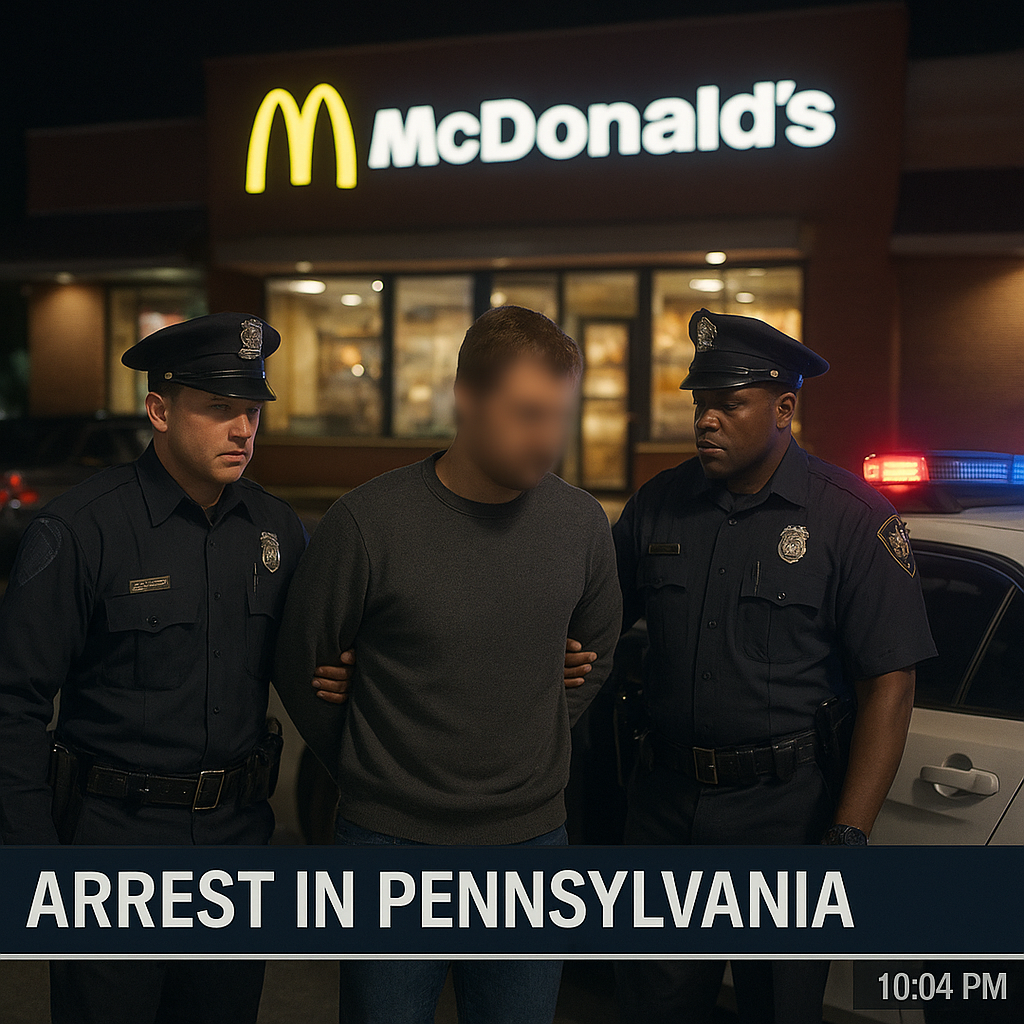
The new video is important not because it changes the underlying facts of the case, but because it shows how the arrest unfolded in real time. That matters in criminal justice reporting. Public understanding often depends on official summaries. Video can either confirm those summaries or complicate them. In this case, the footage appears to reinforce the speed and control of the arrest. It also helps the public see how officers handled a suspect who was, by then, the focus of intense attention.
The arrest also fits into a broader pattern seen in major investigations: once a suspect is identified, the final moments before custody can become almost as scrutinized as the alleged crime itself. Body-camera video, security footage, and bystander recordings often become central to later debates about police conduct and the reliability of the official narrative.
For readers following similar cases, it is worth comparing this arrest to other high-visibility police actions covered by criminal justice outlets. Cases involving public manhunts, executive protection concerns, and quick-turn prosecutions often move through several stages before a court hearing begins. If you want related reporting on how police video shapes public perception, see law enforcement accountability coverage and major arrest investigations.
Legal context and charges or proceedings
Mangione’s guilty plea to federal charges marks the most significant legal development so far. A guilty plea narrows the case in a major way. It ends the trial question, at least for the federal counts, and shifts the focus to sentencing, cooperation issues if any exist, and the broader record that prosecutors will ask the court to consider.
In federal criminal cases, pleas often resolve what would otherwise be a lengthy process of motions, hearings, and jury selection. They can also reflect a defendant’s assessment of the evidence, the likely sentence, or the strategic value of avoiding trial. Prosecutors, for their part, often seek guilty pleas in serious cases because they provide finality and spare victims’ families, witnesses, and the court system from an extended trial.
The federal system is distinct from state court in important ways. Sentencing guidelines, plea agreements, and mandatory minimums can shape outcomes in ways that differ from local prosecutions. In a case with national attention, those details matter. The plea will likely drive most of the next phase, as the court considers what sentence fits the conduct, the harm to the victim, and any aggravating or mitigating factors.

Because Thompson’s killing involved a corporate executive, the case has also become part of a larger discussion about the protection of high-profile business leaders and the security challenges faced by companies with public-facing executives. Those issues are not usually central in homicide prosecutions, but here they have become part of the legal and social backdrop. Corporate security decisions, travel arrangements, and threat assessments may all be reviewed in the aftermath of the crime.
For background on federal criminal procedure and how pleas reshape the path of a case, readers may find this overview useful: federal court proceedings explained and plea agreements in serious felony cases.
The plea also changes the media and public narrative. Before a guilty plea, a case is framed by allegations. After a plea, the legal system moves from “what happened?” to “what sentence is appropriate?” That shift is crucial. It means the case is no longer about proving guilt at trial, though questions may remain about motive, broader context, and whether other charges could still arise in another jurisdiction.
If state charges are still pending or if other investigations continue, the case could remain active in more than one forum. That is common when a violent act crosses federal and state interests, or when investigators believe one event implicates multiple legal theories. In those situations, the criminal justice process becomes layered. One plea does not always close every file.
Law enforcement or court response
Law enforcement’s handling of the arrest will likely be reviewed for months, not days. Video provides a public record, but it also invites close examination of whether officers followed procedure, whether the stop or entry was lawful, and whether the arrest was based on reliable identification. In high-profile cases, every movement is parsed.
From the available description, the arrest appears to have been executed with restraint. That is often important in a case already tied to a homicide investigation. Police departments and prosecutors want to avoid creating new legal problems at the moment they think they have solved an old one. A clean arrest reduces the chances of suppression motions or civil claims later on.
The court response will likely focus first on the plea and then on sentencing. Judges in federal cases must consider the advisory sentencing range, the statutory factors, and any victim impact statements. In a case involving a killing that captured national attention, the courtroom record may become an archive of grief, outrage, and institutional response.
The legal system also has to manage public expectations. In cases like this, people often want the arrest video to answer every question. It rarely does. Footage shows a scene, not a motive. It confirms custody, but not always full culpability or the chain of decisions that led to the crime. That is why prosecutors, defense lawyers, and judges often speak carefully in the wake of a dramatic arrest.
Security concerns surrounding the arrest and the underlying killing may also influence how agencies respond to future threats against executives. That can mean more coordination between local police, federal investigators, private security teams, and corporate risk managers. The effect may be subtle at first, but these cases often change standard practices.
Readers interested in how criminal cases affect policing, private security, and courtroom procedures may also want to review executive protection and criminal investigations and courtroom response in violent crime cases.
Community and policy implications
The killing of Brian Thompson and the arrest of Mangione have implications that extend beyond one defendant and one victim. Any homicide involving a prominent business leader raises public concern, but this case also touches on class tensions, anger at institutions, and the broader debate over corporate accountability. Those issues are real, even if they do not excuse violence.
For the public, the arrest video can be unsettling precisely because it looks so ordinary. It reminds viewers that violent crime does not always unfold in a dramatic or isolated setting. It can spill into restaurants, parking lots, transit hubs, and other everyday places. That reality affects how communities think about safety and how police allocate resources.
The case may also prompt renewed discussion of how law enforcement investigates targeted killings. Rapid identification, digital evidence, witness interviews, and interstate coordination are all part of modern homicide work. When a suspect is located in a different state from the killing, jurisdictional cooperation becomes essential. That cooperation is often invisible to the public, but it is central to the outcome.
At a policy level, the case may influence conversations about executive protection, workplace security, and threat assessment. Large corporations frequently review security after a violent episode involving one of their leaders. Some will tighten access controls or increase personal protection for senior staff. Others may reassess travel policies and event security. None of that erases the crime, but it can shape what comes next.
There is also a civil-rights dimension worth noting. High-profile arrests can raise questions about equal treatment, transparency, and the use of public video. Body-camera footage can support accountability, but it can also be edited, withheld, or released selectively. Communities often ask whether similar transparency would exist in a lower-profile case involving an ordinary defendant. That is a fair question and one that criminal justice reporters should keep asking.
The public may be tempted to treat the case as a referendum on broader social frustrations. The legal system cannot settle those arguments through a plea. It can only determine responsibility for a specific crime and impose a sentence that reflects that conduct. Still, public reaction matters because it shapes policy, security spending, and how authorities communicate during major investigations.
For readers following policy and justice reform angles, related coverage includes criminal justice policy developments and civil rights and policing transparency.
Frequently Asked Questions
What does the new video show?
It shows the moment police arrested Luigi Mangione inside a Pennsylvania McDonald’s.
What crime is this case about?
The case stems from the killing of UnitedHealthcare CEO Brian Thompson.
Has Luigi Mangione pleaded guilty?
Yes. According to the information provided, Mangione pleaded guilty to federal charges.
Why does the arrest video matter?
It provides a real-time record of how officers made the arrest and may help explain the investigative timeline.
Could there still be other legal proceedings?
Possibly. Even after a federal plea, other charges or related investigations can continue depending on the jurisdiction and facts.
What happens next in federal court?
The court will likely move toward sentencing and review the applicable legal factors, including any victim impact statements.
New video can sharpen public understanding, but it does not replace the legal record. In this case, the arrest scene is now part of a broader federal prosecution that has already shifted from accusation to plea. For Thompson’s family, the case remains about loss and accountability. For police and prosecutors, it is about evidence, procedure, and the burden of proving a case that captured national attention. For everyone else, it is a reminder that major criminal cases often begin in ordinary places and then reshape the debate far beyond them.