Uber was ordered to pay $40 million after a jury or court found the company liable in a wrongful death case tied to a driver who forced a woman and her friend...
Uber Ordered to Pay $40 Million After Freeway Ejection Death in Wrongful Death Case
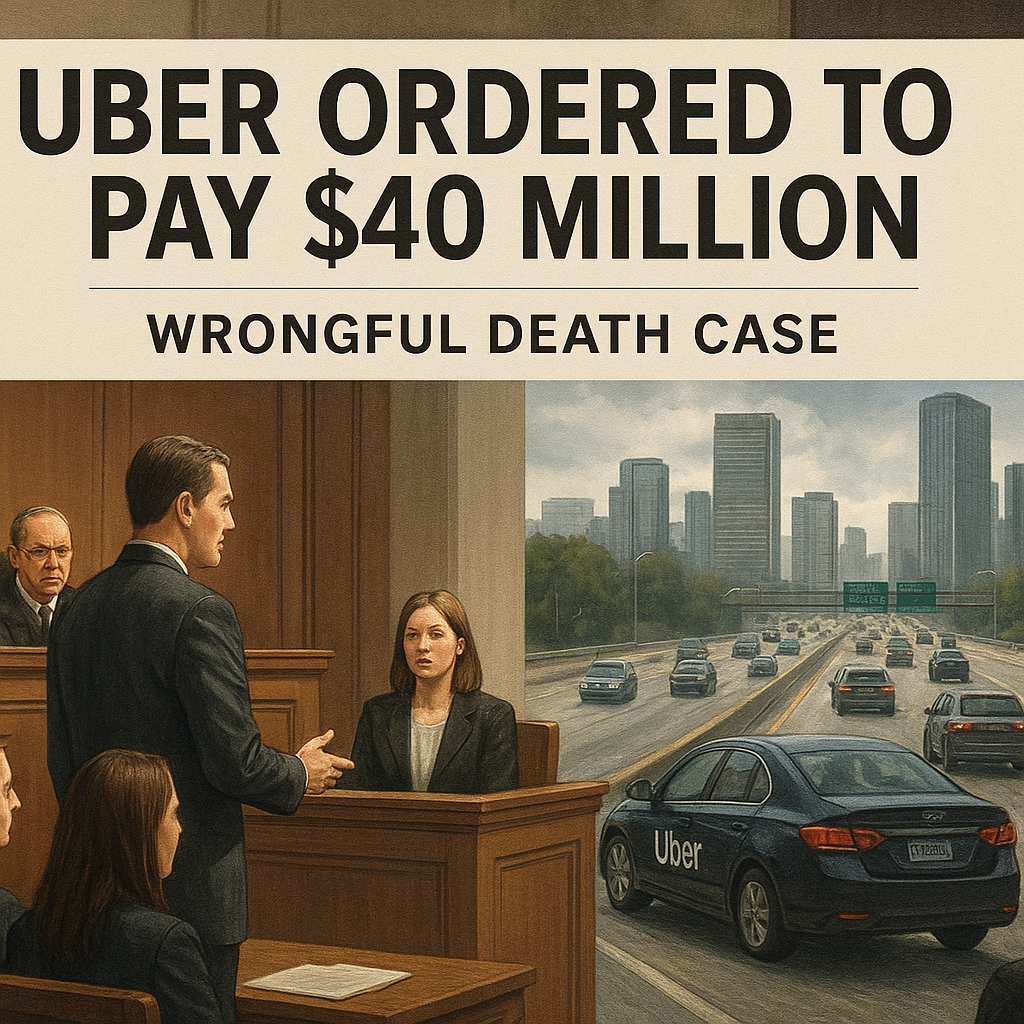
Uber was ordered to pay $40 million after a jury or court found the company liable in a wrongful death case tied to a driver who forced a woman and her friend out of his car on a freeway, where the woman was struck and killed.
Key Takeaways:- A wrongful death lawsuit ended with a $40 million award against Uber.
- The case stems from a deadly freeway ejection after a ride-share dispute.
- The ruling raises questions about platform oversight, driver screening, and passenger safety.
- The outcome may influence future civil suits involving transportation networks and negligence claims.
What happened
The case centers on a fatal confrontation during an Uber ride that ended on a freeway. According to the reporting referenced in the prompt, the driver forced two women out of the vehicle. One of them was then hit and killed by a passing car. The victim’s family filed a wrongful death suit, arguing that the company bore responsibility for the circumstances that led to the death.
The facts matter because wrongful death cases turn not only on the immediate act that caused the injury, but also on whether a company, employer, contractor, or platform failed to take reasonable steps to prevent foreseeable harm. In ride-hailing cases, those questions can include screening, training, incident response, and whether a driver’s conduct was within the scope of the company’s safety obligations.
The verdict or award, reported as $40 million, places this case among the more significant civil judgments involving a transportation platform and passenger safety. It also arrives at a time when ride-share companies continue to face scrutiny over background checks, emergency reporting tools, and how quickly they respond when a ride turns dangerous.
Cases like this are often discussed alongside broader public safety and civil accountability concerns. For readers following how courts handle negligence and liability claims, related reporting on courts and verdicts, civil rights and justice policy, and investigations into corporate conduct can help frame why this lawsuit drew such attention.
Legal context and charges or proceedings
Wrongful death lawsuits are civil cases, not criminal prosecutions. That distinction matters. A civil plaintiff does not need to prove guilt beyond a reasonable doubt. Instead, the family had to persuade the court or jury that Uber, through its policies, oversight, or relationship to the driver, should be held legally responsible under the civil standard that applies in such cases.
Depending on the jurisdiction and the claims filed, the family likely pursued theories such as negligence, negligent hiring or retention, failure to warn, and possibly vicarious liability. Those concepts are common in cases involving corporations and independent-contractor drivers. The central legal question is whether the company exercised enough control over the driver or the platform to incur responsibility when a ride goes catastrophically wrong.
The size of the award suggests that jurors or the court viewed the death as preventable and the harm as severe. In civil litigation, damages may reflect not just economic losses, but also the profound emotional and practical toll on surviving family members. Wrongful death awards can include funeral costs, lost financial support, loss of companionship, and pain tied to the circumstances of the death.
This case also sits within a larger debate over the legal status of ride-hailing companies. They often classify drivers as independent contractors, which can limit direct liability in some settings. But civil juries and courts have, in other cases, found that platform design, safety policies, and corporate responses can still support liability. That is one reason transportation-network lawsuits continue to test the boundaries of tort law.
For a broader view of how courts assess responsibility in high-stakes cases, readers may also look at coverage of court rulings and legal standards and policy debates over platform accountability.

Law enforcement or court response
The prompt does not describe a criminal charge against the driver, but the civil verdict still places the underlying conduct under a legal spotlight. When a freeway ejection leads to a death, police typically investigate the incident as a possible traffic crime, reckless endangerment matter, or other offense depending on state law and the driver’s actions.
Even without a criminal prosecution, the civil case can force disclosure of facts that are useful to the public. Trial testimony, exhibits, and company records may show what the driver reported, how the platform handled complaints, and whether safety systems were used or bypassed. Civil litigation often becomes a forum where details emerge that had not previously been public.
Courts in cases like this also send a message about what kinds of conduct juries may regard as foreseeably dangerous. For transportation companies, the risk is not just the size of the award. It is the possibility that a single incident, if tied to a lapse in supervision or protocol, can become evidence of a broader systems failure.
The response from Uber, including whether it will appeal or seek to reduce the award, will matter. Large civil judgments often trigger post-trial motions, settlement discussions, and appellate review. Those steps can take months or years. A verdict is not always the final word, but it is a significant one.
This is also the kind of case that often intersects with reporting on investigations and law enforcement response, especially when the underlying event involved a deadly roadside confrontation.
Community and policy implications
The death at the center of this case is a reminder that transportation safety is not limited to vehicle design, traffic enforcement, or drunk-driving laws. It also includes the relationship between a platform, its drivers, and riders who may depend on those services late at night, in unfamiliar areas, or after a dispute has already escalated.
For the victim’s family, the verdict is likely to be seen as both accountability and acknowledgment. Money cannot repair the loss, but civil damages can recognize that a death may have been avoidable and that a powerful company may have had a role in the chain of events.
From a policy standpoint, the case may renew debate over how ride-hailing companies supervise drivers, how quickly they can intervene during a safety complaint, and what should happen when a passenger is removed from a vehicle in a dangerous location. Freeways are especially unforgiving environments. Leaving someone on the shoulder or in traffic conditions at night creates obvious risks.
Lawmakers and regulators may also revisit whether platforms should face stronger obligations to deactivate drivers more quickly after serious complaints, improve emergency support lines, or adopt safer ride-interruption procedures. The broader questions are not unique to Uber. They affect the entire on-demand transportation sector.
Civil litigation has become one of the main mechanisms for testing those duties. When regulators move slowly, lawsuits often become the place where records are forced open and where juries decide what level of protection the public should expect from a billion-dollar platform.
That is why this verdict will likely be cited in future disputes over ride-share liability, especially if similar allegations arise again. It may also be discussed in the same breath as other transportation-safety fights involving civil lawsuits, platform responsibility, and public accountability.
Frequently Asked Questions
What was Uber ordered to pay?
Uber was ordered to pay $40 million in the wrongful death case described in the prompt.
Was this a criminal case?
No. A wrongful death suit is a civil case. It seeks financial damages rather than criminal punishment.
What led to the lawsuit?
The suit stemmed from an incident in which an Uber driver allegedly forced a woman and her friend out of the vehicle on a freeway, and the woman was then struck and killed.
Does the award mean Uber admitted wrongdoing?
Not necessarily. A civil judgment or settlement does not always equal an admission. It means the company was found liable or agreed to resolve the case on terms that included payment.
Could the company appeal?
In many civil cases, yes. A company can often seek post-trial relief or appeal, depending on the court’s rules and the stage of the case.
Why does this case matter beyond one family?
It raises broader questions about ride-share safety, company oversight, and how courts assign responsibility when a platform-related dispute turns deadly.
This case will likely remain part of the broader legal conversation over how much responsibility technology platforms should bear when their services end in tragedy. Civil verdicts like this do not resolve every question. They do, however, define the stakes. For families, the law becomes a way to seek accountability. For companies, it becomes a warning that safety failures can carry heavy financial and reputational costs.
The larger issue is straightforward: when a ride ends in a dangerous place, the consequences can be irreversible. Courts, regulators, and the public will keep asking who should have prevented that outcome, and what duty a transportation platform owes the people who trust it with their safety.