Acting Attorney General Todd Blanche faced pointed questions from lawmakers during the first part of his confirmation hearing to lead the Justice Department...
Todd Blanche Faces Senate Questions Over Epstein Files and DOJ “Anti-Weaponization” Fund
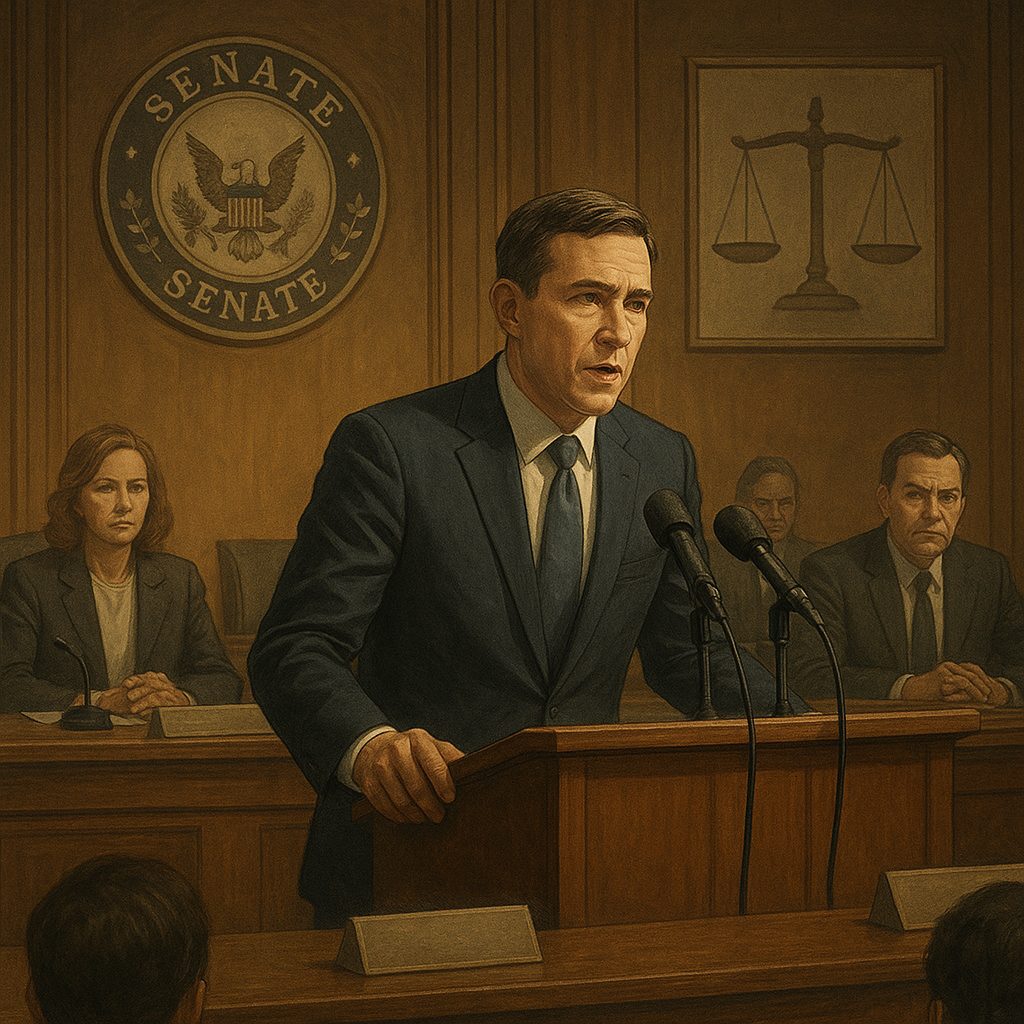
Acting Attorney General Todd Blanche faced pointed questions from lawmakers during the first part of his confirmation hearing to lead the Justice Department, with senators pressing him on the handling of the Epstein files and a proposed “anti-weaponization” fund.
Key Takeaways:- Senators focused on whether Justice Department decisions would be insulated from political pressure.
- The Epstein files resurfaced as a major oversight issue, with lawmakers seeking clarity on transparency and disclosure.
- A proposed “anti-weaponization” fund raised broader concerns about how DOJ resources could be used.
- The hearing reflected a familiar fight in Washington: control, credibility, and the limits of prosecutorial power.
What happened
The hearing placed Blanche at the center of an unusually sharp set of questions about how the Justice Department should operate when politics, investigations, and public trust collide. Lawmakers used the session to test his independence, his views on disclosure, and his approach to a department that oversees federal prosecutors, civil rights enforcement, national security matters, and sensitive investigations that can shape public confidence in the rule of law.
The Epstein files quickly became one of the most scrutinized topics. That is not surprising. Any discussion of the federal government’s handling of records tied to Jeffrey Epstein and related investigations draws attention because the case sits at the intersection of criminal accountability, institutional transparency, and public skepticism about whether powerful defendants are treated differently. For senators, the question was not only what remains in those files, but how a future attorney general would decide what to release, what to protect, and on what timeline.
The hearing also touched on the proposed “anti-weaponization” fund, an idea that has raised concern among critics who see it as a vehicle for redirecting Justice Department authority in a way that could politicize federal law enforcement. Supporters of such a fund typically frame it as a safeguard against selective or abusive use of federal power. Opponents worry that the label itself can become a license for retaliation, especially if it is not paired with clear statutory limits and oversight.
The exchange reflected a larger theme running through contemporary justice politics: the public wants federal law enforcement to be aggressive when crimes are serious, but restrained when investigations appear to serve political ends. Those goals are hard to reconcile, and senators made clear that they intend to keep pressing Blanche on where he draws those lines.
For readers following broader Justice Department debates, the hearing fits into a larger pattern of scrutiny over prosecutorial power, transparency, and civil liberties. Similar themes have shaped recent disputes over surveillance, special counsel authority, records release, and the use of federal resources in politically sensitive matters. For background on those issues, see our coverage of federal oversight of criminal investigations, prosecutorial discretion and public accountability, and criminal justice policy in Washington.
Legal context and charges or proceedings
Although Blanche’s hearing was about leadership rather than a criminal trial, the legal stakes were high. The attorney general leads the federal department that decides which matters become criminal prosecutions, which remain civil disputes, and which investigations are pursued quietly or publicly. That power is vast, and the Senate confirmation process is one of the few formal checks on it.
That is why the questions about Epstein matter so much. In cases involving high-profile defendants, investigators and prosecutors may hold extensive evidence, sealed records, witness statements, and material that could touch other potential offenders or institutions. The treatment of those materials is governed by a tangle of rules: grand jury secrecy, privacy protections, ongoing investigation concerns, victims’ rights statutes, court orders, and the department’s own internal policies.
If a senator wants to know whether the DOJ should disclose more, the answer is not simply political. It involves court process and legal authority. Grand jury material is generally protected. Victims’ identities may need shielding. Investigative files may remain sealed to protect witnesses, preserve future prosecutions, or avoid exposing information that could be misused. At the same time, Congress has long argued that the public deserves a fuller accounting when a major case implicates possible institutional failures.
The “anti-weaponization” discussion carries its own legal baggage. Federal law enforcement already operates under a dense set of constraints, including the Constitution, ethical rules, internal review procedures, Inspector General oversight, and congressional appropriations. A new fund created to address alleged misuse of prosecutorial power would need to be defined carefully. Would it finance internal reviews? Defense support for officials accused of misconduct? Litigation over contested subpoenas or investigations? Advocacy organizations would likely challenge any vague structure that appears to favor one political view of justice over another.
The hearing therefore was not just about Blanche as an individual nominee. It was about the shape of modern federal justice administration. In recent years, critics of the department on both the left and the right have accused it of double standards. Some say prosecutors have been too cautious in one set of cases and too aggressive in another. Others argue that the department’s biggest problem is not bias but inconsistency. Confirmation hearings are where those disputes are aired, often in shorthand, but the underlying legal questions are long-running and serious.
The Senate’s role is more than ceremonial here. Lawmakers are empowered to examine whether a nominee understands the department’s obligations under law, including discovery rules, disclosure duties, civil rights enforcement, and the handling of records tied to sensitive investigations. A nominee who appears evasive can face weeks of negative attention. A nominee who answers too broadly may reveal how they intend to exercise discretion before being confirmed. Blanche’s appearance put him in exactly that bind.
Law enforcement or court response
At the institutional level, the Justice Department’s response to political scrutiny is usually cautious. Officials tend to emphasize that ongoing investigations are protected, that disclosure decisions are made under established rules, and that prosecutors should not comment in a way that compromises cases or witnesses. That is standard practice, but it often frustrates lawmakers who want direct answers.
The hearing’s tone suggested that senators are likely to continue seeking specifics. That could mean follow-up letters, additional testimony, or requests for records concerning the department’s handling of Epstein-related materials and any work tied to the proposed fund. Congress has several tools at its disposal, including oversight hearings, subpoenas, budget controls, and public reporting demands. Whether those tools are used aggressively may depend on how Blanche responds in the next phase of scrutiny.
Court systems, meanwhile, remain relevant because many of the issues surrounding Epstein and DOJ records intersect with sealed filings, privacy claims, and disclosure disputes. Judges often serve as gatekeepers when the government wants to keep documents under seal or when victims, news organizations, or outside parties seek access. That judicial role matters in cases where public interest is intense but legal restrictions remain strong.
The relationship between DOJ leadership and the courts is often underestimated. Attorneys general set priorities, but judges determine whether evidence can be used, whether warrants were lawful, whether a sealing order should remain in place, and whether any record can be unsealed later. In politically sensitive cases, the balance between executive discretion and judicial oversight becomes even more important.
For Blanche, that means his answers at the hearing could shape how judges, prosecutors, and congressional overseers read his tenure if he is confirmed. A nominee’s public statements are not just political talking points. They can establish expectations for how the department will handle future disputes over files, subpoenas, protective orders, and the timing of disclosures.
This also has implications for victims and witnesses. In major investigations, many people with direct knowledge of events are not public figures. They may want truth and accountability, but they also need privacy and protection from retaliation or unwanted exposure. Any debate about the Epstein files must account for that. The same is true for any broad anti-weaponization initiative: if it becomes a slogan rather than a legal framework, the people most affected may be those with the least power to speak up.
The hearing likewise fits into a broader pattern of tension between department leadership and outside critics who believe law enforcement power is being shaped by politics. That tension has played out in everything from special counsel appointments to disputes over charging decisions, public statements by prosecutors, and the use of investigative resources in nationally watched cases. Those controversies rarely end with one hearing. More often, they become part of a continuing institutional argument.
Community and policy implications
The policy stakes extend well beyond one nominee. If Blanche is confirmed, his approach could influence how the Justice Department handles transparency disputes, politically sensitive investigations, and the rhetoric surrounding federal enforcement. Those decisions affect not only Washington but also local communities that depend on federal partnership in areas such as violent crime, public corruption, civil rights violations, fentanyl trafficking, and organized fraud.
One concern raised by critics of “weaponization” rhetoric is that it may erode trust in legitimate cases. When every unpopular investigation is described as political, the public can lose the ability to distinguish between bad-faith prosecution and ordinary law enforcement. That is dangerous. It can weaken jury pools, sour communities on cooperation with investigators, and make it harder for prosecutors to do their work.
But the opposite risk is real too. If the Justice Department is perceived as selective, secretive, or immune from meaningful oversight, confidence also falls. That is why the department’s handling of the Epstein files has become such a symbol. The matter is larger than the documents themselves. It speaks to whether federal institutions can explain their decisions in a way that seems credible to the public.
Civil liberties groups are likely to watch any new anti-weaponization effort closely. If such a fund is used to support internal monitoring or independent review, it might be presented as a check on abuse. If it is used to bankroll partisan litigation or shield officials from accountability, it could trigger legal and political backlash. The details matter. In criminal justice policy, slogans are easy; implementation is where the trouble starts.
Local prosecutors and state officials are watching as well. Federal leadership influences priorities across the system. When the DOJ signals that certain cases or themes will receive special attention, state partners often adjust. That can be useful when the target is human trafficking, ransomware, public corruption, or prison abuse. It can also create confusion if the lines between law enforcement and politics appear blurred.
There is another practical effect: staff morale. Career prosecutors and investigators tend to work best when they believe the rules are stable and the mission is not changing with each news cycle. A highly charged confirmation process can unsettle that confidence. People inside the department want to know whether evidence will be followed, whether decisions will be insulated from political demands, and whether they will be supported when cases become controversial.
For communities affected by crime, the central question is simpler than the Senate’s: will the Justice Department do its job fairly? Fairly means aggressively where necessary, but also cautiously, with respect for due process and constitutional limits. It means protecting victims without using them as props. It means keeping sensitive records secure while recognizing when public disclosure is required. And it means acknowledging that trust in law enforcement is earned, not declared.
That is why the hearing resonated beyond the Capitol. It was not just a personnel review. It was a test of how federal justice should operate in an era when nearly every major case is viewed through a partisan lens. The answers will matter for future cases involving public corruption, civil rights enforcement, and federal investigations that draw national scrutiny.
For readers interested in how similar policy fights have shaped DOJ decision-making, see our reporting on DOJ oversight and transparency, public records disputes in criminal cases, and federal civil rights enforcement.

Frequently Asked Questions
What was the main focus of Todd Blanche’s hearing?
The hearing centered on whether Blanche would lead the Justice Department independently and how he would handle politically sensitive issues, including the Epstein files and a proposed anti-weaponization fund.
Why are the Epstein files such a major issue?
Because they involve a high-profile investigation with public interest, possible sealed records, privacy concerns, and questions about whether the government has fully explained its handling of the case.
What does “anti-weaponization” mean in this context?
It refers to efforts framed as limiting the misuse of federal law enforcement power. Critics worry the concept could be used to justify partisan action or weaken legitimate oversight.
Does a confirmation hearing change any ongoing cases?
Not directly. But it can shape how a future attorney general approaches disclosure, oversight, charging priorities, and the department’s public posture.
Can Congress force the Justice Department to release files?
Not automatically. Congress can pressure the department and request records, but sealed materials, grand jury rules, privacy protections, and court orders can limit disclosure.
The Blanche hearing showed how quickly a confirmation process can become a referendum on the Justice Department itself. Senators were not only assessing one nominee. They were probing whether federal law enforcement can remain credible in a climate where every sensitive case is viewed through a political lens. The answer will depend less on slogans than on the hard choices that follow: what gets disclosed, what stays sealed, and whether the department can show its work.