Six-year-old Etan Patz disappeared in Manhattan in 1979, and the case reshaped how the public, police, and media respond to missing children. This week, the...
Supreme Court Revives Etan Patz Conviction as Missing-Child Case Returns to the Spotlight
Six-year-old Etan Patz disappeared in Manhattan in 1979, and the case reshaped how the public, police, and media respond to missing children. This week, the Supreme Court reinstated the conviction of the man accused of kidnapping and murdering him, sending the long-running case back into the public eye and renewing scrutiny of the legal fight that followed the verdict.
Key Takeaways- The Supreme Court reinstated the conviction in the Etan Patz case after a lower court had overturned it.
- Etan Patz’s disappearance helped change how missing-children cases were covered and investigated.
- The case remains significant for both criminal law and public policy around child abduction alerts, family advocacy, and cold-case prosecutions.
- Lisa Cohen, author of After Etan, argues the case altered the national response to missing children.
What happened
Etan Patz vanished on May 25, 1979, while walking to his school bus stop in lower Manhattan. The disappearance became one of the most closely watched missing-child cases in the United States. For years, the investigation moved slowly, and the family endured decades without a resolution. The case became a symbol of the anguish that follows a child’s disappearance and the limits of law enforcement when a critical early window passes without answers.
The accused, Pedro Hernandez, was convicted in 2017 of kidnapping and murder. Prosecutors said he lured Etan into a basement store, killed him, and disposed of the body. The conviction followed a trial that drew intense attention because the underlying crime had taken place nearly 40 years earlier, relying heavily on testimony, witness memory, and circumstantial evidence. The Supreme Court’s decision to reinstate the conviction revived a question that has lingered for years: how should courts treat a conviction in an exceptionally old case where the legal record is complicated and the evidence is hard to evaluate in the ordinary way?
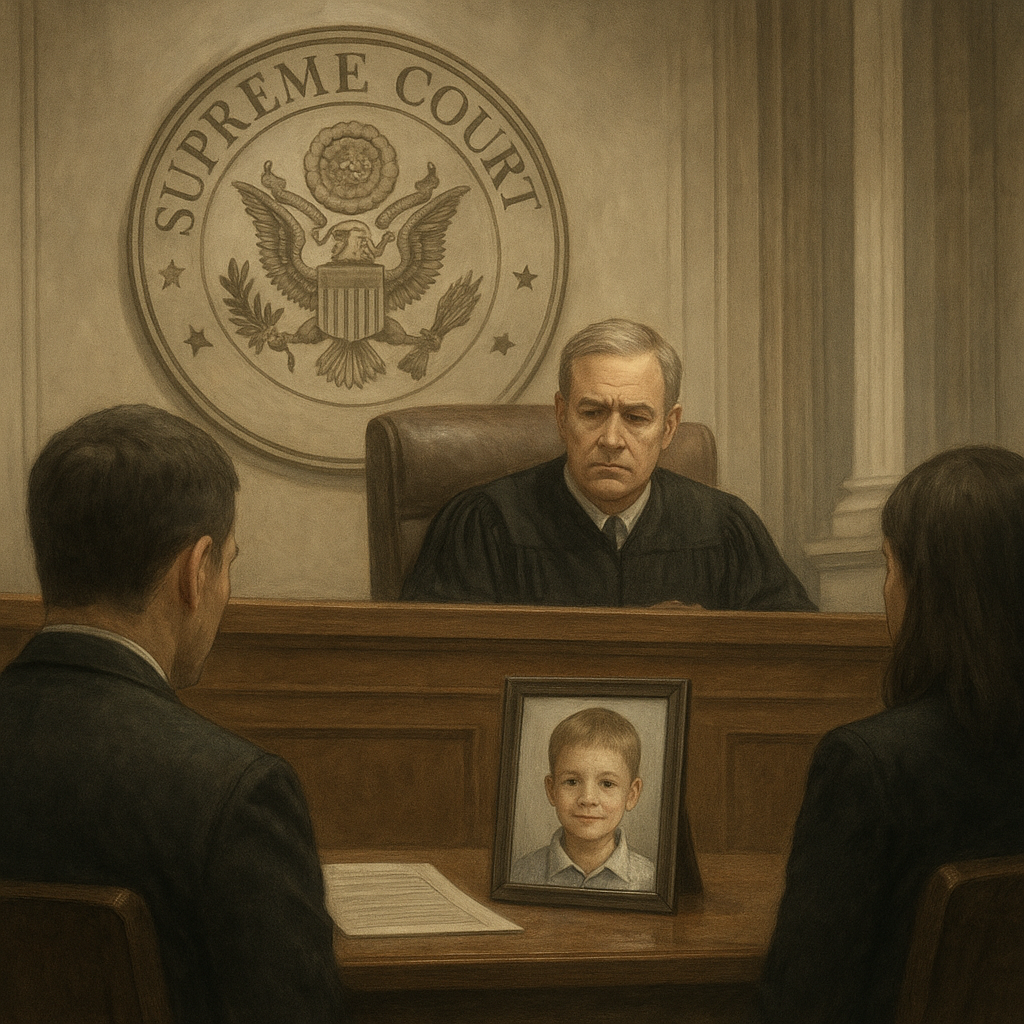
For people who followed the case from the start, the legal twists matter. But so does the broader meaning. Lisa Cohen, whose book After Etan examines the aftermath of the disappearance, has written about how the case changed the way Americans thought about children who go missing. Before Etan Patz, missing-child stories often received less sustained national attention. Afterward, the public began to see such cases as urgent, collective emergencies rather than isolated family tragedies. That shift influenced journalism, police practices, and eventually federal and state policy.
The facts of the disappearance remain chilling in their simplicity. A child left home for school and never returned. The case’s endurance in public memory is partly a result of that stark narrative, but also because it arrived during a period when American cities were changing, media culture was changing, and parents were becoming more anxious about the safety of children moving through public spaces alone.
Legal context and charges or proceedings
The Patz case has had a complex legal history. Hernandez was charged years after the disappearance, following renewed investigative work and interviews that produced a confession-like statement. Prosecutors built the case around that statement, corroborating evidence, and testimony from witnesses who placed him near the site. The defense challenged the reliability of the evidence and argued that the state’s proof was insufficient, especially given the passage of time.
A jury convicted Hernandez in 2017. But the case did not end there. Appellate litigation followed, and a federal court later found problems with the way the trial jury had been instructed on the definition of reasonable doubt. That ruling led to the conviction being overturned, which in turn raised the possibility of another retrial or a permanent setback for prosecutors.
The Supreme Court’s decision to reinstate the conviction restored the state’s victory, at least for now. It also underscored a recurring issue in criminal appeals: when a conviction is reversed on procedural grounds, higher courts must decide whether the error was serious enough to justify undoing a verdict that a jury already reached. In old, emotionally charged cases, that question can carry extraordinary weight.
The legal system is often tested most sharply when time has worn away the usual supports for a case. Physical evidence may be gone. Witnesses may have died or forgotten details. Investigators may rely on interviews conducted decades later. In that setting, appellate courts are asked to assess not just the facts, but the process. That is why the Patz case remains important well beyond the identity of the defendant or the tragedy of the victim.
It also highlights the tension between finality and accuracy. A conviction carries enormous consequences, particularly in a murder case. But when a crime has remained unresolved for decades, families and prosecutors often see the verdict as the first meaningful form of accountability. Courts, by contrast, must ask whether the trial met constitutional standards, even if doing so means revisiting a case that has become deeply symbolic.
Law enforcement or court response
The original investigation into Etan Patz’s disappearance was one of the most scrutinized in modern American policing. It unfolded before today’s systems for rapid alerts, national databases, and coordinated missing-child response protocols were fully developed. That matters. Investigators in 1979 did not have the same tools that are now common in missing-person cases, and public awareness of child abduction was also markedly different.

Over time, law enforcement renewed the investigation several times. Cold-case work, interviews with former associates, and careful record review eventually brought the case back into active focus. Prosecutors emphasized that old cases often depend on persistence more than speed. They also argued that the years did not erase the significance of the evidence they had gathered.
Court response in the Hernandez litigation reflects the judiciary’s role in drawing a line between remedying real trial error and preserving verdicts that remain legally sound. Appellate review in high-profile cases can become a proxy debate over credibility, fairness, and the limits of post-conviction review. In the Patz matter, the procedural question about jury instructions became central, even though the underlying story is one of a child’s disappearance and the search for accountability that followed.
The case also continues to draw attention from journalists and authors because it sits at the intersection of criminal law and social change. Lisa Cohen’s work gives that history a human frame. She has argued that the Patz case altered the nation’s expectations around missing children, pushing police departments and media outlets to take these disappearances more seriously and more quickly. Her point is not simply historical. It speaks to how narratives around crime can shape policy.
That evolution is visible in the expansion of alert systems and missing-child protocols. Amber Alert systems, national missing-child databases, and federal support for child-abduction response did not emerge from one case alone. But Etan Patz was part of the pressure that made such reforms politically possible. The case became a reference point for what happens when a child vanishes and there is no immediate, coordinated response.
For readers following the legal side as well as the public-policy side, the case has parallels with other decades-old prosecutions in which courts must decide whether new evidence, witness memory, or changed standards justify reopening old questions. Similar issues have appeared in other long-running investigations covered by this publication, including cases involving post-conviction review and prosecutorial reliance on delayed witness accounts. In that sense, the Patz ruling belongs in a broader conversation about how the justice system handles old crimes with incomplete records. Related reporting can be found in our coverage of cold-case prosecutions, missing-child investigations, and appeals in serious felony cases.
Community and policy implications
The public reaction to the Etan Patz case has always exceeded the boundaries of one prosecution. The disappearance affected parents, teachers, law enforcement agencies, and child-safety advocates. It also helped create a lasting expectation that missing children should be treated as urgent cases, not routine runaways.
That cultural shift can be difficult to measure, but it is visible in several places. News coverage of missing children became more persistent. Parents were encouraged to track children’s routines more closely. Police departments developed specialized procedures. Legislators took notice. In later years, child-abduction response became part of a larger policy framework that included emergency alerts, federal coordination, and resources for families.
The Patz case also shows how a single investigation can become a public policy lesson. Advocates often argue that early response matters most in missing-child cases. The first hours can determine whether a child is found safely or whether the investigation becomes a long-term search for answers. The attention given to Etan Patz helped reinforce that message. It made visible the costs of delay, confusion, and fragmented communication.
At the same time, the case illustrates the burden borne by families when justice moves slowly. For decades, Etan’s parents lived with uncertainty. That experience is common in unresolved disappearances and missing-person cases, even though the public’s attention usually fades. The durability of the Patz story helped keep pressure on officials to treat missing children as a category requiring permanent institutional attention.
Policy debates since then have expanded beyond response times. They include how to balance public alerts with the risk of overuse, how to manage false leads, and how to support families without creating false hope. They also involve questions about investigative resources. Cold cases require manpower, and departments with limited budgets must decide how much to dedicate to old files versus current threats.
There are broader civil-rights questions as well. Media attention can help solve cases, but it is not distributed evenly. Children from some neighborhoods or backgrounds receive more notice than others. The Etan Patz case became famous in part because of the way it intersected with New York media and public concern. Other families with missing children have not received comparable attention. That unevenness remains a live issue in criminal justice policy and media ethics.
The Supreme Court’s decision to reinstate Hernandez’s conviction does not resolve those policy debates. But it does remind the public that old cases can still shape current law and current expectations. The case now stands as both a legal matter and a historical marker. It tells us something about how a single disappearance altered the national response to missing children, and how the courts continue to grapple with the demands of finality in an old homicide prosecution.
For those tracking the broader justice system, the Patz case sits alongside other examples of how legal outcomes affect public policy. In one sense, the ruling is about a defendant and a verdict. In another, it is about how institutions react when a child disappears, how quickly they adapt, and whether that adaptation lasts after the headlines fade. For more on related developments, see our reporting on court rulings in legacy homicide cases, child-safety policy reforms, and the role of prosecutors in cold cases.
Frequently Asked Questions
Why is the Etan Patz case still important?
It is important because it changed public attitudes toward missing children and helped drive reforms in police response, media coverage, and child-safety policy. It also remains a major legal case because of the long appellate fight over the conviction.
What did the Supreme Court decide?
The Supreme Court reinstated the conviction of the man accused of kidnapping and murdering Etan Patz, reversing the effect of the lower court ruling that had overturned it.
Why was the conviction challenged?
The conviction was challenged on procedural grounds, including concerns about jury instructions and the reliability of evidence in a decades-old case.
How did the Etan Patz case change missing-child reporting?
According to authors such as Lisa Cohen, the case pushed missing-child incidents into the national spotlight and helped shape the expectation that police and media should respond quickly and with urgency.
Does this ruling end the case?
It strengthens the conviction, but legal proceedings in older cases can remain active depending on any remaining appeals, enforcement issues, or related post-conviction motions.
The Etan Patz case remains a reminder that criminal cases can outlast the moment of the crime itself. In rare instances, they become part of the nation’s legal memory. This one did both. It changed how Americans talked about missing children, and it continues to test the justice system’s ability to handle old evidence, contested verdicts, and the demand for closure that never fully disappears.