ShinyHunters, the cybercrime group long linked to data theft and extortion, says it breached an FBI employment website, a claim that — if confirmed — would...
ShinyHunters Says It Breached FBI Job Site, Raising New Questions About Cybersecurity at Federal Agencies
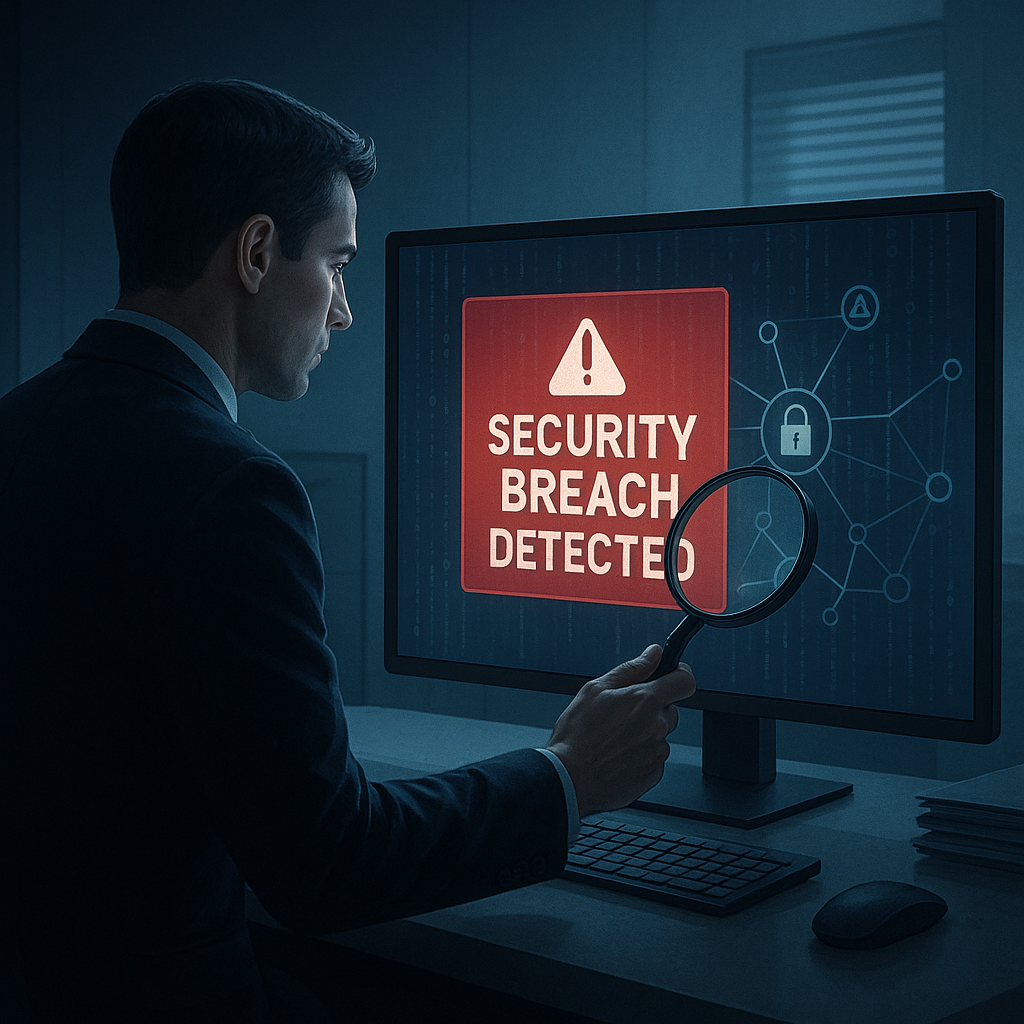
ShinyHunters, the cybercrime group long linked to data theft and extortion, says it breached an FBI employment website, a claim that — if confirmed — would add an unusual layer of embarrassment for the federal law enforcement agency that investigates some of the most serious cyber offenses in the country. The allegation has not, on its face, been independently verified in the public record, but it fits a familiar pattern: high-profile targets, stolen data claims, and a rapid cycle of attention that can pressure agencies to explain what happened, what was exposed, and how fast they moved to contain it.
Key Takeaways:- ShinyHunters claims it accessed an FBI job-related website, though public confirmation has not been established.
- The incident spotlights the risk posed by data-rich federal portals that collect personal information from applicants.
- Even claims of a breach can trigger forensic review, notification duties, and broader scrutiny of federal cyber defenses.
- The case matters not only for the FBI, but also for how agencies secure hiring platforms, vendor systems, and applicant data.
The claim matters because an employment portal is not just another website. Federal job systems often store names, addresses, phone numbers, education histories, work histories, and other identifiers that can be used for identity theft, social engineering, or targeted phishing. If a criminal group got into the FBI’s job site, the immediate harm would not necessarily come from classified material being stolen. It would come from the everyday personal data that applicants entrust to a government system.
The episode also lands in a politically sensitive place. The FBI is not only a user of cyber-defense tools; it is one of the lead agencies that investigates intrusions, tracks hacking groups, and works with prosecutors to bring charges. A public claim that a job site tied to the bureau was compromised invites scrutiny of basic controls: multi-factor authentication, vendor oversight, logging, patching, access management, and the speed of incident response.
Whether or not the claim survives verification, it has already become part of a broader criminal justice story. Cybercrime now sits squarely inside the public safety beat. The issue is not just whether a server was breached, but whether government institutions can protect the data they collect and whether the justice system can keep pace with attackers who operate across borders, exploit weak links in supply chains, and use stolen information in ways that are hard to unwind.
What happened
According to the claim circulating online, ShinyHunters says it breached an FBI job website. In cases like this, the first question is always the same: what exactly was accessed? A breach allegation can refer to many things. It might mean unauthorized entry into a public-facing portal, theft of a database, access to forms submitted by applicants, or even possession of screenshots or files that the group says prove the intrusion. Each possibility carries different consequences.
That distinction matters because criminal groups often use partial access or stolen sample data to make a claim look more dramatic than it is. Sometimes they have genuine access to a limited dataset. Sometimes they exaggerate. Sometimes they combine old material with fresh claims to pressure the target into silence or payment. The public usually sees only the claim and the data dump, not the back-end forensic work that determines whether the intrusion was real, how long it lasted, and whether the attackers obtained anything sensitive.
For a federal agency, the immediate concern is not reputational damage alone. It is the risk that personal data from applicants could be repurposed. An applicant’s email address can become a spear-phishing vector. A phone number can be used in impersonation scams. A résumé can reveal previous employers, certifications, and contact networks. Even if no law-enforcement files were touched, attackers can still turn administrative data into a criminal tool.
The nature of the alleged target also raises a broader question: how many federal systems are exposed through simple application portals, recruiting vendors, or legacy platforms that were not designed for today’s threat environment? Hiring sites are often built to be user-friendly, not hardened like sensitive internal systems. They collect information from thousands of people and may rely on third-party services for hosting, analytics, or form processing. That makes them attractive targets.
In cybercrime reporting, attribution is tricky. ShinyHunters is a known name, but names alone do not prove responsibility. The group has been associated with data theft and extortion claims involving companies and institutions in the past, and online actors frequently copy recognizable brand names to gain attention. Investigators would look for technical indicators, file structures, posting behavior, and infrastructure links before drawing conclusions.
The public face of a cyber incident can also unfold in stages. First comes the claim. Then comes the silence, as the target reviews logs and consults incident responders. Then comes the notification process, which may include internal warnings, contractor notices, or public disclosure if the facts warrant it. In many cases, the gap between the claim and the official response is where the most uncertainty lives.
In cybercrime cases, the question is not only whether a server was compromised. It is whether the agency’s controls were enough, whether vendors did their part, and whether the people who applied for federal jobs now face avoidable exposure.
Legal context and charges or proceedings
A claimed breach of a federal website can carry several possible legal consequences, even before any indictment is filed. Unauthorized access to a protected computer can trigger investigation under the Computer Fraud and Abuse Act, depending on the facts. If data was copied, sold, or used for extortion, prosecutors may look at identity theft, fraud, conspiracy, or extortion-related offenses. If the attackers operated overseas, the path to charges becomes more complicated, but not impossible.
Federal cyber cases often move on two tracks. One is the technical investigation, which asks who accessed what, from where, and using what tools. The other is the criminal case-building side, which asks whether the conduct fits a chargeable offense and whether the evidence can survive in court. If investigators identify suspects outside the United States, prosecutors may seek indictments even when arrests are unlikely, partly to constrain travel and signal that the conduct is being tracked.
The legal significance also extends to notification obligations. Federal agencies must follow rules on incident reporting, internal review, and, when required, notice to affected individuals. If applicant data was accessed, the agency may need to determine whether the exposure created a realistic risk of harm. That analysis can be fact-specific and slow. It is not enough to say data existed on a server; the question is whether it was actually exposed in a way that could be exploited.
In a case involving an agency like the FBI, the scrutiny can intensify because public confidence is at stake. The bureau investigates cyber intrusions involving hospitals, schools, pipelines, local governments, and major corporations. If its own hiring infrastructure was compromised, critics will ask whether the agency that helps define cybersecurity best practices is using systems that were sufficiently hardened.
The legal framework also intersects with privacy law. Applicant portals frequently contain personally identifiable information that is protected by federal policy even when it is not classified. A breach could trigger questions under federal records rules, privacy statutes, and internal security policies. Civil liability may be limited or barred in some situations, but the policy consequences can be significant.
For readers tracking how such cases enter the justice system, the relevant question is often not whether a criminal charge appears immediately, but whether the incident becomes part of a longer federal investigation. That investigation may be invisible to the public for months. It may also overlap with other probes into the same group, especially if ShinyHunters or associated actors are linked to additional intrusions.
Cases like this are also shaped by the federal government’s broader cybercrime posture. The Justice Department has increasingly treated digital theft as a priority offense, pairing criminal charges with seizure warrants, international cooperation, and coordinated takedowns. Those efforts are most visible when investigators can identify infrastructure, cryptocurrency trails, or intermediaries that help move stolen data.
The FBI itself has made public cybercrime a major part of its mission, including through field offices, national cyber teams, and partnership with the private sector. That makes the allegation of a breach especially notable. A claim against the bureau’s own systems is not just another data loss story; it is a test of whether the apparatus used to police cybercrime is resilient enough to protect the public-facing tools it relies on.
For broader background on how federal cyber investigations develop, see related coverage of federal cybercrime investigations, data breach notification rules, and identity theft prosecutions.
Law enforcement or court response
As of the public claim, the central law enforcement question is whether investigators have confirmed the intrusion and begun a formal response. In cyber cases, the first step is usually containment: isolate affected systems, preserve logs, and determine whether data was accessed, copied, or altered. That process can take time, and agencies are often cautious about making public statements before facts are verified.
If federal investigators opened a case, the FBI would likely be involved in both its role as victim and as investigator, creating an unusual but not unheard-of posture. Other parts of the government, including cybersecurity and privacy offices, may also be pulled in. The response can include digital forensics, coordination with service providers, and review of whether the breach connects to a larger campaign by the same threat actor.
Court action would depend on what investigators find. If there is enough evidence, prosecutors could pursue sealed charges against known or unknown suspects, especially if the group’s members are overseas. Sealed indictments are common in cybercrime matters because they let prosecutors preserve evidence and build leverage while the investigation continues. If the case involves money transfers, stolen credentials, or extortion demands, additional financial investigation may follow.
The law enforcement response also has a public confidence dimension. Agencies often face criticism when they do not disclose quickly enough, but premature disclosure can spread misinformation. In a situation like this, investigators must balance transparency, evidence preservation, and operational security. That balance is hard to strike, especially when a hacking group is already publicizing its claim.
If the breach was limited or unverified, officials may choose not to confirm more than necessary. But if applicant records were exposed, the response would likely include notices, credit monitoring or identity protection steps where appropriate, and guidance for those who applied for jobs through the portal. Those notifications are not just administrative paperwork; they are part of the harm-reduction process.
The broader law enforcement lesson is clear. Public systems that collect personal data should be monitored with the same seriousness as systems that support mission-critical operations. Cybercrime groups look for weak spots, not agency hierarchies. A recruiting portal may look low-risk until it becomes the easiest route to thousands of usable identities.

Community and policy implications
This claim lands at the intersection of public trust, worker privacy, and cybersecurity policy. People who apply for federal jobs often expect a high standard of protection. They are handing over sensitive information because the government asks for it. If the system used to collect that information is compromised, the breach reaches beyond the FBI. It touches the idea that public institutions should protect data at least as carefully as private employers do.
The policy implications are especially important for hiring systems, which have become more digital and more centralized. Government recruitment often depends on portals that must serve large numbers of users quickly, sometimes across multiple agencies. Those platforms are efficient, but they can also concentrate risk. If a single portal is weak, one intrusion can affect many applicants.
There is also a civil rights dimension. Data breaches do not hit everyone equally. People with lower margins for financial harm are often more exposed to identity theft. Applicants from marginalized communities may already face barriers to government employment; a breach can add another layer of worry. The loss of control over personal information can be especially damaging for individuals who are cautious about how their data is used.
That is one reason cybersecurity should be treated as a justice issue, not just an IT issue. A breach can create practical harms: fraudulent loans, account takeover, account verification scams, and long-term administrative headaches. It can also undermine confidence in public hiring, especially for agencies that rely on broad applicant pools.
The policy answer is not simply to issue reminders about strong passwords. Agencies need stronger architecture, modern authentication, continuous monitoring, better vendor management, and clear incident reporting rules. They also need to test whether their portals are collecting more data than necessary. Data minimization is one of the most effective defenses available: if a system does not store information, it cannot lose it.
There is a budgetary angle too. Public agencies often run on systems that are old, patched unevenly, and tied to procurement cycles that move more slowly than the threat environment. Attackers do not wait for a new budget year. They exploit delays, misconfigurations, and forgotten accounts. That gap between risk and spending has become one of the defining problems of government cybersecurity.
The incident also shows why breach claims by prominent hacking groups spread quickly. They are not just trying to embarrass a target. They are trying to shape the story before the target can. Once a claim is public, reporters, employees, job applicants, and watchdogs all start asking questions. That pressure can be useful if it forces rapid review and honest disclosure. It can also distort the facts if the claim is overstated.
Public institutions therefore face a difficult choice: respond too slowly and look evasive, or respond too quickly and risk amplifying an unverified claim. The better path is disciplined confirmation, clear notification when warranted, and a candid account of what data was at risk.
For more on the policy side of cyber incidents, see government cybersecurity policy, federal data protection standards, and public sector breach response.
Frequently Asked Questions
Did ShinyHunters really breach the FBI job site?
At this stage, the public claim should be treated as an allegation unless and until it is independently verified by the agency or by a credible forensic investigation. In cybercrime cases, groups sometimes overstate access, so confirmation matters.
What kind of data could be exposed in a job site breach?
Typical hiring portals can store names, contact information, addresses, work history, education history, and related identifiers. Even without access to classified material, that information can be used for phishing or identity theft.
Could someone be charged for this kind of intrusion?
Yes. Depending on the facts, federal prosecutors could consider charges related to unauthorized access, conspiracy, fraud, extortion, identity theft, or related cyber offenses.
Why is this significant if no sensitive investigative files were taken?
Because administrative data still has value to criminals. Attackers can use it to impersonate officials, target applicants, or piece together broader social engineering campaigns.
What should affected applicants do if the breach is confirmed?
They should follow any official notice from the agency, watch for phishing attempts, monitor financial accounts, and consider credit and identity monitoring tools if the exposed data creates that risk.
Does this mean the FBI’s cyber defenses failed?
Not necessarily. A claim of breach does not prove a systemic failure. But it does raise questions about how the agency secures public-facing systems, vendors, and data collection platforms.
The larger lesson is that cybercrime now sits alongside traditional public safety threats because the harm is real, measurable, and often personal. A breach claim against a federal hiring site may not carry the drama of an arrest or courtroom verdict, but it can still affect thousands of people. If the allegation is confirmed, the response will need to be more than technical cleanup. It will need accountability, stronger safeguards, and a clearer standard for how agencies protect the data they ask the public to trust them with.