Russell Brand Sentenced to 10½ Years for Rape and Sexual Assault
Russell Brand was sentenced Monday to 10 years and six months in prison after a Southwark Crown Court jury convicted him of rape and three counts of sexual assault. The verdicts concern a 2009 rape and sexual assaults in London in 2004 and 2005. The jury acquitted him on two other rape charges and an attempted indecent assault charge.
Key Takeaways- Brand received nine years for rape and a further 18 months for sexual assaults, bringing the total to 10½ years.
- The jury returned four guilty verdicts and three acquittals after considering the charges.
- Six women made allegations spanning 1999 to 2009; not every allegation resulted in a conviction.
- Police are investigating separate, additional rape allegations made by two women. No charge in that separate investigation was reported.
What happened
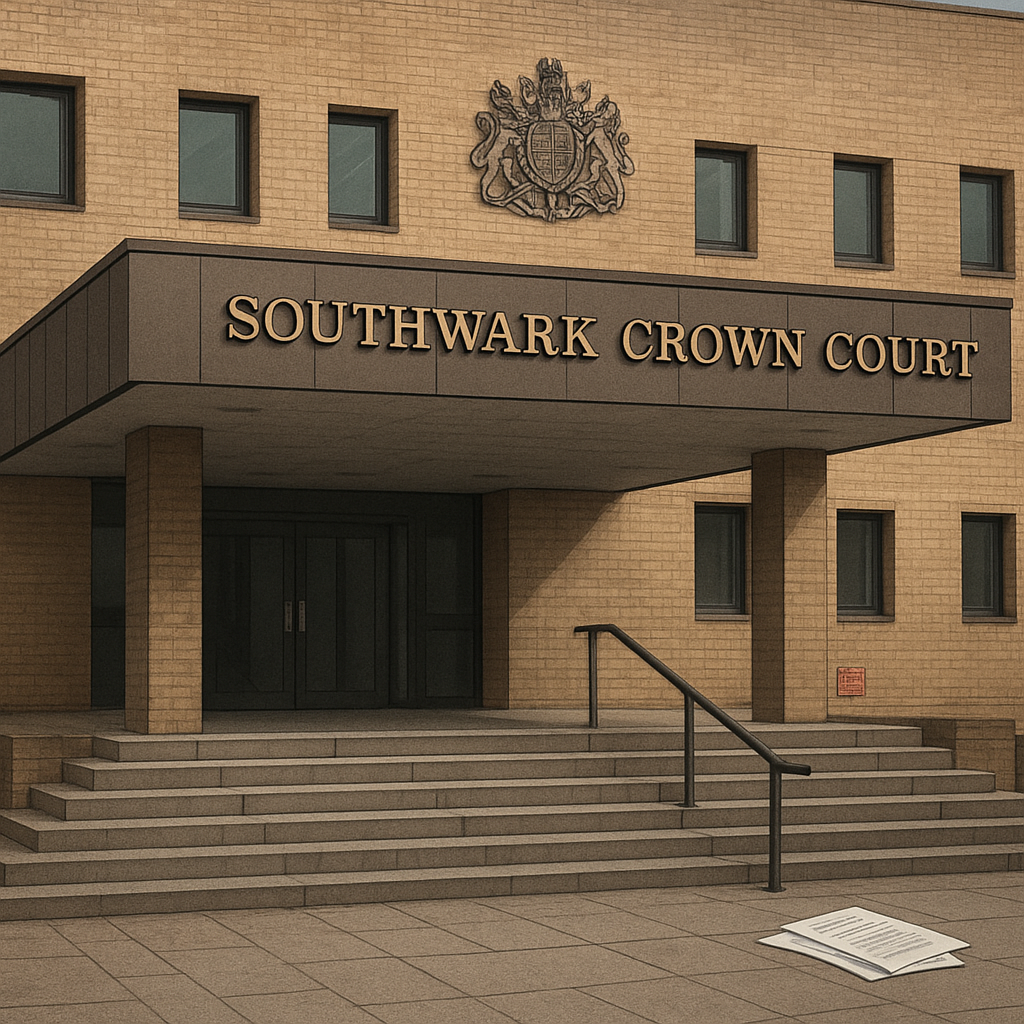
The case was heard at Southwark Crown Court in south London. A jury of eight men and four women found Brand guilty last week. The convictions relate to incidents involving women at a London bar, a London radio station and Brand’s west London home. The court heard that the conduct took place over several years, with the rape occurring in 2009.
The jury found Brand guilty of groping a woman’s breasts at a London bar in 2004. It also convicted him of sexual assaults involving a woman at a London radio station in 2004 and 2005. The rape conviction concerns an attack on a woman at Brand’s home in west London in 2009. The accounts of the verdict and sentencing did not identify the women by name, and this article does not do so.
The case involved allegations by six women dating from 1999 to 2009. That span describes the allegations brought into the case; it does not mean the jury found every allegation proven. The verdicts were specific to the counts put before it. Brand was convicted on one count of rape and three counts of sexual assault, while the jury found him not guilty of two further rape charges and one charge of attempted indecent assault.
That distinction matters. A guilty verdict establishes criminal responsibility for the offense proved to the jury’s satisfaction. An acquittal means the prosecution did not establish that charge to the jury’s satisfaction; it is not a finding of guilt. The convictions and acquittals should therefore be described separately, rather than treating every allegation as if it had the same legal outcome.
Judge Joel Bennathan described Brand as a “sexual predator” during sentencing and said he had shown “staggering arrogance.” The judge said Brand appeared to believe that “fame meant you could act how you liked, when you liked.” Those were the judge’s comments about the offenses and Brand’s conduct as addressed in court. They were part of the sentencing remarks, not a separate verdict on allegations outside the case.
Before the sentence was announced, the court heard victim impact statements. The prosecutor read three statements. A fourth was read aloud by one of the women, who was shielded from view by a screen, with the judge able to see her. Her statement described years of shock and turmoil and said she had felt traumatised and had lost respect for herself. She recalled thinking she was “damaged goods” and worrying that ordinary behavior could be misread as sending the wrong signals.
One of the statements read by the prosecutor described Brand as a “sexual predator who has no remorse” and expressed the hope that he would not be allowed to hurt other women. The woman who was raped in 2009 said she had struggled to sleep, eat and cope with her emotions after the attack. Impact statements give people affected by an offense an opportunity to describe its consequences to the court. They do not determine guilt; the jury had already returned its verdicts.
Legal context and sentence
Rape and sexual assault are separate offenses in the law of England and Wales. The Sexual Offences Act 2003 sets out the legal definition of rape, including the requirements relating to penetration, consent and a reasonable belief in consent. The Act also defines sexual assault. The Crown Prosecution Service’s overview of sexual offences explains the broad legal framework, while the relevant provisions are set out in sections on rape and sexual assault of the Act.
Those legal definitions are not a substitute for the jury’s assessment of the evidence in a particular trial. In this case, jurors considered each charge and reached different results on different counts. The convictions show that the jury was sure of Brand’s guilt on the rape and sexual-assault charges on which it convicted him. The acquittals show that it did not reach that conclusion on the other charges. The public account of the case does not set out the jury’s private deliberations, and no inference about those discussions should be drawn.
The sentence consists of nine years for rape and 18 months for the sexual assaults, a combined term of 10 years and six months. The Sentencing Council’s rape guideline provides general guidance for courts in England and Wales. Sentencing depends on the offense and the circumstances considered by the judge; the term imposed in this case should not be treated as a standard sentence for every rape or sexual-assault conviction.
The reported expectation is that Brand will spend at least seven years in prison, with the remainder of his sentence subject to substantial restrictions, including electronic monitoring. The account of the sentence did not set out a precise release date or the full conditions that will apply. Those details should not be assumed from the length of the overall term alone.
Brand was already in custody before Monday’s sentencing. After the guilty verdicts, the judge refused his request for bail so he could spend time with his wife and children before the hearing. Judge Bennathan acknowledged the hardship that the decision would cause the children, but said it was caused by their father’s serious criminal offending. When bail was denied, Brand said, “I’m good, I’m good, I’m good,” before being led away.
The defense addressed the rape conviction at sentencing. Ian Winter KC told the court that Brand was a “fundamentally different person today” from the man he had been 17 years earlier. He described the rape as a “momentary total failure to respect [the woman’s] consent.” That was the defense lawyer’s characterization during the sentencing hearing. The sentence, in contrast, was imposed by the judge after conviction by the jury.
The reported account does not describe an appeal or an appeal ruling. A sentence announcement should not be confused with any later appeal process: if an appeal is brought, it is a separate legal step, and its outcome would need to be reported on its own terms. Nothing in the available account changes the fact that the jury’s verdicts and the sentence are the decisions recorded by the court in this proceeding.
Law enforcement and court response
The court’s response unfolded over several days. Following the verdicts, Brand was kept in custody after the judge rejected his bail application. The refusal meant that he remained detained between conviction and sentencing rather than being released temporarily to his family. At the sentencing hearing, the judge explained the decision in terms of the seriousness of the offenses, while acknowledging its effect on Brand’s children.
The sentencing remarks addressed both the gravity of the convictions and the judge’s view of Brand’s attitude. Bennathan’s comments about arrogance and fame formed part of the court’s explanation of the case. They also underline that a defendant’s public profile does not alter the legal test jurors must apply. The case was decided on the evidence and the charges before the court, not on Brand’s former standing as a television personality or actor.
The impact statements brought the personal effects of the offenses into the sentencing hearing. The woman who read her own statement did so from behind a screen. The other statements were read by the prosecutor, including the account from the woman raped in 2009. Their words described effects on self-worth, sleep, eating and emotional wellbeing. The statements were presented to the court as accounts of harm; the sentences were then imposed by the judge.

Separately, the BBC reported that London’s Metropolitan Police were investigating additional rape allegations made by two women. One woman was 16 at the time of the alleged incident. The allegations are separate from the convictions and acquittals decided by the jury. The reported information does not say that Brand has been charged in connection with either of these additional allegations, and they must not be described as proven offenses.
The head of the Metropolitan Police said Friday that he “wouldn’t be surprised” if more women came forward. That comment reflects an expectation that further reports might be made; it is not evidence that additional allegations have been substantiated. Any new complaint would need to be assessed and investigated on its own facts. The current status of those inquiries beyond the reported investigation was not set out.
This distinction between a conviction and a live investigation is essential to fair reporting. A jury has reached verdicts on the charges at trial. Police work on other allegations is a separate process, and an investigation does not itself establish guilt. If authorities announce charges or a court makes a decision in those matters, the development should be reported separately and with the same care about what has and has not been proved.
Community and policy implications
The case has drawn attention to allegations that span a decade and to the different ways they have moved through the justice system: some charges resulted in convictions, others in acquittals, and separate allegations remain under investigation. Those different outcomes are not contradictory. They reflect the requirement that each charge be considered on its own evidence and legal elements.
Historic allegations can present practical challenges for investigators and prosecutors. The passage of time may make records harder to locate and memories more difficult to test, while people who report sexual violence may describe reasons they did not come forward earlier. Neither delay nor a person’s public profile decides a criminal case. The task of the court is to assess admissible evidence and apply the law to each charge. The fact that allegations in this case covered years should not be turned into a general assumption about the truth of any untested claim.
The judge’s reference to fame and perceived entitlement also speaks to a broader public concern: status should not confer immunity from investigation or prosecution. At the same time, public attention to a prominent defendant makes careful language especially important. The trial’s verdicts establish guilt on the counts that resulted in convictions; they do not resolve allegations that were not proven at trial or that remain under investigation.
The statements read at sentencing also show why the court gives those affected a chance to explain the consequences of an offense. The women described emotional distress and changes to their sense of safety and self-worth. Their experiences are not interchangeable, and the statements should not be reduced to a single account of how people respond to sexual violence. They were individual statements made to the judge in the context of sentencing after the jury had determined guilt on the relevant counts.
The case will also renew scrutiny of how institutions respond when allegations concern a person who has held influential positions in entertainment and broadcasting. The reported convictions concern conduct at a bar, a radio station and a private home. The fact that one incident was linked to a workplace setting may prompt questions about how reports are received and acted upon, but the court account does not establish what any employer or broadcaster knew at the time. Claims about institutional knowledge require their own evidence.
For the public, the clearest account is the one that keeps the legal outcomes distinct: Brand has been sentenced for four offenses; he was acquitted on three other charges; police are investigating two further allegations, neither of which was reported as having led to a charge. This precision respects the jury’s work, the people who gave statements, and the fairness owed to anyone facing an unproven allegation.
Frequently Asked Questions
What sentence did Russell Brand receive?
Brand received a total sentence of 10 years and six months. The judge imposed nine years for rape and a further 18 months for the sexual assaults.
What was Brand convicted of?
A Southwark Crown Court jury convicted him on one count of rape and three counts of sexual assault. The convictions concern incidents in 2004, 2005 and 2009, including the rape at his west London home in 2009.
What charges did the jury acquit him of?
The jury acquitted Brand on two counts of rape and one charge of attempted indecent assault. Those acquittals are separate from the four guilty verdicts.
Are police investigating other allegations?
Yes. The Metropolitan Police were reported to be investigating separate rape allegations made by two women, one of whom was 16 at the time of the alleged incident. The report did not say that Brand had been charged in that investigation. The allegations remain unproven.
How long is Brand expected to spend in prison?
Reporting said he is expected to serve at least seven years in prison, with the remainder of the sentence subject to restrictions that may include electronic monitoring. A precise release date and full conditions were not reported.
The court has imposed a substantial prison term for the offenses the jury found proved. What happens in any separate police inquiry will depend on its own evidence and decisions by prosecutors and courts; it should not be folded into the verdicts already delivered.