Rex Ryan Charged After Nashville Pickup Truck Incident Involving Two Pedestrians
Former NFL head coach Rex Ryan was charged with six offenses after a pickup truck he was driving allegedly struck two pedestrians in downtown Nashville, Tennessee, shortly before midnight Thursday. Police said the pedestrians had a walk signal and suffered minor injuries. Ryan surrendered for booking Wednesday morning, according to police; his attorneys said he was released without having to post bond.
Key Takeaways
- Police say two pedestrians were crossing Broadway with a walk signal when Ryan’s truck ran over their feet and struck one person in the leg.
- Ryan faces two counts each of leaving the scene of an accident, failing to give information or render aid, and failing to obey a traffic control signal.
- His attorneys described the charges as misdemeanors and said he surrendered as soon as he learned of them.
- The available account does not report a court date, a plea, or a resolution of the case. The charges are allegations, not findings of guilt.
What happened
The incident took place shortly before midnight Thursday, as Ryan was making a right turn onto Broadway, the Nashville police news release says. The two pedestrians told officers they were crossing with a walk signal. According to the release, the truck ran over their feet and hit one of them in the leg. Police described the injuries as minor. The release does not identify the pedestrians, describe their treatment, or provide further medical details.
The pedestrians told police that the truck continued for a short distance before stopping at a red light. They said they flagged down the driver. According to the police account, Ryan got out of the vehicle, argued with them, returned to the truck and drove away. The pedestrians photographed the truck’s license plate and Ryan, police said. The public account does not say how long the exchange lasted or what was said during it.
Those details are allegations described by police, not a complete reconstruction of the incident. The account does not state how the vehicle’s turn began, what signal applied to the truck at that moment, or how the pedestrians and driver first became aware of the contact. It also does not say whether other people witnessed the incident or whether investigators have obtained video from nearby businesses or traffic cameras. Those details may matter to a final account, but they should not be assumed before investigators or a court establish them.
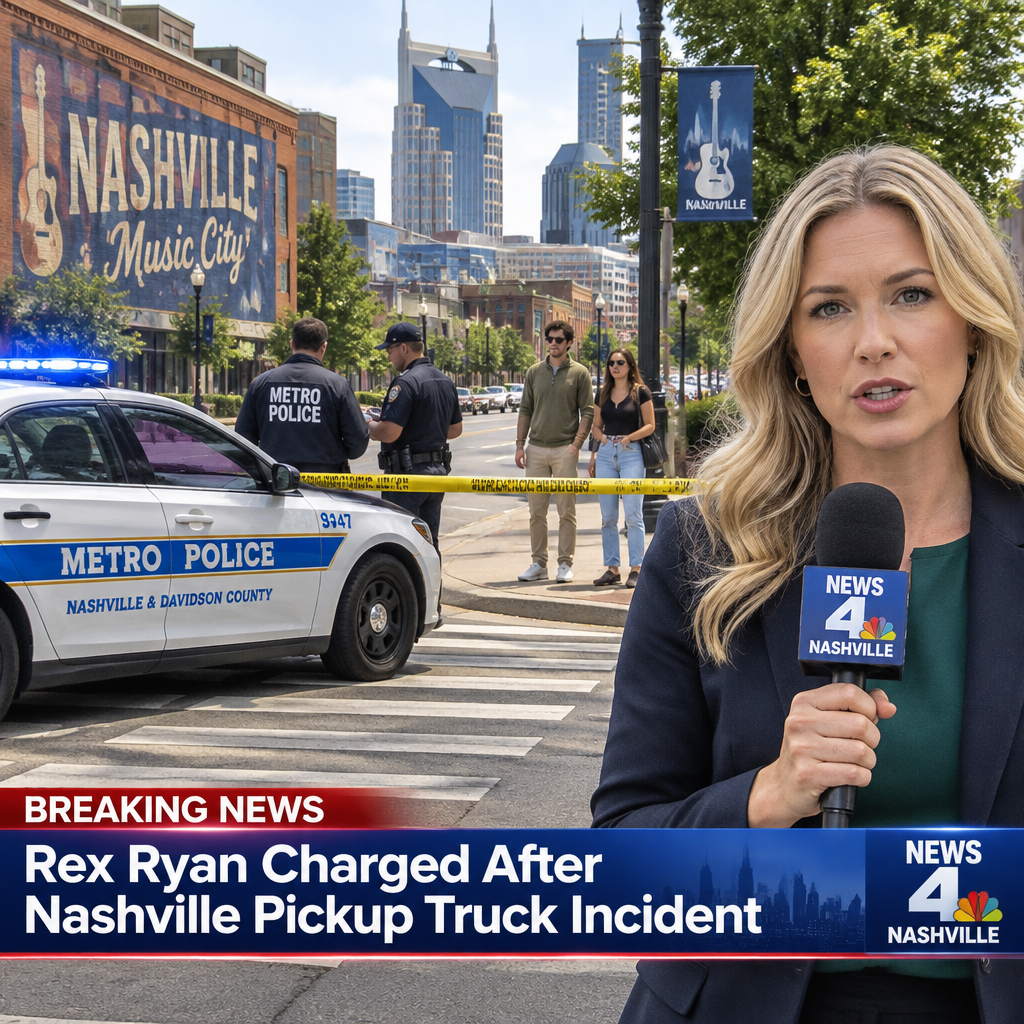
Police said Ryan was charged with two counts of leaving the scene of an accident, two counts of failure to give information or render aid, and two counts of failure to obey a traffic control signal. The charge list contains six counts in all. The release does not explain why each offense was charged twice or set out the specific allegation connected to each count. The charging documents, if made public, would be needed to clarify the authorities’ theory.
Ryan, 63, is an ESPN NFL analyst. ESPN said it was aware of the matter and in contact with him. His attorneys, David and Ben Raybin, said he turned himself in as soon as he learned of the charges and would continue cooperating with law enforcement. They also said the case was in its early stages and that they had limited information about the allegations. No response from the pedestrians is included in the police account.
Ryan coached the New York Jets for six seasons, from 2009 through 2014. The team dismissed him after a 4-12 season. He coached the Buffalo Bills for two seasons, from 2015 through 2016, before moving into broadcast work. That professional history explains his public profile, but it does not determine the evidence or legal questions in the Nashville case.
Legal context and charges
The allegations concern three kinds of conduct: leaving the scene, failing to provide information or render aid, and disobeying a traffic control signal. They are listed as separate offenses in the police account. Tennessee’s motor-vehicle laws address drivers’ duties after crashes and obedience to traffic-control devices; the applicable provisions can be reviewed in the Tennessee code’s motor-vehicle laws. The particular statute cited for each count matters. The police account does not provide those citations, so it is not possible to assess the precise elements or potential penalties from the count names alone.
Ryan’s attorneys described the charges as misdemeanors. That characterization comes from the defense statement; the account does not identify the statutory classification for each count. Nor does it report a prosecutor’s explanation of the charges or reproduce a charging instrument. The distinction matters because the title of an offense, the statute cited and the facts alleged in a court filing together define what the state must prove. A general description of a charge cannot substitute for those details.
The two counts for each type of offense may relate separately to the two pedestrians, but the police release does not spell out the count-by-count basis. It would be premature to treat that explanation as confirmed. The formal charging documents, and later court proceedings, would show whether the counts are tied to individual pedestrians, particular actions or another legal theory.
At this stage, the charge list does not establish that Ryan committed any offense. A criminal allegation must be tested through the legal process, and Ryan is presumed innocent unless proved guilty. For each count, the prosecution would have to establish the elements required by the applicable Tennessee statute. Which facts are disputed, what evidence will be used and whether the case proceeds to a hearing or trial have not been reported.
The reported walk signal is relevant to the circumstances, but it does not by itself resolve every question. The police account says the pedestrians had a walk signal; it does not describe the signal facing the truck, the timing of the turn, or the positions of the people and vehicle. Those facts could be important to the traffic-signal allegation and to the broader account of the collision. They should not be filled in by inference from the brief release.
The allegations about what happened after the contact raise a separate set of factual questions. Police say the truck continued, stopped at a red light, and then left after the pedestrians approached the driver. Investigators and, if necessary, a court would need to assess what happened and what each participant could observe. The release does not report Ryan’s account of the event, and his attorneys said they had limited information at that point. The public should distinguish the police description from a finding made after evidence is tested.
The distinction between a criminal case and a traffic-safety discussion is also important. A walk signal and a reported injury make pedestrian safety central to the incident, but neither the seriousness of a public concern nor the prominence of a person accused can replace proof of a charge. The relevant legal questions are the ones set by Tennessee law and the specific allegations filed, not assumptions about intent or responsibility.
Law enforcement and court response
Police said Ryan surrendered for booking Wednesday morning. His attorneys said he did so as soon as he learned of the charges and that he was released without being required to post bond. Those statements describe the initial booking and release; they do not resolve the allegations. Release without bond is a procedural outcome, not a finding about guilt or innocence.
The police account does not report a court date, a plea, a judge’s ruling or the identity of the prosecutor handling the case. It also does not describe a charging hearing or say whether Ryan has entered a formal response in court. The Tennessee courts’ official website provides information about the state’s court system, but the next steps in this particular case cannot be confirmed from the details reported so far.
The account identifies two pieces of information the pedestrians said they documented: the truck’s license plate and a photograph of Ryan. Those details could help investigators check the vehicle and the driver’s identity. The release does not say whether police reviewed those images, obtained additional photographs, interviewed other witnesses or collected video. It does not identify the truck’s owner or provide a police report number. Such evidence should be described as unconfirmed unless authorities or court records make it public.
In a case involving a reported pedestrian collision, evidence might include witness accounts, photographs, the timing and sequence of traffic signals, video, and physical information about the vehicle. That is a description of possible investigative material, not a claim that police have collected any particular item. The officers’ release gives only a short account. It does not disclose the full investigation file or indicate whether the evidence is disputed.

The public statement from Ryan’s attorneys is limited. They said he would cooperate and noted that the matter was at an early stage, when they had limited information about the allegations. ESPN, meanwhile, said it was aware and in touch with Ryan. Neither statement supplies an account of the turn or the alleged exchange with the pedestrians. It is therefore not possible to draw conclusions about the evidence from those responses.
The Nashville Police Department publishes public information through its news and announcements page. Any later police statement or court filing could add detail, but the account available here should be read on its own terms. In particular, the existence of six charges should not be mistaken for six separate collisions or for a final determination of responsibility.
Community and policy implications
The police account puts a familiar safety issue at the center of the case: a vehicle turning across a pedestrian crossing. The reported walk signal makes the signal sequence especially relevant. Yet the release is too brief to support conclusions about the design of the intersection, the driver’s view, the speed of the truck or the precise movement of the pedestrians. Those questions require evidence, not speculation.
For people walking, an intersection can involve several streams of movement at once: vehicles turning, people crossing and traffic responding to changing signals. A collision can occur in that short interval, which is why turning drivers need to watch for people in the crossing and why pedestrians’ signal status matters. The National Highway Traffic Safety Administration’s pedestrian-safety guidance offers general safety information. It does not establish what happened in this particular incident.
The allegations about what followed also speak to the importance of reporting a crash. When a driver leaves before identities and information are exchanged, police may have to rely on witness descriptions, vehicle details and other available evidence to identify the people involved. Here, the pedestrians told police they photographed the plate and the driver. The release does not say whether those photographs were the only evidence that led to Ryan’s identification, so their role in the investigation should not be overstated.
There is no reported allegation in the account that Ryan was impaired, speeding or acting intentionally. The absence of those allegations in a short release is not proof about what investigators may or may not have considered; it is a reason not to add claims that authorities have not reported. Precision is particularly important when charges are pending and a person’s public profile can draw attention beyond the evidence disclosed.
Ryan’s status as a former coach and current analyst is relevant to why the case is receiving public notice. It is not evidence of what occurred. The same principles apply to a well-known defendant as to anyone else: authorities should explain the basis for charges, the defense should have an opportunity to respond, and conclusions should follow the legal process. A public employer’s awareness of an incident is separate from a court’s assessment of criminal liability.
The case also shows why an early account should be treated as provisional. Police releases often summarize allegations and key investigative facts, but they are not a full record of witness testimony or a final ruling. A fuller account could emerge through court filings, statements by the parties or further police information. Until then, the central known facts remain the reported contact with two pedestrians, the six charges and Ryan’s surrender for booking. The missing details are not a license to guess.
Frequently Asked Questions
What is Rex Ryan accused of?
Police said Ryan faces two counts each of leaving the scene of an accident, failure to give information or render aid, and failure to obey a traffic control signal. His attorneys described the charges as misdemeanors. The account does not identify the statute for each count.
Were the pedestrians seriously injured?
Police described both injuries as minor. The release says the truck ran over the pedestrians’ feet and struck one person in the leg. It does not provide additional medical information.
Did Ryan turn himself in?
Yes. Police said Ryan surrendered for booking Wednesday morning. His attorneys said he did so as soon as he learned of the charges and was released without being required to post bond.
Has Ryan been found guilty?
No finding of guilt is reported. The charges are allegations, and the available account does not report a plea, a court ruling or a resolution of the case.
What happens next?
A court date or other next step has not been reported in the account. The specific charges, evidence and schedule would need to be confirmed through court records or later statements from authorities or the parties.
The next meaningful developments will be the details that can be verified: the formal charges, the evidence and any response in court. Until those emerge, the police account sets out serious allegations, while the presumption of innocence remains in force.