Police say one of the nine women found dead may have been killed in connection with a possible love triangle, a theory that has sharpened public fear while...
Police Link One Woman’s Death to a Possible Love Triangle as Nine Murders Fuel Fear and a Wider Investigation
Police say one of the nine women found dead may have been killed in connection with a possible love triangle, a theory that has sharpened public fear while investigators work to determine whether a single offender, multiple offenders, or an organized pattern of violence is behind the deaths.
Key Takeaways- Nine women have been found dead, prompting a major homicide investigation.
- Police say one death may be tied to a possible love triangle.
- Investigators have not publicly ruled out a serial offender or multiple suspects.
- The case has raised urgent questions about victim safety, police coordination, and how quickly authorities can identify a pattern of killings.
What happened
The discovery of nine bodies has sent shock waves through the affected community and turned a string of deaths into a high-priority criminal investigation. Authorities have not said that all nine victims were killed by the same person, but the scale of the case has led police to treat it as potentially connected until evidence proves otherwise. The public statement that one woman’s death may involve a love triangle adds a separate layer to the inquiry, suggesting that at least one killing could stem from a personal relationship dispute rather than a broader pattern of predatory violence.
That distinction matters. In homicide investigations, a relationship-based motive can change the early direction of the case. Detectives look closely at phones, messages, travel records, financial disputes, and witness statements to determine whether a victim was targeted by a partner, former partner, or a romantic rival. But when multiple women are found dead in the same period, police must also consider the possibility that the motive in one case has nothing to do with the motive in another.
Authorities have not publicly identified a suspect in the killings. That leaves investigators with a difficult problem: they must sort a potentially broad set of deaths into separate or linked cases while pressure mounts from grieving families and a fearful public. The risk in these moments is obvious. If cases are assumed to be connected too early, detectives may miss evidence that points to different perpetrators. If they are treated as unrelated, a serial pattern could be overlooked.
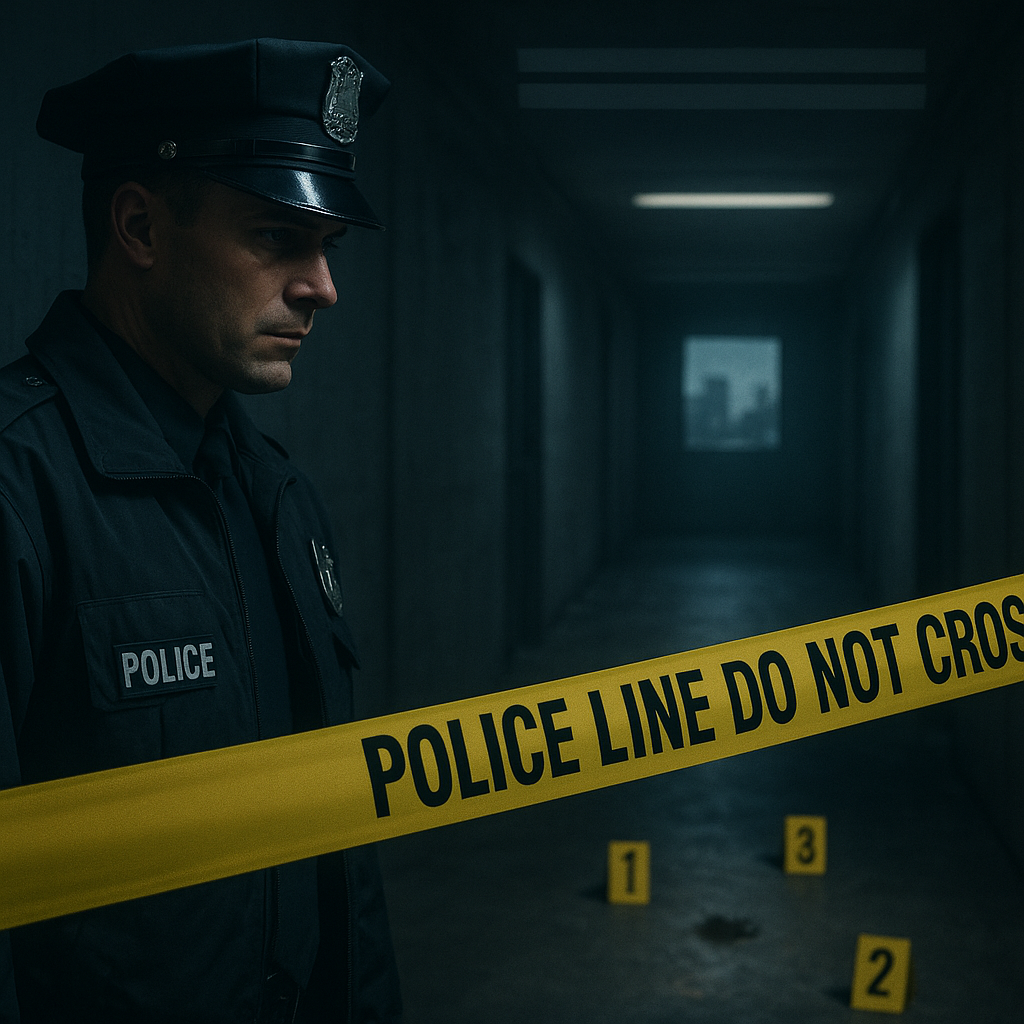
This is the point at which homicide work becomes both forensic and logistical. Police need to preserve crime scenes, trace the last known movements of each victim, identify common contacts, and compare the manner of death in each case. Forensic pathologists, digital analysts, and crime-scene specialists often work in parallel. The speed of the investigation can shape public confidence just as much as the outcome itself.
Local fear has also been amplified by uncertainty. People living in the area want to know whether the danger is ongoing, whether more victims could be found, and whether the killer may still be at large. As with other major homicide investigations, community members are often left with more questions than answers in the early days. For a broader look at how detectives build complex homicide cases, see related coverage in our Investigations archive, our Courts section, and our Law Enforcement reporting.
Legal context and charges or proceedings
If police identify a suspect, prosecutors will need to decide whether to file charges in one case first or wait until they can connect multiple killings through evidence. That decision often depends on several factors: the strength of the forensic evidence, the credibility of witness statements, the risk that a suspect may flee, and whether the cases involve overlapping facts. In a multi-victim investigation, prosecutors also have to consider whether they can prove a common scheme or pattern, which can be important at trial and during sentencing.
A love-triangle theory, by itself, is not evidence. It is a lead. In court, prosecutors would need to establish motive through admissible facts, not speculation. That could include text messages, social media activity, prior threats, stalking behavior, or testimony showing a romantic dispute escalated into violence. If the theory is wrong, or if the death is unrelated to any relationship dispute, prosecutors may abandon it entirely.
When a case involves several deaths, charging decisions may also be staged. Police may arrest a suspect in connection with one body while continuing to investigate links to the others. That approach can help prevent evidence from going stale and can protect the integrity of an active case. But it also raises the stakes for prosecutors, who must avoid overcharging before they have a clear factual basis.
In many jurisdictions, murder charges may differ depending on the degree of planning, cruelty, and number of victims. If investigators eventually prove that one person killed multiple women, the case could involve charges for multiple counts of homicide and, depending on local law, aggravating factors such as concealment of evidence or kidnapping. If the killings are not linked, the legal picture becomes more fragmented, with each death potentially producing a separate file, separate evidence review, and separate trial strategy.
The defense side would likely challenge any effort to connect the cases without strong physical evidence. Counsel may argue that investigators focused too quickly on a theory of serial violence or, conversely, that police overlooked a domestic or personal motive because they assumed the deaths were part of a pattern. Trials involving multiple victims can become legally complex, especially when prosecutors want to introduce evidence from one death to help explain another. Courts often have to decide whether such evidence is relevant or unfairly prejudicial.
That is one reason early case framing matters. Once public officials speak of a possible serial killer, the phrase can shape media coverage, community expectations, and sometimes even jury pools. Careful reporting and careful charging decisions both matter here. The law requires proof, not fear.
For readers tracking similar court and prosecution issues, our coverage of major homicide prosecutions, police investigations, and justice policy debates provides useful background on how these cases develop.
Law enforcement or court response
Police response in a case like this usually moves on two tracks: immediate public safety and long-term evidence collection. On the public safety side, investigators may increase patrols, issue warnings, and ask residents to report suspicious activity. They may also review missing-person reports, unsolved assaults, and prior complaints involving the women who were found dead. If the victims shared neighborhoods, workplaces, social circles, or transportation routes, detectives will map those connections carefully.
On the evidence side, law enforcement will be under pressure to show that no stone has been left unturned. That typically means:
- Reconstructing each victim’s last 48 to 72 hours
- Obtaining phone and location data
- Reviewing surveillance footage from roads, businesses, and residences
- Collecting DNA, fingerprints, and trace evidence
- Interviewing friends, partners, family members, and coworkers
- Checking for prior reports of harassment, abuse, or stalking
The challenge is that homicide cases can stall when witnesses are afraid, evidence is degraded, or key data has not been preserved quickly enough. That is especially true if some victims were found after a significant delay. In cases with multiple deaths, investigators may also rely on pattern evidence: similar injuries, shared disposal sites, matching forensic signatures, or overlapping suspect behavior.

A court response may not come immediately, but judges eventually become central to the process. If a suspect is arrested, the first hearings will usually involve bail, probable cause, and scheduling. In serious homicide cases, prosecutors often seek detention before trial, arguing that the severity of the charges and the risk to the community justify holding the accused without release. Defense attorneys, meanwhile, may challenge the sufficiency of the evidence and the reliability of early witness accounts.
If a grand jury is used, prosecutors may present evidence in sealed proceedings before filing indictments. That can be especially important when the case is still unfolding and investigators do not want to compromise future arrests. If the case goes to trial, a judge may later rule on whether to allow multiple counts to be tried together, whether prior bad acts are admissible, and how much of the relationship evidence tied to the possible love triangle can be shown to jurors.
In situations like this, agencies often coordinate across departments. Local police may work with regional homicide units, forensic laboratories, prosecutors, and sometimes state or national investigative bodies if the case spans multiple jurisdictions. That coordination can determine whether the investigation moves quickly or gets bogged down by communication failures.
Public confidence can hinge on how openly authorities explain the process. Families of victims usually want updates, but investigators may withhold key details to avoid compromising the case. That tension is familiar in high-profile homicide investigations. It also appears in public discussions about policing and accountability, which is why related reporting in our Civil Rights coverage and Prisons reporting can help readers understand the broader system in which these cases unfold.
Community and policy implications
Nine deaths are not just a criminal matter. They are a public safety crisis. The reaction in the community will likely include anger, fear, mistrust, and demands for answers. People want to know whether the victims were vulnerable in ways the system failed to address, whether prior reports were missed, and whether more could have been done to stop the violence earlier.
When a case involves women as victims, public discussion often turns quickly to whether warning signs were ignored. That can include reports of stalking, domestic abuse, coercive control, or threats from former partners. If one death is linked to a possible love triangle, advocates may ask whether the relationship was already volatile and whether police had been told enough to intervene. That does not mean a preventive arrest was legally possible. But it does raise hard questions about risk assessment and follow-up.
Policy makers may also face pressure to review how homicide clusters are detected. Some police departments have stronger analytic capacity than others. Better data sharing across precincts and agencies can reveal patterns sooner. So can faster access to missing-person reports, forensic labs, and digital records. In many cities, the bottleneck is not willingness but staffing and resources.
There may also be broader questions about how violence against women is investigated and documented. Advocacy groups often argue that police should treat reports of stalking, threats, and domestic abuse as serious indicators of escalating harm. That is especially important when victims belong to communities that are already underserved by law enforcement or are less likely to be believed when they come forward. If this case proves to involve multiple offenders, or a serial pattern, it could intensify calls for earlier intervention protocols.
There is also a danger in the way the public talks about serial killers. Media attention can help generate tips, but it can also produce myths that obscure the facts. Not every cluster of deaths is a serial homicide, and not every relationship-related killing reflects the same offender profile. Accurate labeling matters because it shapes both police strategy and public understanding.
Some observers may demand immediate action and sweeping reforms. But the most effective changes are often narrower and more practical: better evidence preservation, faster interagency communication, stronger domestic violence follow-up, and clearer public updates during active investigations. Those steps will not resolve every case. They can, however, improve the odds that police identify patterns before more lives are lost.
For readers interested in how those reforms are debated, our Policy section tracks legislative changes and agency reforms, while our Crime coverage follows public safety developments and major arrests.
Frequently Asked Questions
What does it mean that police linked one death to a possible love triangle?
It means investigators are considering whether that particular killing may have stemmed from a personal relationship dispute, romantic rivalry, or jealousy. It is a theory, not proof.
Does that mean the other deaths are related?
Not necessarily. Police are still investigating whether the nine deaths are linked. One case could be personal, while others could involve different motives or suspects.
Have police named a suspect?
Based on the information available, no public suspect has been identified.
Why are investigators talking about a serial killer?
Because the discovery of nine bodies raises the possibility of a pattern of killings. Detectives must consider that possibility until the evidence rules it out.
What evidence will matter most?
Forensic evidence, digital records, witness statements, surveillance footage, and victim histories will all matter. In a case like this, investigators often need several types of evidence to show whether the deaths are connected.
Could police charge someone in just one death first?
Yes. Prosecutors sometimes file charges in one homicide before proving links to others. That can keep the investigation moving while the remaining cases are developed.
What happens next in the legal process?
If a suspect is arrested, the case may move through probable-cause hearings, bail arguments, grand jury proceedings, indictment, and eventually trial. If no suspect is identified, the investigation will continue under homicide review.
The central fact remains simple and troubling: nine women are dead, and police are still working to determine whether one of those deaths points to a personal dispute while the others reveal a wider pattern of violence. The public wants certainty, but investigators need evidence. In the days ahead, the strength of the forensic record, the credibility of witnesses, and the discipline of the investigation will matter far more than any theory offered too early.