Patrick Clancy is revisiting one of Massachusetts’ most painful criminal cases in a new 60 Minutes interview airing Sunday, more than two years after the...
Patrick Clancy Speaks Out After Lindsay Clancy’s Mistrial Leaves Questions About the Case
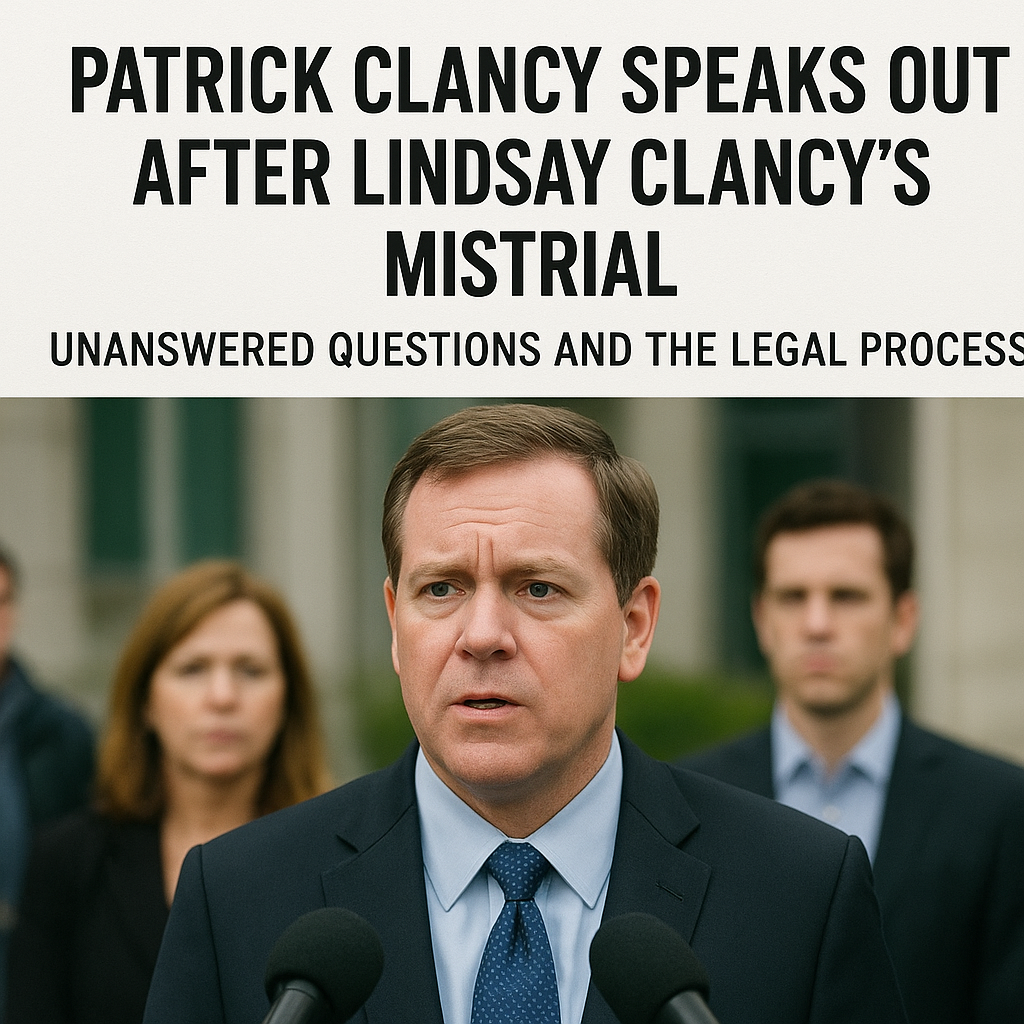
Patrick Clancy is revisiting one of Massachusetts’ most painful criminal cases in a new 60 Minutes interview airing Sunday, more than two years after the deaths of his three children and weeks after the murder trial of his estranged wife, Lindsay Clancy, ended without a verdict.
Key Takeaways:- Lindsay Clancy’s murder trial ended in a mistrial after jurors could not reach a unanimous verdict.
- Patrick Clancy is now speaking publicly about trauma, grief, and what comes next for his family.
- The case has renewed debate over mental health defenses, homicide prosecutions, and the limits of the criminal legal process.
- The interview may shape public understanding, but it does not resolve the legal questions left by the mistrial.
The interview puts a human face on a case that has already drawn national attention for its rare mix of family tragedy, contested mental health evidence, and the difficulty prosecutors face when a jury cannot agree. It also comes at a moment when the criminal justice system has been asked to explain what a mistrial means, what it does not mean, and whether the case will be tried again.
For readers following similar high-profile proceedings, related coverage has often centered on courtroom process and criminal case developments, as well as the broader policy questions raised by mental health and the justice system.
What happened
According to public reporting and statements from the family, the case stems from the deaths of the Clancys’ three young children in Duxbury, Massachusetts, in January 2023. Prosecutors alleged that Lindsay Clancy strangled the children before attempting to take her own life. She has pleaded not guilty and, through her defense, has raised mental health issues that became central to the case.
Patrick Clancy’s interview is notable not because it changes the facts of the underlying case, but because it brings forward the perspective of the surviving parent after a long and intensely public legal fight. He has largely kept a low profile while the case moved through pretrial proceedings and trial.
That silence is not unusual in cases like this. Families often avoid public comment while a homicide case is pending, both to preserve the integrity of proceedings and because the legal process can stretch over months or years. Once a trial ends without a verdict, however, the public conversation often shifts. Reporters, advocates, and viewers want to know what the surviving relatives think, how they are coping, and whether they expect the case to return to court.
The emotional weight of the interview is likely to overshadow the procedural details for many viewers. But the procedural details matter. A mistrial does not amount to an acquittal. It means the jury could not reach the unanimous decision required for a verdict. The case remains unresolved unless prosecutors choose to retry it, reach a plea agreement, or dismiss the charges.
In that respect, the Clancy case now joins a familiar category of criminal cases in which the courtroom outcome falls short of finality. The legal system can produce arrest, indictment, trial, and even days or weeks of testimony without delivering a conclusion that satisfies everyone involved.

Legal context and charges or proceedings
The Clancy case has turned on a difficult legal question: how should the justice system handle an alleged homicide in which the defendant’s mental state is itself a central dispute?
Massachusetts prosecutors charged Lindsay Clancy with murdering her three children. Her defense has argued that her mental condition at the time of the killings was critical to understanding what happened. That kind of defense does not excuse a charge by itself, but it can shape trial strategy, evidentiary disputes, and possible outcomes.
In high-profile homicide cases involving mental illness or post-partum psychiatric conditions, prosecutors usually focus on intent and causation. Defense attorneys often seek to show that a defendant lacked the capacity to form criminal intent or was suffering from a severe mental disorder that affected behavior. The result is often a battle of experts, records, and testimony about medical history.
A mistrial in such a case can reflect several possibilities. Jurors may disagree about the facts. They may agree that terrible acts occurred but not agree on the legal significance of the defendant’s mental condition. Or they may be unable to reconcile sympathy for the family with the burden of proof the state must meet.
The legal standard matters here. In a criminal homicide trial, the prosecution must prove guilt beyond a reasonable doubt. That is a demanding standard, and in cases involving psychiatric evidence it can be especially hard for jurors to apply. Even jurors who believe a defendant committed the acts may remain divided about whether the state has met its burden on intent, mental responsibility, or related issues.
This is one reason cases like Clancy’s often remain in the public conversation long after the trial itself stalls. A mistrial creates more questions than answers. It also leaves families in the painful position of waiting for the system to decide whether it will try again.
For background on how trial stages work, readers can review criminal court procedures, which help explain why jury deadlock can bring a case to a temporary halt rather than a final end.
Law enforcement or court response
The court response in a mistrial is straightforward in one sense and complicated in another. The judge acknowledges the deadlock and closes out the trial phase, but the broader case remains pending unless prosecutors make a new decision about how to proceed.
That decision often depends on several factors: the strength of the evidence, the likelihood of another hung jury, public interest, witness availability, and the emotional toll on the families involved. Prosecutors may also weigh whether a retrial would produce a different result or simply reopen the same evidence before another jury.
In cases like this, law enforcement’s role shifts after the arrest and investigation phase ends. Police and detectives are no longer gathering the kind of front-end evidence they collected at the outset. Instead, the lead actors are the district attorney’s office, defense counsel, court administrators, and, if a retrial is pursued, the same or revised expert witnesses.
The Clancy case also highlights the larger burden on courts when a case has intense public attention. Coverage by major outlets and the continuing interest in the family mean that nearly every procedural step is scrutinized.
That scrutiny can be difficult for courts to manage. Judges must keep proceedings focused on evidence and legal instructions, not public reaction. Yet the public rarely sees only the law. It sees grief, allegations, expert disagreement, and the visible strain on a family that has already suffered an irreversible loss.
The upcoming 60 Minutes interview with Patrick Clancy will likely intensify that attention, though it will not affect the legal standard the state must meet if the case is retried. It may, however, shape public expectations. Viewers often confuse emotional credibility with legal proof. A compelling interview can move public sympathy, but it cannot resolve evidentiary gaps.
That distinction matters in every criminal case, especially when the underlying facts are tragic and the legal issues are complex. A court is not a forum for healing. It is a forum for deciding whether the state has met its burden under the law.
Community and policy implications
The Clancy case has resonated far beyond one Massachusetts family because it sits at the intersection of homicide law, mental health policy, and family tragedy. It raises uncomfortable questions about how courts should respond when a defendant’s psychiatric history is central to the case and when the victims are children.
For many members of the public, the case is hard to classify. It is a murder prosecution, but also a mental health case. It is a courtroom proceeding, but also a story of grief, trauma, and family collapse. Those overlapping themes make the trial especially difficult to discuss without reducing it to slogans.
From a policy perspective, cases like this often prompt renewed interest in several issues:
- access to psychiatric care during pregnancy and postpartum periods;
- emergency intervention for families in crisis;
- the relationship between mental health treatment and criminal justice outcomes;
- and the challenge courts face when expert testimony dominates a homicide trial.
There is also a civil rights dimension, though it is easy to overlook. Criminal defendants have a right to a fair trial, including the chance to present mental health evidence. Families of victims also have a right to expect a process that is careful, orderly, and not driven by public pressure. Those rights can coexist, but not always comfortably.
Cases with strong emotional content often become policy proxies. Advocates may use them to argue for better psychiatric services. Others may use them to call for tougher prosecution of violent crime. Both reactions are common, and both can miss the more difficult truth: the justice system is often least satisfying when it confronts the most devastating human behavior.
That is why the mistrial matters so much. It signals not just one jury’s inability to agree, but the system’s limited capacity to give a clear answer in some cases. When a trial ends without a verdict, families are left in limbo and the public is left with competing narratives.
For readers interested in the policy side of such cases, our coverage of mental health and criminal justice policy explains why legislators and courts continue to struggle with the overlap between psychiatric illness and violent crime.
Frequently Asked Questions
What does a mistrial mean in the Clancy case?
A mistrial means the jury could not reach a unanimous verdict. It does not equal an acquittal or a conviction.
Can prosecutors try Lindsay Clancy again?
Yes. In most cases, prosecutors can choose to retry a defendant after a mistrial. The decision depends on the evidence, the legal strategy, and whether a second trial is likely to produce a different result.
Why is mental health so central to this case?
The defense has raised issues related to Lindsay Clancy’s mental state at the time of the killings. In homicide cases, mental health can affect questions of intent, responsibility, and the arguments presented to jurors.
Why is Patrick Clancy speaking out now?
The 60 Minutes interview gives Patrick Clancy a public platform after a long period of silence. It comes after the mistrial, when public attention to the case remains high and the legal future is still uncertain.
Does a public interview affect the legal case?
Usually not directly. It can shape public opinion, but it does not change the burden of proof or the rules that apply if the case returns to court.
The hardest part of cases like this is that legal resolution and human closure are not the same thing. A mistrial may reopen the docket, but it does nothing to restore what was lost. Patrick Clancy’s decision to speak publicly underscores that gap: the law can keep moving while grief remains unchanged.