A respected Oregon veterinarian has been accused of stalking and disguising himself before fatally shooting Kenny Fandrich, the husband of a former employee...
Oregon Veterinarian Accused of Stalking and Disguising Himself Before Killing Former Employee’s Husband
A respected Oregon veterinarian has been accused of stalking and disguising himself before fatally shooting Kenny Fandrich, the husband of a former employee, in a case investigators say was unraveled in large part by security camera footage.
Key Takeaways
- Investigators say surveillance video helped connect the suspect to the scene and timeline.
- The case centers on allegations of stalking, disguise, and murder, raising questions about planning and intent.
- Prosecutors are expected to rely on digital evidence, witness accounts, and forensic work as the case moves forward.
- The killing has also renewed attention on workplace retaliation, personal safety, and how police build homicide cases with video evidence.
What happened
According to investigators, the case began as a homicide investigation and quickly widened into something more complex: a possible pattern of surveillance, stalking, and premeditation. Dr. Steven Milner, a veterinarian with a strong professional reputation in Oregon, was accused of tracking and disguising himself before killing Kenny Fandrich, who was married to a former employee of Milner’s.
The central allegation is not only that Milner was present when Fandrich was killed, but that he allegedly took deliberate steps to avoid identification. That detail matters. In many homicide cases, evidence of disguise, route planning, or repeated contact before the attack can support an argument that the act was not impulsive but planned.
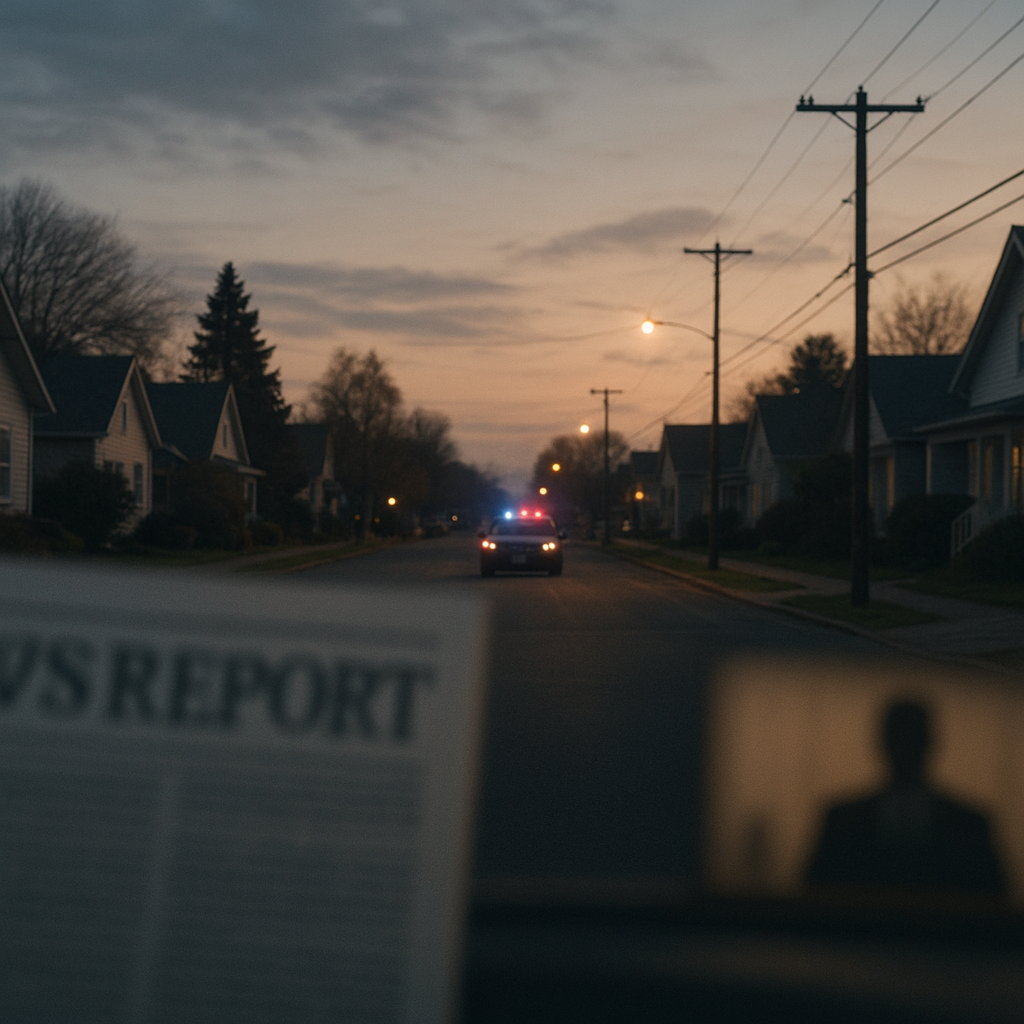
Detectives say security cameras became a major turning point. Video from the area helped investigators reconstruct where a suspect was seen, how he moved, and what clothing or appearance details might have been used to conceal identity. In modern homicide investigations, that kind of footage can be decisive. It can corroborate witness statements, narrow a suspect list, and show a timeline that phone records alone cannot provide.
The accusation has also carried an unsettling social component. Milner was known as a veterinarian, a professional role often associated with trust and public service. That background can intensify public reaction when a person with an established reputation is tied to a violent crime. But in court, reputation does not control the outcome. Evidence does.
The alleged victim, Kenny Fandrich, appears to have been connected to the case through his spouse’s earlier employment relationship with the accused. That connection may become important if prosecutors argue the killing was motivated by a conflict or grievance rooted in a prior professional relationship. If so, the case could raise questions about harassment, boundary violations, and whether warning signs were missed before the homicide.
Security video, witness statements, and any electronic communications will likely be central as the case proceeds. For readers following similar investigations, the role of cameras in this case is a reminder that many homicide cases are now built as much from digital breadcrumbs as from eyewitness testimony.
For more on how digital evidence shapes homicide investigations, see how police use surveillance footage in murder cases and what prosecutors need to prove premeditation.
Legal context and charges or proceedings
The legal significance of the allegations is straightforward: if prosecutors can show stalking, concealment, and a deliberate approach to the victim, they may argue the killing was premeditated rather than spontaneous. That distinction can affect everything from the charge itself to potential sentencing exposure.
In homicide cases, prosecutors generally look for proof that the accused formed intent before the killing. Evidence can include surveillance, travel patterns, disguise, prior threats, unwanted contact, or a history of fixation. If the state can establish that Milner tracked Fandrich or intentionally masked his identity, those facts may bolster an argument that the killing was planned.
Stalking allegations also matter because they can demonstrate a pattern of conduct. Even when stalking is charged separately, it often helps prosecutors explain motive and state of mind. In a case like this, that could mean showing escalating behavior before the homicide rather than treating the killing as a single isolated event.
Because the suspect is a medical professional, defense counsel may emphasize the presumption of innocence and challenge whether surveillance footage actually identifies the person shown on camera. That is a common point of dispute in cases built on video. Grainy images, partial views, masks, hats, and dark clothing can all create room for doubt. A defense may also scrutinize chain of custody, time stamps, and whether investigators interpreted the footage correctly.
The procedural posture will matter. If formal charges have been filed, the next steps may include arraignment, bail arguments, discovery disputes, and possible motions to suppress evidence. If the case is still in the investigative stage, law enforcement may continue to obtain search warrants for phones, vehicles, medical devices, home cameras, and cloud accounts. In serious cases, prosecutors and detectives often work in parallel before charging decisions are finalized.
Cases involving alleged disguise and stalking can also implicate a broader set of statutes depending on the facts and jurisdiction. Those may include unlawful use of a weapon, harassment, obstruction, tampering with evidence, or violating a protective order if one existed. The specific charges will depend on what investigators can prove beyond a reasonable doubt.
For broader context on criminal filings and court steps, readers may also find [the basics of homicide charging decisions](/courts/homicide-charging-decisions/) and [how prosecutors build circumstantial murder cases](/investigations/circumstantial-evidence-homicide/) useful.
Law enforcement or court response
Police work in this case appears to have relied heavily on the kind of evidence that increasingly shapes modern investigations: cameras, timestamps, location data, and corroborating witness accounts. Detectives often start with the most visible fact — a body, a scene, an emergency call — and then work backward through technology and human memory.
Security footage can do more than identify a suspect. It can map the sequence of events. Investigators may compare video from businesses, homes, roads, and parking areas to determine when the victim was last seen, where the suspect traveled, and whether the accused used a disguise or changed clothing. In cases with multiple camera angles, that footage can help establish whether a person returned to the scene, waited nearby, or followed the victim.
Prosecutors are likely to lean on that kind of reconstruction. Jurors often understand video more readily than abstract testimony. Still, a case built on surveillance is only as strong as its interpretation. Investigators must show not only that the defendant resembles the person in the video, but that the footage fits with other evidence such as cell-site records, vehicle data, witness observations, and physical evidence recovered from the scene or a search.
If the court has already become involved, judges may be asked to rule on evidence disputes early. Defense attorneys in homicide cases frequently challenge search warrants, the admissibility of digital evidence, and statements made by the accused. Those disputes can shape what reaches a jury.
There is also the question of public safety. When a suspect is alleged to have stalked the victim before the killing, law enforcement may view the case not simply as a homicide but as a possible escalation in a broader pattern of targeted harassment. That can affect how police communicate with the public and whether they ask others who knew the suspect or victim to come forward.
The investigative response in this case mirrors a larger trend in policing: surveillance video is no longer supplemental. In many violent-crime investigations, it is foundational. That is why agencies now devote considerable resources to collecting, storing, and synchronizing footage from private and public cameras. For more on that shift, see how detectives use digital evidence and why video analytics matter in violent crime probes.
Community and policy implications
This case is likely to resonate well beyond the courtroom because it touches several public concerns at once: violence, professional trust, workplace relationships, and the use of technology in policing. Residents in any community tend to react strongly when someone with a respected professional profile is accused of a violent crime. That reaction can be amplified when the case involves allegations of concealment or stalking.
For employers, the case may prompt a sober look at boundaries between workplace disputes and off-duty conduct. When a former employee is connected to a deadly incident involving a spouse, questions can arise about whether earlier tensions were reported, whether complaints were documented, and whether anyone felt safe enough to notify law enforcement or human resources. None of that proves criminal conduct on its own, but it can matter when investigators look for motive.
The public-policy questions go beyond one defendant. This case shows why stalking behavior is treated seriously in many jurisdictions. Stalking is often dismissed at first as persistent contact or unwanted attention, but it can be a precursor to severe violence. In that sense, the accusation against Milner is part of a much larger policy debate about early intervention, protective orders, and how quickly authorities should respond when patterns of fixation emerge.
It also highlights the growing role of private surveillance in public safety. Home cameras, storefront systems, and doorbell devices can provide crucial evidence. At the same time, heavy reliance on video raises concerns about privacy, selective access, and the uneven distribution of surveillance across neighborhoods. Communities with more cameras may produce stronger cases, while areas with fewer resources may leave investigators with less to work with.
On the civil-rights side, the case offers a reminder that technology does not replace scrutiny. Footage can be powerful, but it can also be misread. Courts must still insist on reliable identification, proper warrant procedures, and careful handling of evidence. The fact that a person is well known in the community cannot substitute for proof, and the fact that a camera captured movement does not automatically settle intent.
For readers interested in those broader questions, this case connects to ongoing reporting on [stalking laws and protective orders](/policy/stalking-laws-protective-orders/), [the use of private cameras in criminal investigations](/policy/private-surveillance-evidence/), and [how courts handle digital identification evidence](/courts/digital-id-evidence/).

There is also a human cost that can get lost when the focus stays on procedure. Fandrich’s death will be felt by family members, friends, and co-workers who are left trying to understand how a professional disagreement or personal conflict, if that is what the evidence shows, could end in homicide. The criminal process can answer legal questions. It rarely answers every emotional one.
Frequently Asked Questions
What is Dr. Steven Milner accused of?
He is accused of stalking, disguising himself, and killing Kenny Fandrich, the husband of a former employee.
Why are security cameras important in the case?
Investigators say surveillance footage helped them reconstruct the suspect’s movements, appearance, and timeline near the homicide.
Does the accused’s professional reputation matter in court?
Not as evidence of guilt or innocence. The case will turn on proof, including video, forensic evidence, and witness testimony.
What could prosecutors have to prove?
Depending on the charges, they may need to show identity, intent, premeditation, and a connection between the accused and the victim.
Why does stalking matter in a homicide case?
Stalking can help show motive, planning, and a pattern of conduct before the killing.
Cases like this tend to move in stages. First comes the public allegation, then the evidence review, then the courtroom testing. That process can be slow, but it is built to answer one question carefully: what can the state prove, and how convincingly?
If the evidence does show stalking, disguise, and pre-planning, the case may become a study in how modern homicide investigations are assembled from fragments of video, digital records, and witness accounts. If the defense undermines identification or intent, the same evidence may tell a very different story. Either way, the surveillance footage at the center of this investigation has already changed how the case is understood.