Officials Find No Evidence Linking Recent Outages to Cyberattacks
Top U.S. national security officials told a House committee they have found no evidence that a series of technology outages affecting airlines, banks, Microsoft services and National Security Agency communications systems were connected or caused by malicious cyberattacks. The officials said investigations and private-sector coordination are continuing, while lawmakers also pressed them about the cause of the NSA disruption and reports of possible Iranian plots against people in the United States.
What happened
The testimony came at a House Homeland Security Committee hearing held amid public concern about disruptions across several essential services. In the days surrounding the hearing, outages affected technology used by airlines and banks, Microsoft services and the NSA’s internal network. A nationwide Federal Aviation Administration ground stop on the preceding Friday caused major disruption at airports that continued into the weekend. The ground stop was described as only the second of its kind since Sept. 11, 2001.
The clustering of incidents drew attention because failures in multiple systems can raise the possibility of a shared cause. But timing alone does not establish that outages are connected. Mullin said the Department of Homeland Security had contacted private industry as officials reviewed the events. He told lawmakers, “We have seen nothing that would indicate that they are related.” Later, he said he was “98% confident” the outages were not the work of foreign adversaries, while acknowledging that he had “absolutely not” seen this many outages in such a short period.
Clayton said the intelligence community had reached a similar assessment after reviewing the incidents with government agencies and private-sector cybersecurity experts. He characterized them as separate service disruptions related to maintenance and technical changes, not a coordinated or state-sponsored attack. Raia said FBI cybersecurity specialists had been involved from the beginning and that the bureau had no indication of malicious cyber activity connected to the incidents. He said the FBI would continue working with private-sector partners as a precaution.
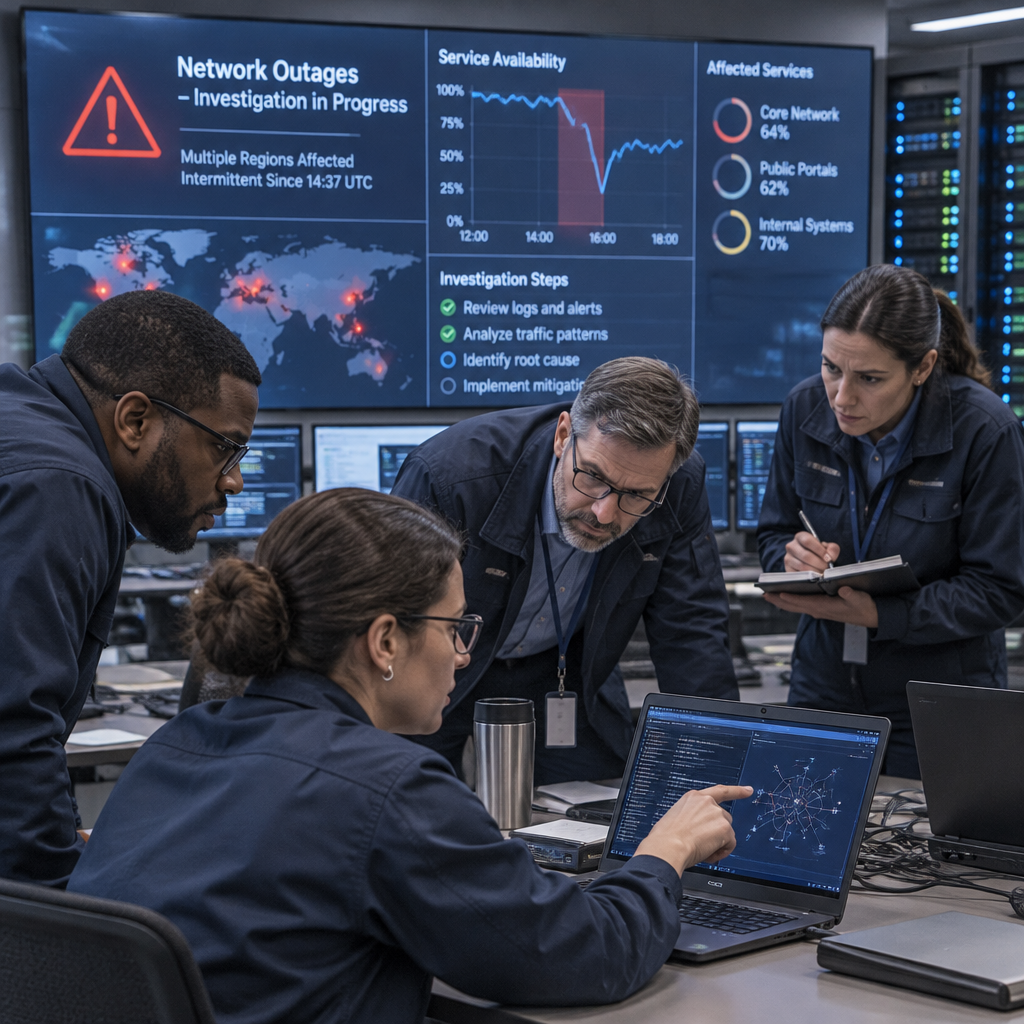
Officials gave a specific technical account of the FAA disruption. They said contractor L3Harris Technologies had carried out maintenance at a remote facility, replacing aging copper communications lines with fiber-optic connections. During the changeover, a router began flooding other routers, overloading the system and contributing to the ground stop. That explanation describes a failure during infrastructure work; it is distinct from a finding that an outside actor gained access to or deliberately disrupted the network.
Lawmakers focused separately on the NSA outage, which occurred on Monday. Rep. Dan Goldman, a New York Democrat, asked Clayton whether the disruption had resulted from internal software updates or other technical work. Clayton said officials had no indication that external threat actors caused it. He described routine maintenance practices such as software patches, system upgrades and hardware replacement, which can require systems to be taken offline and restarted.
Goldman pressed for a more direct answer about whether the cause was internal. Clayton did not provide a definitive public account of the NSA incident’s technical cause. He said the government had no evidence of outside interference; Goldman accused him of avoiding the question. That exchange left a distinction at the center of the hearing: an assessment that investigators have found no evidence of an external actor is not the same as a detailed explanation of what failed inside a system.
The officials did not present public technical reports for each outage, identify a common vulnerability, or disclose incident-by-incident forensic evidence. Their statements described the government’s assessment at that point in the investigation. That assessment may be reassuring, but it is not a guarantee that every event has been fully explained or that agencies will not revise their conclusions if new evidence emerges.
Legal context and proceedings
The hearing was an oversight session, not a criminal trial or a public charging announcement. Committee members questioned senior officials about agency assessments, preparedness and communications. No criminal charges related to the service outages were announced in the account of the hearing, and officials did not publicly identify an individual or organization as responsible for them.
A service outage, by itself, does not establish a cybercrime. Investigators generally have to determine what happened, whether someone deliberately accessed or interfered with a system, what evidence supports that conclusion and whether the conduct meets the elements of a particular offense. A maintenance error can cause serious operational harm without being a criminal act. Conversely, an outage initially attributed to a technical problem could warrant renewed scrutiny if forensic evidence later indicates unauthorized access. The public information given at the hearing did not resolve every technical question about the incidents.
That is why the language used by the officials matters. “No indication” and “no evidence” describe the results of an assessment so far; they do not establish that an attack was impossible. Mullin’s statement that he was “98% confident” was a description of his confidence, but the public testimony did not explain a statistical method or model behind that figure. The committee was not presented with an unclassified evidentiary record that would allow outsiders to independently test the assessment.
The Iran-related questions also concerned reported threats, not publicly confirmed criminal cases against people inside the country. Rep. Michael Guest, a Mississippi Republican, asked whether authorities were concerned about Iranian sleeper cells. Mullin said the possibility was a concern and that agencies were working to counter it. Clayton warned that online radicalization can influence people already in the United States. Raia cautioned that some intelligence reporting was “largely aspirational,” while saying it still merited serious attention.
Officials did not publicly confirm that Iranian-linked actors had operational plans to use a radiological dispersal device, commonly called a dirty bomb, or chemical weapons in the United States. Nor did they confirm that sleeper cells were preparing attacks. A dirty bomb is not a nuclear detonation; the term generally describes a device intended to spread radioactive material. The legal consequences of any alleged plot would depend on specific conduct and evidence, not on the label attached to a threat in public discussion. Federal law addresses certain weapons-of-mass-destruction offenses, including radiological weapons, but the hearing did not announce charges or establish that such conduct had occurred. See the text of 18 U.S.C. § 2332h.
How agencies and lawmakers responded
The three officials presented a common message about the outages: federal agencies were examining the disruptions, communicating with companies and had not found evidence of a coordinated hostile campaign. Raia said the FBI would continue to work with private-sector partners “in an abundance of caution.” The FBI’s public cyber-investigation guidance describes the bureau’s role in investigating cyber threats, but the hearing did not disclose what investigative steps or technical findings applied to each individual outage.
The Cybersecurity and Infrastructure Security Agency provides public information on cyber threats and incident response. That broader work is relevant because many critical services depend on systems operated by private companies, government agencies and contractors. The officials’ statements pointed to that interdependence, while leaving unanswered how much detail companies had shared with investigators and whether the public would receive a fuller technical account.
Goldman’s questions about the NSA were an example of the oversight problem. Lawmakers can ask agencies to explain whether an event resulted from internal work, outside interference or another cause. Agencies may be limited in what they can say publicly about sensitive systems, but a general statement that no external actor has been identified does not answer every question about system reliability. Clayton’s discussion of patches, upgrades and hardware replacement supplied examples of routine work, not a precise public cause for the outage.
The hearing also included scrutiny of Mullin’s conduct after the FAA ground stop. He had taken a government plane to a college football game one day after the disruption, while airports were still facing serious effects. Asked about the flight, Mullin said that not flying would have shown “distrust” in the nation’s airspace. The controversy was separate from the forensic inquiry into the outages, but it became part of the hearing’s broader test of public confidence and accountability during a transportation disruption.
Clayton raised a longer-term issue: the speed of computing and the capabilities of applications are increasing, he said, putting pressure on older government systems. He warned that technology once considered current can fall behind quickly. The observation did not identify the cause of the NSA outage, but it framed a continuing challenge for agencies that must maintain systems while updating them.
Community and policy implications
For travelers and customers, the immediate question is whether essential services will remain dependable. A sudden ground stop can strand passengers and disrupt airline operations well beyond the site where a technical failure began. Banking and software interruptions can likewise leave people unsure whether a delayed transaction, unavailable service or missed notification reflects a temporary fault or a security incident. Clear explanations help the public distinguish those possibilities without treating every disruption as evidence of an attack.
The hearing illustrates why that distinction is difficult. Several outages close together can look like a coordinated campaign, but technical systems fail for different reasons and at different points in their life cycle. Maintenance, software changes, hardware replacement and network congestion can all cause interruptions. At the same time, officials cannot rely on coincidence as a reason to stop investigating. Their task is to compare evidence across incidents and remain willing to revise an initial assessment.
The FAA account points to the importance of change management and resilience. Replacing old communications infrastructure may be necessary, yet a transition can create risks if a change at one facility affects connected equipment elsewhere. Agencies and contractors can reduce the consequences of a failure through testing, monitoring, backup capacity and clear procedures for reverting a change. The public testimony did not establish which safeguards were in place or whether any were inadequate in this case. Those are questions for a technical review, rather than conclusions that can be drawn from the outage alone. The FAA newsroom is a starting point for public agency updates, though a detailed post-incident account would be needed to explain the specific failure fully.
Clayton’s warning about aging government technology raises a related policy choice. Older systems may be difficult to maintain and less able to support new applications, but replacing them can itself introduce operational risk. Agencies need time, funding and skilled staff to test changes, protect systems during transitions and keep essential functions available. Modernization is not only a question of purchasing new equipment; it also involves careful planning, trained operators and an ability to restore service when a change goes wrong.
There is also a transparency challenge. Some information about national-security communications and ongoing investigations may be sensitive. Yet the government can often provide useful information without exposing operational details: what services were affected, how long they were disrupted, what broad cause has been established, whether investigators found signs of intrusion and what steps are being taken to prevent a repeat. The hearing showed that lawmakers wanted that kind of distinction, especially for the NSA disruption, while officials remained cautious about what they could say publicly.
The Iran-related warnings require equally careful communication. Clayton said threats had “dramatically increased,” and Raia said intelligence reporting should be taken seriously even when it is aspirational. Those statements convey concern, not confirmation that an attack is imminent or that a specific cell is operating in the country. Public agencies have a duty to warn about credible risks, but imprecise language can fuel fear and blur the line between intelligence leads and verified operational plans. Officials should make clear what they know, what remains uncertain and whether the public is being asked to take any specific action.
For Congress, a useful follow-up would be to seek a timeline for each outage, the broad technical cause where it has been established, and an explanation of how agencies compare separate incidents for signs of coordination. Members could also ask what information contractors must report, what redundancy exists for critical communications and how agencies test maintenance changes. Those questions do not presume a cyberattack; they focus on whether services can withstand faults and whether the government can explain disruptions accurately.
Frequently Asked Questions
Did officials say the outages were caused by a cyberattack?
No. Mullin, Clayton and Raia said they had found no evidence or indication that the outages were linked or caused by malicious cyber activity. They said investigations and coordination with private companies would continue.
What caused the FAA ground stop?
Officials said maintenance by FAA telecommunications contractor L3Harris Technologies involved replacing aging copper lines with fiber-optic connections. During the router changeover, one router flooded other routers and overloaded the system. The hearing did not provide a full public technical report.
Did officials explain what caused the NSA outage?
Not definitively in public. Clayton said there was no indication of external interference and described routine maintenance activities, but he did not give a specific technical cause. Rep. Dan Goldman challenged him to answer whether the cause was internal.
Did the hearing confirm Iranian sleeper cells or a dirty-bomb plot in the United States?
No. Mullin said potential sleeper cells were a concern, and officials discussed reports of Iranian-linked threats. They did not publicly confirm that sleeper cells were preparing attacks or that a radiological or chemical weapons plan was operational. Raia said some reporting was aspirational but should still be taken seriously.
What happens next?
The FBI and other agencies said they would continue reviewing the incidents and working with private-sector partners. Congress may continue oversight. The officials’ public statements reflect their assessment at the hearing, not a final technical report covering every outage.
Officials offered reassurance, but the hearing did not close every question. The most consequential next step is a clear account of what failed, what evidence supports the current assessment and how agencies and contractors will reduce the risk of another disruption. Separating technical faults from malicious acts is essential both for public trust and for sound investigations. That standard applies to the outages already under review and to the more serious threats officials said they are monitoring.