Nine people were shot and injured in Tucson, Arizona, early Sunday morning, and police say a suspected gunman was also shot and wounded during the response...
Nine Injured in Tucson Shooting as Police Wound Suspected Gunman
Nine people were shot and injured in Tucson, Arizona, early Sunday morning, and police say a suspected gunman was also shot and wounded during the response. The incident, unfolding in the early hours when streets were quieter and visibility lower, quickly became both a public safety emergency and an active criminal investigation.
Key Takeaways- Nine people were injured in an early-morning shooting in Tucson.
- Police say a suspected gunman was shot and wounded during the response.
- The case raises questions about scene security, witness accounts, and charging decisions.
- Investigators are expected to sort out who fired first, how many shots were exchanged, and whether more people were involved.
What happened
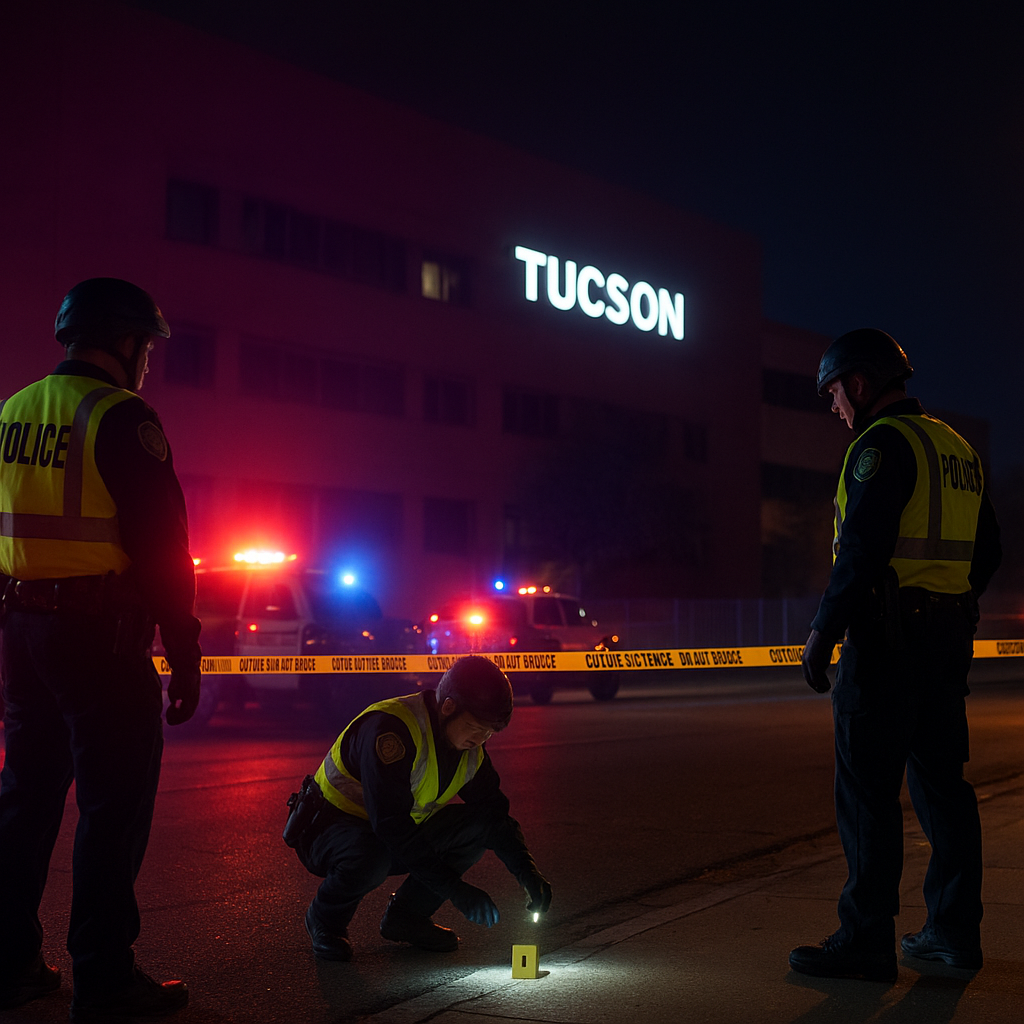
Police said the shooting happened early Sunday morning in Tucson, though investigators have not publicly released a full sequence of events. What is clear is that multiple people were struck by gunfire, sending officers and emergency medical crews into a fast-moving scene where the priority was to stop the shooting, render aid, and secure the area.
In mass-injury shootings, the first minutes often determine the shape of the case. Officers must separate victims from witnesses, locate shell casings, identify possible weapons, and determine whether a suspect is still armed or has fled. When police say a suspected gunman was wounded during the response, that adds another layer: investigators must also assess the use of force by officers, the timing of the suspect’s injuries, and whether the person posed an imminent threat.
At this stage, the public record is limited. Authorities have not said what led to the shooting, whether the victims were targeted, or whether the incident stemmed from an argument, gathering, or other dispute. Those details matter because they often determine what charges may follow and whether prosecutors treat the matter as attempted murder, aggravated assault, gang-related violence, or some combination of offenses.
The scale of the injuries is significant even if the victims are expected to survive. Nine people hurt in one event places a heavy burden on trauma teams, detectives, crime scene analysts, and victim advocates. It also raises the likelihood of a wide-ranging investigation that could take days or weeks before a complete account emerges.
For readers looking at how similar cases move through the system, recent coverage of police response, evidence preservation, and witness protection often shows the same pattern: the earliest statements can be incomplete, and the legal theory may change as detectives review surveillance footage and interview bystanders. Related reporting on active investigations, such as our coverage of ongoing shooting probes, police use-of-force reviews, and victim-centered public safety response offers useful context for how these cases are built.
Legal context and charges or proceedings
The legal stakes in a case like this are often substantial. If prosecutors conclude that the shooting was intentional and directed at the victims, they may seek charges that include aggravated assault, attempted murder, weapons offenses, and, if applicable, charges tied to firearm possession by a prohibited person. If more than one person fired a weapon, or if the scene involved crossfire, the charge sheet could become more complicated.
Arizona law allows serious felony prosecution in shootings that cause substantial injury or involve a deadly weapon. Prosecutors will likely focus on whether the suspect acted with the intent to kill, to cause serious physical injury, or to place others in imminent danger. The distinction matters. A case built around intent can lead to harsher exposure than one framed as reckless endangerment or unlawful discharge of a firearm.
If the suspected gunman survives, the case may proceed in parallel tracks. There is the criminal investigation, which determines the facts and possible charges. And there is the medical recovery process, which may affect timing for interviews, arrests, and court filings. In some cases, prosecutors wait for a suspect to be medically cleared before an initial court appearance. In others, charges are filed based on witness statements and physical evidence, even if the suspect is hospitalized.
The fact that police say the suspect was shot and wounded by officers also creates potential legal questions around justification. Arizona law, like that of many states, gives police authority to use deadly force when they reasonably believe a person poses an immediate threat of death or serious bodily injury. That standard is fact-specific. Investigators will examine body-worn camera footage, radio traffic, witness statements, and the exact position of the suspect when officers fired.
Those reviews are important not only for potential criminal charges but also for public confidence. When the same incident involves multiple victims and a wounded suspect, families want answers quickly. Prosecutors and police typically move cautiously, though, because premature statements can compromise a case or create confusion about who did what.
If the case develops into a broader weapons or gang-related investigation, it may also intersect with federal authorities. Federal charges can come into play if investigators believe firearms were trafficked, if the suspect has prior disqualifying convictions, or if the conduct implicates interstate gun laws. At present, no federal involvement has been announced.
For background on how charging decisions change in violent-crime cases, see our related coverage on felony assault prosecutions, firearm crime and sentencing, and victim injury documentation in court. Those cases often show how the same facts can support different legal theories depending on the evidence recovered in the first 24 hours.
Law enforcement or court response
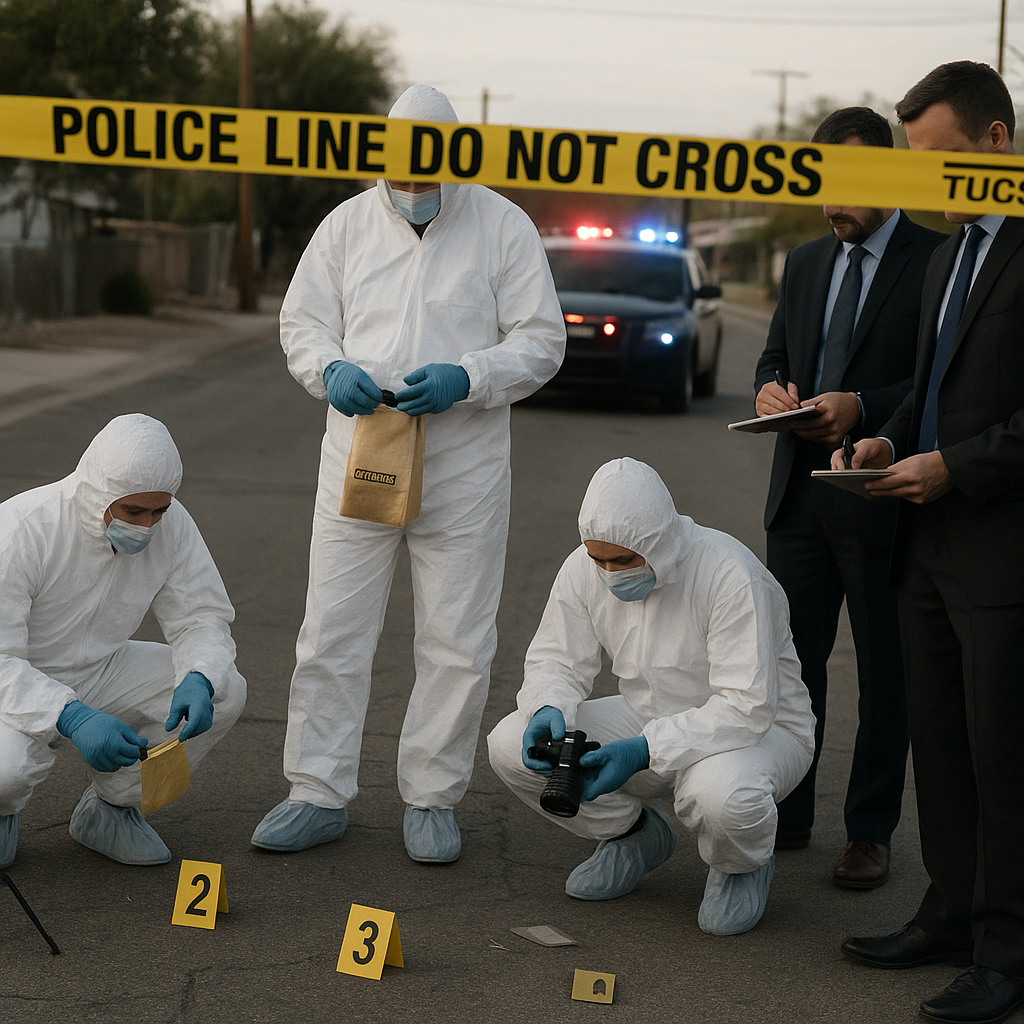
Police response to a shooting of this size is usually immediate and layered. Patrol officers secure the scene. Detectives interview witnesses. Crime scene units map bullet trajectories, collect cartridge casings, and compare physical evidence against any recovered weapon. Supervisors coordinate with emergency services to keep victims moving to trauma care and to prevent the scene from becoming contaminated.
If officers shot the suspect, department policy typically requires a separate review of that use of force. In many jurisdictions, an internal investigation is paired with an outside review by another agency or a special prosecutor. That separation is intended to reduce conflicts of interest and preserve public trust.
The Tucson case may also raise questions about whether officers encountered the suspect while the shooting was still unfolding or whether they arrived after the gunfire had already begun. That distinction affects not only the force analysis but also witness recollection and scene reconstruction. When shots are fired in a crowded or chaotic setting, people often remember the loudest moments but not the sequence. Investigators then rely heavily on physical evidence and video.
Courts may become involved quickly if prosecutors file charges and seek to hold the suspect without bond. In serious violent felonies, judges examine public safety, the strength of the evidence, and the defendant’s medical condition. A hospital-bed arrest or delayed initial appearance is not unusual in high-injury shootings.
There is also the possibility of search warrants, phone extractions, and social media review. Modern violent-crime investigations often depend on digital evidence. A text message, livestream, or location record can help establish who was at the scene and whether the incident was planned or spontaneous. That evidence can be decisive in cases where witnesses are reluctant to speak.
Readers following the procedural side of such cases may find it useful to compare this event with other news on post-shooting investigations, court handling of violent felonies, and local police accountability procedures. The process often looks familiar, even when the facts are still emerging: secure the scene, stabilize the injured, identify the suspect, and then build the legal case from the ground up.
Community and policy implications
A shooting that leaves nine people injured is not just a criminal case. It is also a public health event, a policing test, and a reminder of how quickly violence can ripple through a neighborhood. Residents near the scene may be left wondering whether the shooting was random or targeted, whether there is an ongoing threat, and how long it will take before the area feels safe again.
For city leaders, incidents like this often revive debates about violence prevention, patrol strategy, and the availability of crisis intervention resources. Tucson, like many cities, has to balance immediate enforcement with longer-term efforts to reduce shootings through outreach, conflict interruption, and gun-violence intervention programs. Those discussions tend to intensify after a high-injury event because the public wants more than an arrest; it wants reassurance that the same thing will not happen again.
Families of victims are often caught in a difficult position. They may want rapid answers, but they also need time to process injury, medical bills, and fear. In cases involving many victims, the burden on hospitals and support services can be substantial. Trauma care is only the first step. People injured in shootings often face surgery, rehabilitation, lost wages, and emotional trauma long after the news cameras leave.
The case also touches on broader debates around police use of force and accountability. Whenever officers shoot a suspect during a violent incident, the legal and public questions move in two directions at once: Did police act lawfully to stop a threat? And could the underlying violence have been prevented sooner? Those are not always easy questions, but they matter to both criminal justice and civil rights policy.
Local agencies may use the investigation to review staffing, response times, and coordination with emergency medical services. If body-camera footage exists, officials may face pressure to release it quickly. At the same time, departments are often cautious about releasing video before witnesses are interviewed, particularly in a complex shooting involving multiple victims and a wounded suspect.
From a policy standpoint, this incident may also reinforce calls for better data collection on shootings, more rapid victim notification systems, and stronger links between police, prosecutors, and community organizations. The public often hears about arrests but not about the slow work that follows: ballistics testing, phone analysis, witness follow-up, and charging decisions.
That is why many justice reporters treat events like the Tucson shooting not as isolated bursts of violence but as windows into the system’s strengths and weaknesses. How quickly can a department lock down a scene? How effectively can it document officer conduct? How well do prosecutors translate evidence into charges that fit the facts? And what happens to the neighborhoods that absorb the violence before any courtroom hearing begins?
For readers interested in the policy side, our related coverage on gun violence prevention measures, community policing reforms, and emergency response coordination provides useful background on the tools cities use after shootings like this one.
Frequently Asked Questions
Was anyone killed in the Tucson shooting?
Police said nine people were shot and injured. At the time of the initial report, no deaths had been announced.
Was the suspected gunman shot by police?
Yes. Police said a suspected gunman was shot and wounded during the response.
Has the motive been released?
No. Investigators have not publicly identified a motive or said what led to the shooting.
What charges could follow?
Possible charges may include aggravated assault, attempted murder, weapons offenses, or other felony counts depending on the evidence.
Will police release body-camera video?
That depends on department policy, the status of the investigation, and any court or prosecutorial restrictions.
Why do these investigations take time?
Because detectives need to interview witnesses, analyze ballistic evidence, review video, and determine the sequence of events before filing charges or making detailed public statements.
The Tucson shooting is still in its earliest stage as a criminal case, and that means key facts remain unsettled. But the legal and public safety implications are already clear: a major violent incident has left multiple victims injured, a suspect wounded, and investigators with a difficult reconstruction ahead. In the days to come, the questions will shift from what happened at the scene to how prosecutors, police, and the courts decide to move forward.