Nick Reiner has been indicted on murder charges in the killings of his parents, Rob and Michele Reiner, marking a major step in a case that has drawn national...
Nick Reiner Indicted on Murder Charges in the Killings of His Parents, Rob and Michele Reiner
Nick Reiner has been indicted on murder charges in the killings of his parents, Rob and Michele Reiner, marking a major step in a case that has drawn national attention because of the family’s prominence and the severity of the allegations. CBS News correspondent Katrina Kaufman explained the charges as prosecutors move the case from investigation into formal criminal proceedings.
Key Takeaways- Nick Reiner has been indicted on murder charges in the deaths of Rob and Michele Reiner.
- The indictment means prosecutors believe they have enough evidence to formally accuse him and move the case toward court proceedings.
- The case is likely to involve questions about probable cause, pretrial detention, mental health evidence, and the handling of highly sensitive family violence allegations.
- Because the Reiners are well known, the case is also likely to test how the justice system manages intense public scrutiny while protecting due process.
What happened
The indictment alleges that Nick Reiner was responsible for the killings of his parents, Rob Reiner and Michele Singer Reiner. At this stage, the indictment is the formal charging document returned by a grand jury, which means prosecutors presented evidence behind closed doors and persuaded jurors that there was enough to proceed.
That step does not decide guilt. It does, however, change the posture of the case. A homicide investigation becomes a criminal prosecution, with the state now required to prove its allegations in open court under the rules of evidence and criminal procedure.
In high-profile family homicide cases, the early facts often remain tightly controlled. Investigators may release only limited details while collecting forensic evidence, interviewing witnesses, reviewing digital records, and reconstructing the timeline of events. That caution is especially common when the defendant is a family member and the victims are closely connected to the suspect.
The deaths of Rob and Michele Reiner have naturally intensified public interest because of Rob Reiner’s long career as an actor, director, and public figure. But the criminal case will be evaluated on evidence, not celebrity. The central questions are the same ones that matter in any murder prosecution: what happened, when it happened, what evidence links the accused to the deaths, and whether the state can prove intent and causation beyond a reasonable doubt.
Depending on the jurisdiction and the charging theory, prosecutors may have to prove elements such as malice aforethought, premeditation, or another legally defined form of homicide. The indictment itself usually does not spell out the full factual record, and even when it does, the details may be summarized rather than exhaustively listed.
Cases like this often unfold in stages. First comes arrest or surrender. Then arraignment. Then motions over bail, discovery, and possibly mental competency. If the defense challenges the indictment or the evidence, those arguments may take months to resolve. In the meantime, the public hears fragments of a larger story while the legal system works through its procedures.
Legal context and charges or proceedings
A murder indictment is one of the most serious actions a prosecutor can secure. It is typically the product of a grand jury process, which is secret by design. Grand juries hear evidence from prosecutors and decide whether probable cause exists to charge a crime. The standard is much lower than proof beyond a reasonable doubt, but it is enough to formally bring a defendant into the criminal justice system.
In practice, that means the case against Nick Reiner now enters a phase governed by deadlines, filings, and constitutional protections. He is presumed innocent. He has the right to counsel. He can challenge the prosecution’s evidence, question the legality of any searches or statements, and contest the state’s interpretation of events.
If prosecutors seek the most serious homicide counts available, the penalty exposure can be significant, including life imprisonment in many jurisdictions. The exact charges matter. A single count of murder may carry different consequences than multiple counts, special circumstances, or allegations that could make the defendant eligible for a harsher sentence. Those distinctions are often central in murder litigation, especially when prosecutors believe the facts support aggravating circumstances.
Courts typically move carefully when the allegations involve family members and public figures. Defense lawyers may ask for protective orders to limit prejudicial pretrial publicity. Prosecutors may do the same to preserve witness safety and prevent the release of sensitive evidence. Judges must balance the public’s right to know against the defendant’s right to a fair trial.
Another issue that often arises in serious homicide cases is mental health. That does not mean a defendant is automatically unfit to stand trial or legally insane. But if there are indications of psychiatric history, substance use, or cognitive impairment, defense counsel may seek evaluations. Such issues can shape whether a defendant is competent to proceed, whether statements are admissible, and whether the defense will pursue mitigation later if the case reaches sentencing.
For readers trying to understand the difference between an indictment and a conviction, the distinction is straightforward but important. An indictment says a grand jury found enough evidence to charge. A conviction comes only after a guilty plea or a verdict following trial. In a case this serious, the gap between those two points can be substantial.
The indictment also means prosecutors must be prepared to disclose much more information through discovery. That can include forensic reports, autopsy findings, witness statements, surveillance footage, phone records, and any statements made by the defendant. If the case involves a domestic setting, investigators may also analyze prior police calls, texts, and any history of conflict. Those materials often become the backbone of the prosecution’s narrative.
For a useful comparison with how homicide charges are handled in a different but similarly serious context, see this courts coverage on federal charging standards and this law enforcement overview on homicide investigations. The basic mechanics differ by jurisdiction, but the criminal process shares the same core features: evidence, charging authority, and courtroom review.
Law enforcement or court response
In a homicide investigation of this profile, law enforcement agencies usually coordinate closely with prosecutors from the earliest stages. Detectives, forensic analysts, and deputy district attorneys may be working from the same timeline, but each has a different role. Police investigate. Prosecutors assess whether the evidence supports charges. Courts then oversee whether the process is lawful and fair.
The arrest or charging decision in a murder case can depend on several factors: physical evidence, witness credibility, the defendant’s access to the scene, and whether any statements corroborate the theory of the case. In family homicide cases, there is often a focus on domestic dynamics, prior disputes, and the possibility of concealed intent. Investigators may examine whether the violence was sudden or planned, whether there were efforts to clean the scene, and whether any digital evidence shows preoffense preparation.
Once charges are filed, the court’s first major task is usually arraignment. That is when the defendant is formally advised of the charges and enters a plea. The court may also address custody status, no-contact provisions, and conditions of release if bail is legally possible. In some jurisdictions, the seriousness of a murder charge makes pretrial release unlikely or subject to strict conditions.
The court may also set a schedule for hearings on discovery and motions. Defense lawyers may challenge the admissibility of evidence, seek to suppress statements, or dispute the sufficiency of the indictment. Prosecutors, for their part, will want to protect the integrity of the case and limit delays that could affect witnesses or evidence.
High-profile cases also bring pressure on institutions. Law enforcement agencies are expected to communicate enough to reassure the public, but not so much that they compromise the case. Judges face similar pressure. They must enforce procedure even when outside interest is intense and cameras, commentary, and speculation are everywhere.
It is worth noting that many homicide prosecutions are shaped less by dramatic courtroom moments than by ordinary legal work: expert reports, motions, continuances, and plea negotiations. That may sound unremarkable, but it is where many serious cases are won or lost. The law depends on what can be proven, not what the public assumes.
For background on how courts manage homicide proceedings and evidentiary disputes, readers can also look at the National Center for State Courts and the U.S. Department of Justice’s criminal resources. Those sources help explain why a case can take time even when the underlying event appears straightforward.

Community and policy implications
The indictment of Nick Reiner is first and foremost a criminal case. But it also raises wider questions about how the justice system handles domestic violence, mental health concerns, and the shock that follows a homicide inside a family.
When alleged violence occurs in a prominent household, the case attracts immediate public attention. That scrutiny can help keep the matter visible, but it can also distort expectations. People often want instant answers. Criminal cases rarely provide them. Evidence takes time to assemble. Witnesses need to be interviewed. Forensic conclusions need to be tested. Defense counsel has a right to scrutinize the state’s theory.
For communities, this case may reinforce a difficult reality: violent crime often occurs in private, and the warning signs are not always visible. Public conversation after a homicide frequently turns to prevention, intervention, and whether earlier systems could have detected risk. Those discussions matter, but they should not be reduced to slogans. Real prevention requires consistent reporting systems, mental health access, crisis response options, and careful coordination between police, prosecutors, courts, and social services.
Cases involving family violence can also revive debates over protective orders, wellness checks, firearm access, and crisis intervention. Policy makers often respond to high-profile tragedies by proposing reforms. The challenge is to identify measures that are workable, constitutional, and based on evidence rather than headlines.
The criminal justice system must also avoid overreach. Because the victims and alleged offender are public figures, there is a danger that the case becomes a story about fame rather than proof. That matters because public pressure can make it harder for judges and jurors to focus on the record. Due process is not a technicality. It is the mechanism that keeps a serious case from becoming a public judgment before the evidence is fully tested.
Civil rights concerns can arise as well. Even in a widely watched homicide case, the accused retains constitutional protections. If investigators obtained evidence through unlawful searches, coercive questioning, or other improper means, courts must address that. If pretrial detention becomes prolonged, the defense may raise speedy-trial issues. If mental health is implicated, the state still has to proceed within legal safeguards.
The broader policy conversation also touches prisons and incarceration. If the case ends in a conviction for murder, the sentence could mean decades or life in prison, depending on the charges and findings. That raises practical issues about incarceration capacity, mental health treatment in custody, and the realities of aging in prison if the defendant is convicted and receives a lengthy term.
Readers interested in the intersection of violent crime and justice policy can review related coverage on homicide prosecution, pretrial detention, and corrections reform. The mechanics may seem procedural, but they shape outcomes in some of the most serious cases the system sees.

Frequently Asked Questions
What does an indictment mean in a murder case?
An indictment means a grand jury found probable cause to formally charge a person with a crime. It is not a conviction and does not mean guilt has been proven.
Is Nick Reiner presumed innocent?
Yes. Under the Constitution, he is presumed innocent unless and until prosecutors prove the charges in court or he enters a guilty plea.
What happens after an indictment?
The case usually moves to arraignment, where the defendant is advised of the charges and enters a plea. After that, courts handle discovery, pretrial motions, and other proceedings.
Can murder charges lead to life in prison?
Yes, depending on the jurisdiction, the degree of murder charged, and any aggravating factors found by the court or a jury.
Why are these cases often slow?
Serious homicide cases require extensive evidence review, expert analysis, witness interviews, and constitutional safeguards. That process takes time.
Will the public learn all the evidence right away?
Usually not. Some information may be sealed or delayed to protect the integrity of the case, witness safety, and the defendant’s right to a fair trial.
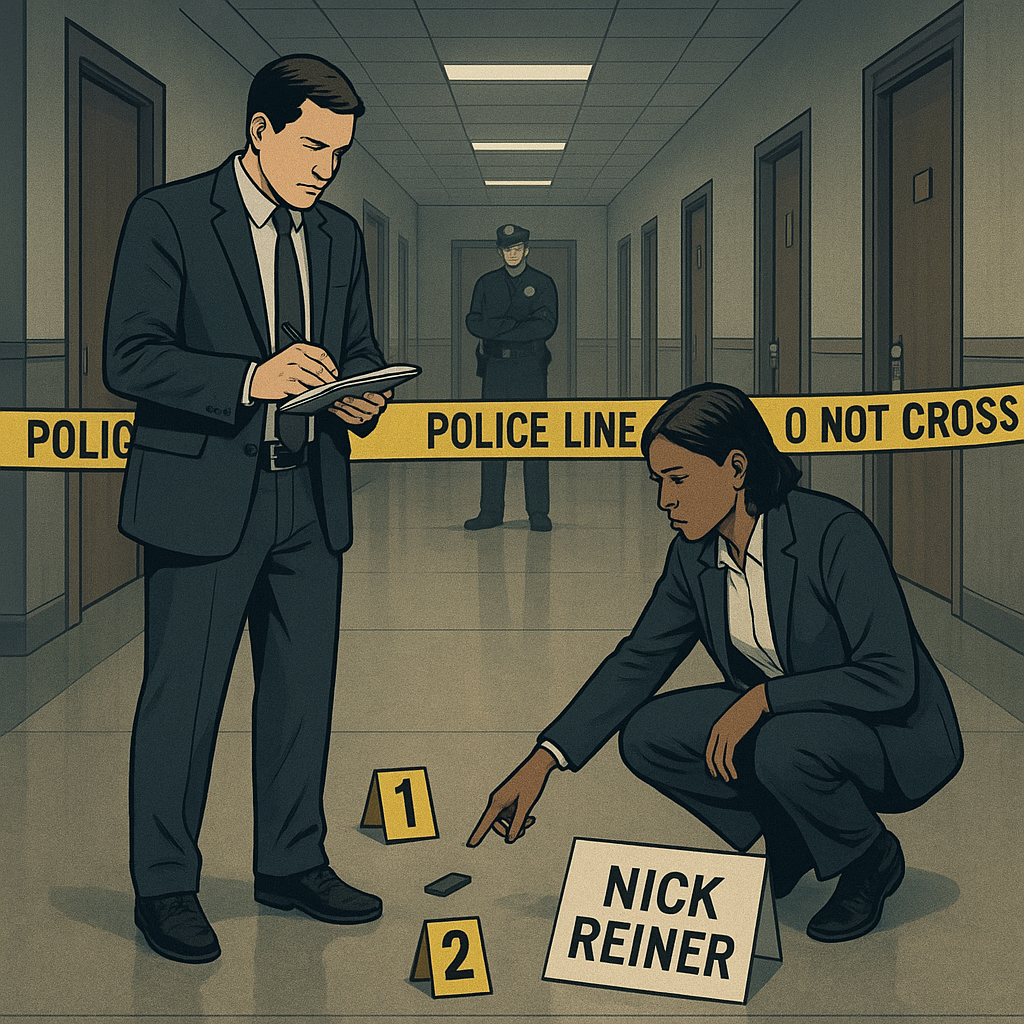
The indictment in this case marks the beginning of the courtroom phase, not the end of the story. For prosecutors, the task now is to prove a homicide case under the rules that govern every criminal proceeding in the country. For the defense, the work will be to test that evidence, challenge weak points, and ensure the state is held to its burden. However the case develops, the legal system will now be asked to do what it is designed to do: separate accusation from proof.