New York City is intensifying enforcement against wage theft and other abuses that hit low-income workers hardest, as labor advocates and prosecutors point to...
New York City Cracks Down on Wage Theft as Workers Lose Billions Each Year
New York City is intensifying enforcement against wage theft and other abuses that hit low-income workers hardest, as labor advocates and prosecutors point to an economic crime that drains more than $50 billion a year from workers nationwide.
Key Takeaways- Wage theft is a major economic crime that can include unpaid wages, stolen tips, off-the-clock work, and illegal deductions.
- New York City has expanded enforcement efforts aimed at protecting low-wage workers, many of whom are vulnerable to retaliation.
- The issue sits at the intersection of criminal justice, labor rights, and public policy.
- Better coordination among city agencies, prosecutors, and courts can improve accountability.
What happened
Wage theft is often discussed as a labor violation, but in practice it can also involve fraud, coercion, document theft, and retaliation. In New York City, officials have moved to treat the problem more seriously, especially in sectors where workers are paid in cash, work irregular hours, or have little bargaining power. Those sectors include construction, food service, domestic work, delivery, cleaning, and nail salons.
The Economic Policy Institute’s estimate that workers lose more than $50 billion annually gives a sense of the scale. That figure is not just a matter of unpaid paychecks. It reflects a broader pattern in which employers, contractors, and labor brokers may underpay workers, misclassify employees as independent contractors, deny overtime, or fail to pay the minimum wage. Some workers are also pressured to remain silent through threats tied to immigration status, job loss, or blacklisting.
For city officials, the issue is not only about wages. It is about public safety, fair markets, and trust in the rule of law. When employers can systematically ignore wage laws, they distort competition and shift the costs onto workers, families, and taxpayers.
The crackdown in New York has focused on a mix of agency enforcement, referrals for criminal investigation, and outreach to workers who may not know how to file complaints. In many cases, wage theft begins with administrative violations. But persistent, organized, or fraudulent conduct can become the basis for criminal charges. That is where criminal justice agencies enter the picture.
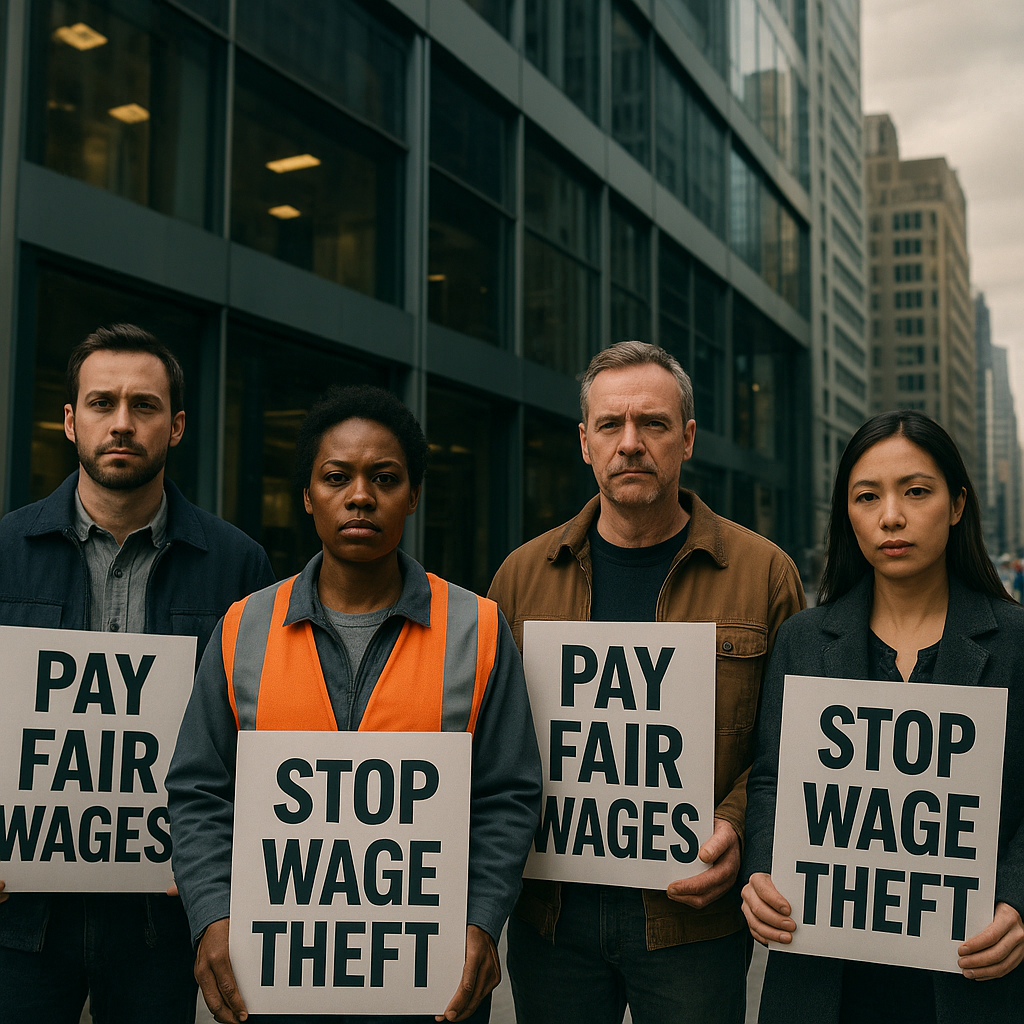
The city’s approach also reflects a broader shift in how officials think about low-wage abuse. For years, enforcement tended to rely heavily on civil complaints. That model can leave workers waiting a long time for relief, and it often fails when employers dissolve shell companies, move assets, or simply refuse to cooperate. More aggressive enforcement seeks to make wage theft riskier for repeat offenders and more visible to employers who assume penalties will be minor.
There is also a signaling effect. When a city says wage theft is a priority, it tells workers that their complaints matter and tells employers that the rules are not optional. In industries where theft of wages is normalized, that message can matter as much as a fine.
Legal context and charges or proceedings
Wage theft is not a single offense under every law. It can overlap with civil labor enforcement, tax violations, false recordkeeping, identity theft, and, in some cases, larceny or fraud charges. The legal theory depends on the facts. An employer who simply underpays overtime may face labor penalties and back-pay orders. An employer who falsifies time sheets, steals tips, or uses threats to keep workers from complaining may face more serious exposure.
New York has long had labor laws that establish minimum wages, overtime rules, meal breaks, and recordkeeping requirements. But legal remedies only matter if the state can detect violations and enforce them. That is why prosecutors and labor agencies often rely on records, payroll data, witness statements, and worker testimony. These cases can be difficult. Workers may fear retaliation, lack documents, or move frequently. Some employers keep two sets of records, making proof harder.
The legal process typically starts with complaints to labor agencies, worker centers, or prosecutors’ offices. Investigators then compare pay stubs, schedules, bank records, text messages, and jobsite evidence. In cases involving contractors or franchises, investigators may also try to determine who actually controlled wages and conditions. That question matters because employers sometimes use layered corporate structures to avoid liability.
In New York City, the crackdown has aligned with broader state and local tools that can include license suspensions, restitution orders, civil penalties, and, where facts support it, criminal cases. A criminal case is more likely when there is evidence of deliberate deception, repeated violations, or retaliation designed to keep workers quiet. The line between a labor dispute and a crime can be thin, but repeated theft over time, especially when documented, can support prosecution.
For readers tracking how criminal justice intersects with other kinds of economic harm, the same basic investigative logic appears in financial crime cases and public integrity matters. The difference here is the victim class: workers who often have less leverage than the companies that employ them. That imbalance can shape how cases are reported, investigated, and resolved.
More context on those broader enforcement themes can be found in related coverage such as labor trafficking and worker exploitation, prosecutors using restitution in economic crime cases, and city agency coordination on public safety enforcement.
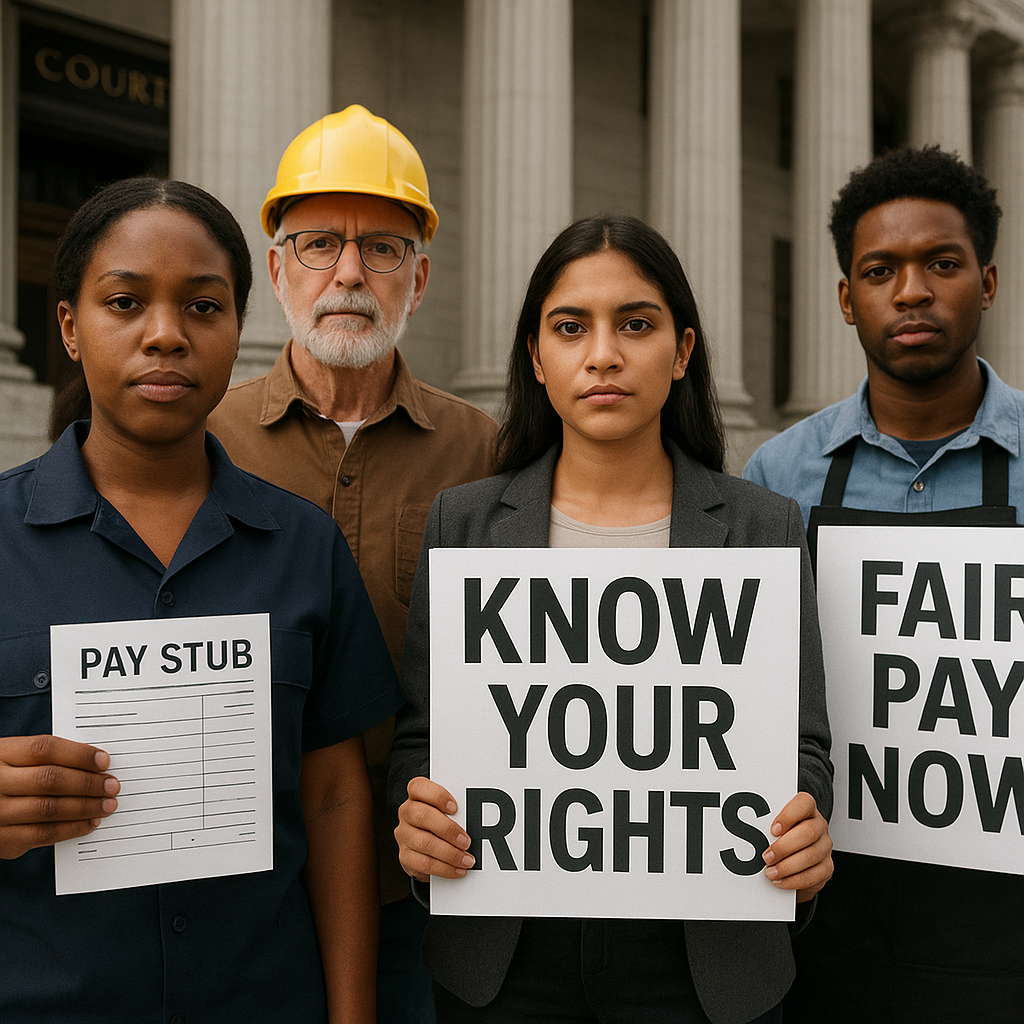
The legal burden also extends to proving damages. Wage theft cases often require more than showing one missed payment. Investigators try to establish a pattern: unpaid overtime over months, unlawful deductions, tip pooling violations, or off-the-clock work demanded by supervisors. The stronger the paper trail, the more likely the case is to result in restitution or penalties.
There is another layer to the law: immigration and language access. Many victims are immigrants, and many do not speak English as a first language. That creates challenges in interviews, notices, and hearings. If workers cannot understand the process, they may never file complaints. That is not just a policy issue. It can affect due process and the practical ability of the state to enforce labor laws fairly.
Law enforcement or court response
New York City’s wage-theft enforcement depends on multiple actors. Labor standards investigators identify patterns. Prosecutors decide when conduct crosses into criminal territory. Courts then handle arraignments, plea negotiations, restitution, and sentencing where criminal charges are filed. The process is not as visible as a violent-crime arrest, but it can have significant consequences for employers who repeatedly exploit workers.
Police are not always the lead agency in these cases, but law enforcement plays a role when investigators need subpoenas, search warrants, or criminal records checks. Prosecutors may also coordinate with state labor departments, consumer protection agencies, and attorneys general. That coordination matters because wage theft often spans different jurisdictions and legal regimes. A contractor might operate in one borough, keep books elsewhere, and pay workers through another shell company.
Court response varies widely. Some cases end with civil settlements and back pay. Others move into criminal court when there is evidence of intentional theft, threats, or document falsification. Judges may order restitution to workers, fines, probation, or compliance monitoring. In serious cases involving organized fraud, defendants may face jail time, though incarceration is less common than financial penalties.
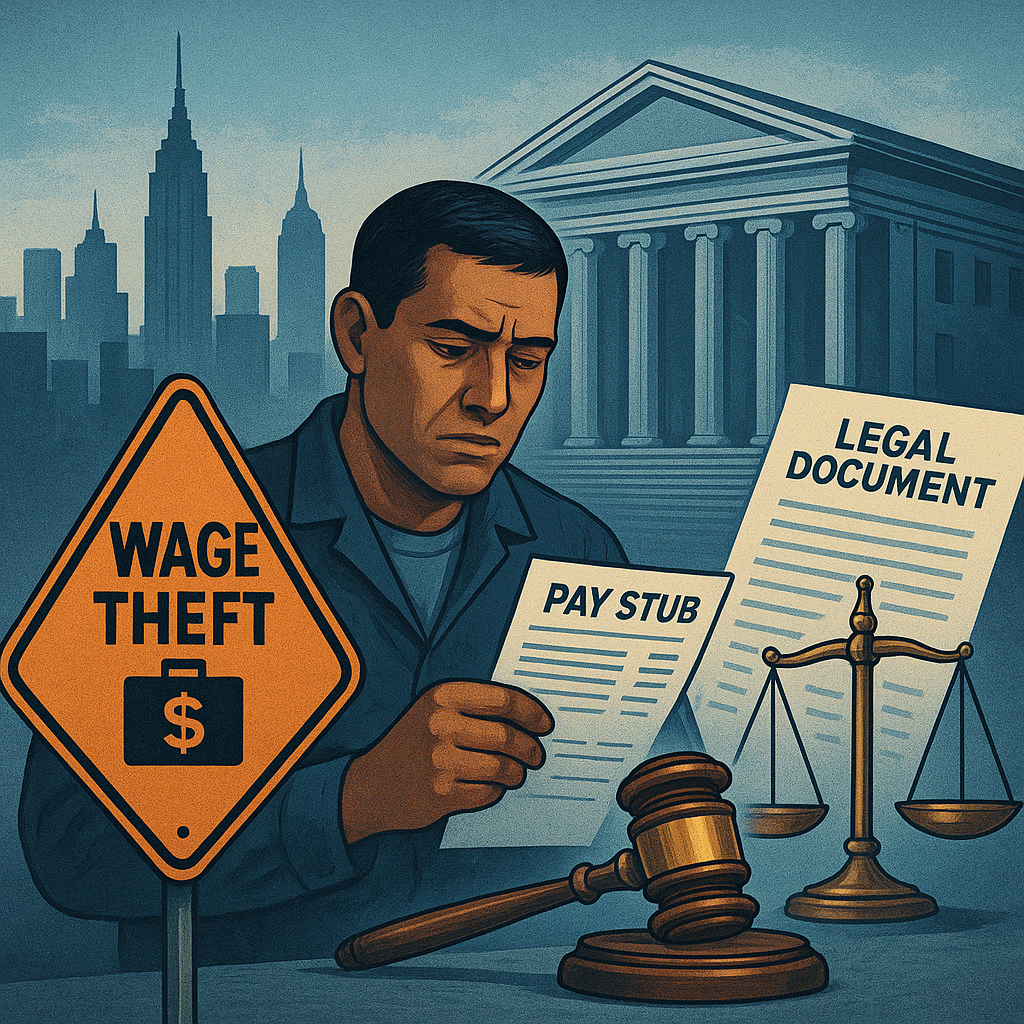
One reason these cases are difficult is that workers are often reluctant witnesses. They may be undocumented, may have been threatened with deportation, or may simply need another job quickly and cannot risk retaliation. Prosecutors have learned that witness protection in wage-theft cases does not always mean formal relocation or secrecy measures. It can mean careful scheduling, language access, and assurance that complaints will not boomerang onto the complainant.
The court system also faces a proof problem. Wage theft cases can look simple from the outside: someone worked, someone did not pay. In reality, the facts can turn on whether time was recorded properly, whether the worker was exempt from overtime, whether a salary was lawful, or whether the employer can claim an independent-contractor relationship. That is why these cases often hinge on records and credibility.
Enforcement can be more effective when it is visible. Publicized cases encourage other workers to file complaints and discourage employers from assuming they can quietly settle. But visibility also raises expectations. If workers report abuse and see no follow-through, confidence in enforcement erodes quickly.
For a deeper look at how the system handles abuse claims, see related coverage on worker retaliation and labor complaints, restorative remedies in court, and investigations into labor fraud networks.
Community and policy implications
The consequences of wage theft reach beyond individual paychecks. When workers lose wages, families fall behind on rent, food, child care, and transportation. That strain can increase reliance on emergency services, deepen housing instability, and worsen health outcomes. For public officials, the issue is not only one of fairness but of social cost.
Low-income workers are especially vulnerable because they have less room to absorb wage losses. A week of unpaid work can mean a missed rent payment. A stolen tip pool can make the difference between covering a subway fare and staying home. Over time, those losses accumulate into debt and instability. The broader effect is that labor abuse becomes a hidden subsidy for businesses that ignore the law.
Policy advocates argue that New York City’s crackdown should do more than punish a few bad actors. They want faster investigations, larger penalties, more multilingual outreach, and stronger protections against retaliation. Some also want public debarment of repeat offenders, so companies that cheat workers cannot keep winning city contracts. Others support mandatory wage bonds in high-risk industries, which could ensure money is available if an employer disappears.
There is also a debate about the role of criminal law. Some labor advocates worry that criminalization can scare workers away from coming forward if they fear any interaction with police or prosecutors. Others argue that civil enforcement alone has not been enough, especially against repeat offenders. In practice, the most effective model may be layered: civil relief, administrative penalties, and criminal prosecution for the most egregious conduct.
Public policy reform has another target: misclassification. When employers call workers independent contractors, they can avoid overtime, unemployment insurance, and tax obligations. Misclassification is not always criminal, but it is a frequent gateway to wage theft. It also creates confusion about who is responsible when pay problems surface. Stronger enforcement in New York could help close that gap.
The city’s effort also sits within a larger justice-policy conversation about which harms are treated as crimes and which are handled as civil matters. Wage theft can be technically complex, but its effect is simple. It takes money from people who earned it. That is why some prosecutors and advocates argue it deserves the same seriousness as other property offenses, even if the harm is more hidden and the victims have fewer resources.
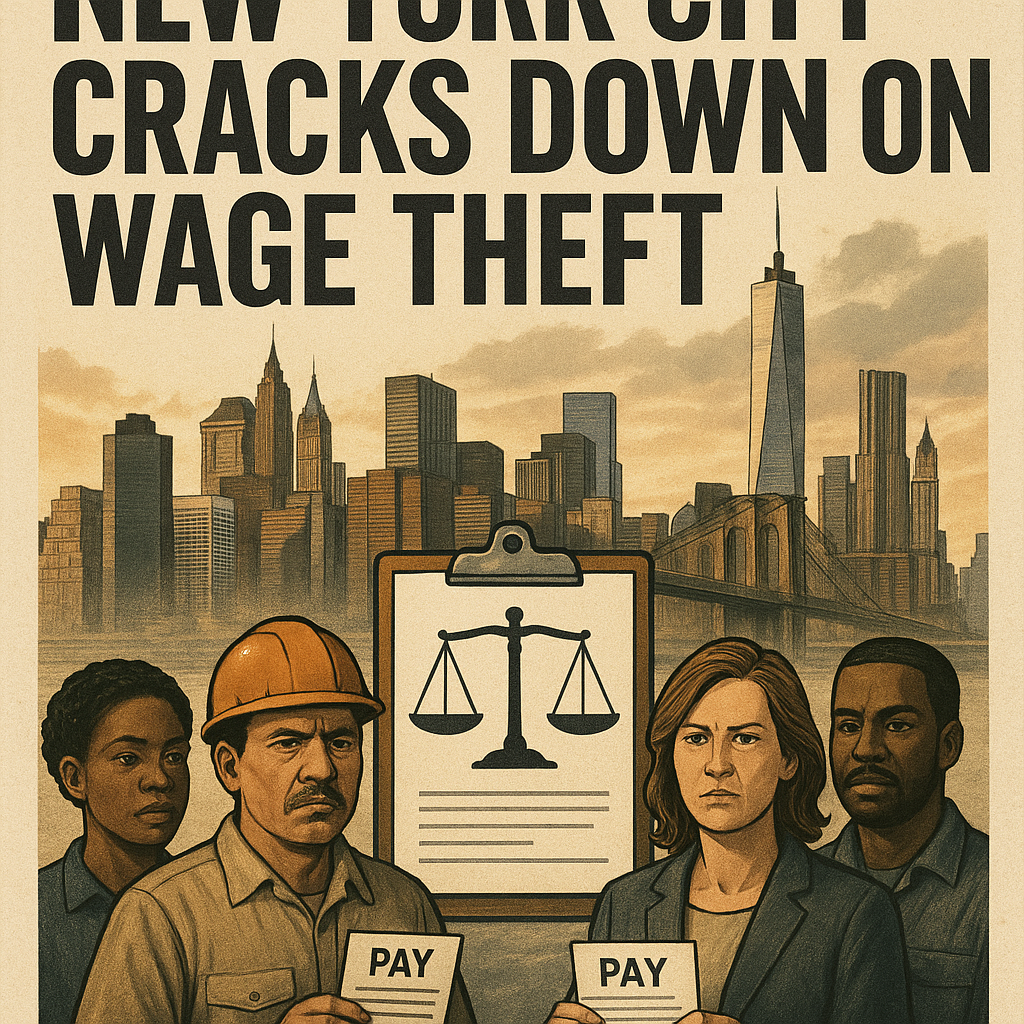
The practical question is whether the crackdown will produce durable change. That depends on staffing, data sharing, and whether the city can move from episodic enforcement to routine deterrence. It also depends on whether workers trust the system enough to report abuse. Without that trust, even the best-written law will miss the people it is supposed to protect.
Frequently Asked Questions
What is wage theft?
Wage theft is the illegal denial of earned pay. It can include unpaid overtime, stolen tips, off-the-clock work, minimum wage violations, unlawful deductions, and misclassification.
Is wage theft a crime or a civil violation?
It can be both. Many cases begin as civil labor matters, but intentional fraud, falsified records, threats, or repeated violations can lead to criminal charges.
Why is New York City focusing on wage theft now?
City officials are responding to persistent worker abuse, especially in low-wage industries where employees may fear retaliation and have limited access to legal help.
Who is most at risk?
Low-income workers, immigrants, domestic workers, day laborers, delivery workers, restaurant staff, and contractors in cash-heavy industries are especially vulnerable.
What remedies can workers get?
Workers may receive back pay, restitution, interest, fines against employers, and in some cases criminal penalties against individuals or companies.
How does enforcement help the public?
It protects workers, discourages unlawful business practices, and helps ensure that honest employers are not undercut by competitors who break labor laws.
New York City’s crackdown on wage theft is a reminder that criminal justice is not limited to street crime. It also includes the hidden forms of economic abuse that can strip workers of pay, stability, and dignity. The hardest part of enforcement is often not identifying the harm. It is proving it, documenting it, and making sure the system responds before the damage spreads.