Mississippi officials are facing renewed scrutiny after the body of 17-year-old Nolan Wells was found days after he disappeared during a Fourth of July boat...
NAACP Joins Family of Mississippi Teen Found Dead After Fourth of July Boat Trip, Citing Need for Answers
Mississippi officials are facing renewed scrutiny after the body of 17-year-old Nolan Wells was found days after he disappeared during a Fourth of July boat trip, prompting the NAACP to join his family in seeking a clearer account of what happened and whether the investigation has been thorough enough.
Key Takeaways:- Nolan Wells, a Mississippi teen, was found dead days after going missing on a Fourth of July boat trip.
- The NAACP says it is joining the Wells family to push for answers and accountability.
- Civil rights leaders are calling attention to how missing-person cases can be handled when families believe investigators have not been fully transparent.
- The case raises broader questions about law enforcement response, investigative standards, and public confidence in death investigations.
The case has drawn attention not only because of the circumstances of Wells’ disappearance, but because of the gap between a family’s questions and the official information that has emerged so far. In cases like this, families often want a rapid, detailed accounting of search efforts, witness statements, timelines, and any forensic findings. When those answers are slow in coming, public trust can erode quickly.
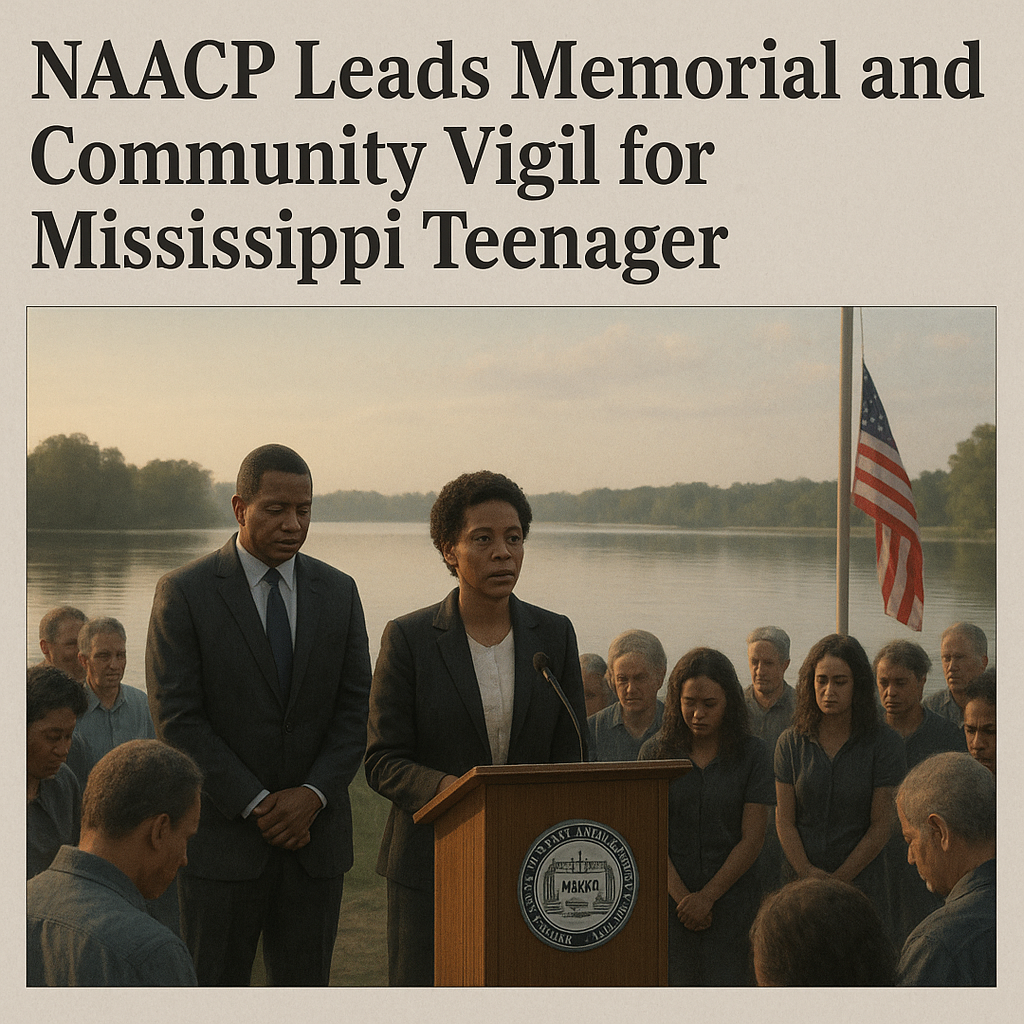
Kristen Clarke, the NAACP’s general counsel, said the organization is standing with the Wells family as they seek more information about the events leading up to the teen’s death. Her involvement signals that the matter is being viewed as more than a local tragedy. It is also being treated as a civil rights and accountability issue, especially if the family believes the response to the disappearance was inadequate or if key facts have not been fully explained.
What happened
Wells disappeared during a Fourth of July boat outing in Mississippi. According to publicly described accounts, the teen was reported missing and searched for over the following days before his body was recovered. The timeline is central to the family’s concerns. In any disappearance that ends in a death investigation, the hours immediately after the person is last seen often matter most: who was present, what emergency calls were made, whether anyone gave conflicting accounts, and how quickly authorities mobilized search resources.
The fact that the body was recovered days later has intensified questions about where Wells was last seen, whether he entered the water, and whether there were signs of foul play, negligence, or some other explanation. Those are the questions families almost always ask when a young person vanishes under uncertain circumstances. They are also the questions law enforcement must answer through interviews, physical evidence, and a careful reconstruction of events.
The family’s desire for answers has been amplified by the NAACP’s decision to become involved. Civil rights organizations do not typically step into every missing-person case. When they do, it usually reflects concern that a local matter may have broader implications, such as unequal treatment, poor investigative follow-up, or a need for outside scrutiny to reassure the family and public that the case is being taken seriously.
For background on how difficult these cases can become when facts are sparse, see related coverage in our Investigations section and Law Enforcement coverage on missing-person response, case triage, and family engagement.
Under a holiday weekend setting, the search can become more difficult. Large gatherings, boating activity, alcohol use, reduced visibility, and crowded waterways can complicate witness accounts and rescue operations. In a case involving a teen, the stakes are especially high because families expect authorities to treat the matter with urgency from the first report.
Legal context and charges or proceedings
At this stage, the case appears to be centered on a death investigation rather than a criminal prosecution. That distinction matters. A missing-person case can move into several different directions: accidental drowning, undetermined death, homicide, or another cause of death identified through forensic examination. If investigators determine that another person’s conduct contributed to Wells’ death, charges could follow. If evidence is inconclusive, the family may still press for further review, independent testing, or additional witness interviews.
In death investigations, prosecutors and detectives typically look for several categories of evidence: cell phone records, video, boat registration information, statements from anyone on the water that day, autopsy results, and any physical signs that could help establish cause and manner of death. If there was a delay in reporting Wells missing, investigators may also examine whether that delay affected the search.
The NAACP’s involvement does not mean a criminal charge is imminent. Instead, it suggests concern that the legal process around the case may not be complete or transparent enough for the family’s confidence. That is a familiar dynamic in cases involving deaths of young people, especially when the family believes official statements are too limited to explain the loss.
If additional facts emerge, the case could move into a court process. That might include an inquest, grand jury review, or criminal proceedings if investigators identify a suspect. For now, the most immediate legal issue is whether state and local authorities have gathered and preserved the evidence needed to answer the family’s questions and withstand later scrutiny.
This is also where the broader justice system comes into view. When families believe they must seek help from outside groups before getting meaningful answers, it raises concerns about procedural fairness. Similar questions have emerged in other high-profile cases involving disputed police response or incomplete investigative records. Our recent reporting in Courts coverage has tracked how families use public records, open meetings, and civil litigation to force disclosure when criminal investigations stall.
The legal standards in a death case can be demanding. Prosecutors generally need a clear evidentiary basis before filing charges, and investigators cannot overstate conclusions before a forensic report is complete. Still, the absence of a public explanation can leave families feeling as though the system is moving in slow motion. That tension is especially difficult in a case involving a child or teenager, where the expectation of swift, careful action is even greater.
One question likely to remain central is whether the circumstances of Wells’ disappearance were treated with enough urgency at the outset. Another is whether investigators have spoken with every potential witness, including individuals who may have left the area before authorities could interview them. Those details often determine whether a case remains unresolved or whether a coherent timeline can be built.
Law enforcement or court response
Law enforcement agencies have a responsibility to investigate missing-person cases thoroughly and to communicate enough information to maintain trust without compromising the inquiry. In a high-profile death case, that balance is difficult. Release too little, and families accuse officials of secrecy. Release too much, and investigators risk contaminating witness testimony or undermining later proceedings.
So far, the public response has been defined by a search for facts rather than by court action. That leaves a great deal of pressure on local officials to explain what they know, what they do not know, and what steps are being taken next. The NAACP’s call for answers may intensify that pressure, particularly if the family has already experienced delays or limited communication.
Civil rights leaders often frame these cases around equal treatment under the law. Their concern is not just whether one investigation is adequate, but whether systems consistently respond with the same seriousness regardless of race, geography, or family influence. That issue has been a recurring theme in death-investigation controversies nationwide. Families in smaller communities, or those without public visibility, sometimes say they struggle to get routine updates, retrieve records, or receive a clear chain of command from law enforcement.
For readers following broader accountability issues, see our Civil Rights reporting on transparency, missing-person cases, and public trust in investigations. The Wells case fits into a larger conversation about what families are entitled to know and when.
If local officials have already conducted an autopsy or requested one from a state medical examiner, the findings will likely be critical. The cause of death can narrow or expand the scope of the case. A drowning determination may still leave questions about how Wells ended up in danger. A traumatic injury finding could shift the case toward possible criminal conduct. An undetermined ruling may prolong uncertainty and push the family to demand additional review.

In many cases, the family’s first real path to answers comes through records requests and direct engagement with investigators. But when there is a public perception problem, advocacy groups often urge independent review. That may mean asking the state attorney general, a different sheriff’s office, or an outside agency to assess the facts. It can also mean urging the release of incident logs, dispatch audio, or search records where legally permitted.
Mississippi officials have not publicly indicated whether the case is under review by any outside agency, and that absence of clarity is part of the story. The more limited the official information, the more room there is for speculation, which is why transparent communication matters so much in cases involving a young victim and a holiday outing.
There is also a practical law enforcement issue: missing-person cases can quickly become evidence-sensitive. Water conditions change. Physical traces disappear. Witnesses move on. If there is no prompt, well-documented account of the first few hours, later reconstruction becomes harder. That is true even when everyone involved is acting in good faith.
Community and policy implications
The Wells case is resonating beyond one family because it touches on recurring failures that many communities recognize: delayed searches, inconsistent updates, and the feeling that a case only gets broader attention after outside advocates get involved.
For the NAACP, joining the Wells family is both a support measure and a public statement. It tells local authorities that the case is being watched and that the family is not standing alone. It also places the matter within a wider civil rights framework, where the adequacy of official response is measured not just by whether a report was taken, but by whether the investigation was immediate, professional, and transparent.
That broader framing matters in policy debates. Legislators and state agencies continue to review how missing-person cases are triaged, how quickly emergency resources are deployed, and how families are updated. Some jurisdictions have improved protocols for juvenile disappearances, especially when water, travel, or large gatherings are involved. But many family advocates argue that procedures still vary too much from one county to another.
In Mississippi and elsewhere, public confidence depends on consistent standards. Families should not have to rely on publicity or advocacy groups to receive a detailed explanation of investigative steps. When they do, it creates the impression that equal protection is uneven in practice.
This case may also encourage discussion about coordination between local law enforcement, state investigators, and medical examiners. When a teen’s body is found after a disappearance, each agency has a role. If one piece of the response is delayed or poorly documented, the resulting uncertainty can last for months. That uncertainty can be emotionally devastating for families and politically costly for officials.
There is a policy lesson here as well. Agencies may need clearer rules for family liaison work, faster public notification standards, and more uniform documentation of search operations. Those reforms do not solve every tragedy, but they can reduce the mistrust that grows when a family feels left in the dark.
For more on how justice policy shapes these cases, our Policy coverage examines reform proposals, records access, and oversight in death investigations. This is one of those stories where procedure matters as much as the final outcome. A case can be technically open and still leave the public with no meaningful explanation.
The emotional stakes are obvious. A teenager is missing. Then a body is found. Then the family begins asking why the answers are still not clear. That sequence, repeated in case after case nationwide, explains why groups like the NAACP continue to press for independent scrutiny.
Frequently Asked Questions
What happened to Nolan Wells?
Wells, a Mississippi teen, was reported missing during a Fourth of July boat trip. His body was found days later.
Why is the NAACP involved?
The NAACP says it is joining the Wells family to help seek answers and accountability, reflecting concerns about transparency and the adequacy of the investigation.
Is anyone charged in the case?
Based on the information available now, the matter appears to be a death investigation rather than a criminal case with charges filed.
What are investigators likely reviewing?
Detectives would typically look at witness statements, boat activity, phone records, search timelines, autopsy findings, and any video or physical evidence.
Could this become a criminal case?
Yes. If investigators find evidence of foul play or unlawful conduct, prosecutors could file charges. If not, the case may remain an unresolved death investigation.
The central issue now is whether the family will get a clear, timely accounting of what happened to Nolan Wells. In tragic cases like this, answers can take time, but trust depends on whether the search for those answers feels honest, complete, and open to scrutiny. The NAACP’s involvement underscores that this is not only a family’s grief; it is also a test of how seriously institutions respond when a young life is lost under unclear circumstances.