Murdaugh Lawyers Seek to Dismiss Murder Indictments, Accusing Lead Investigator of Misleading Grand Jury
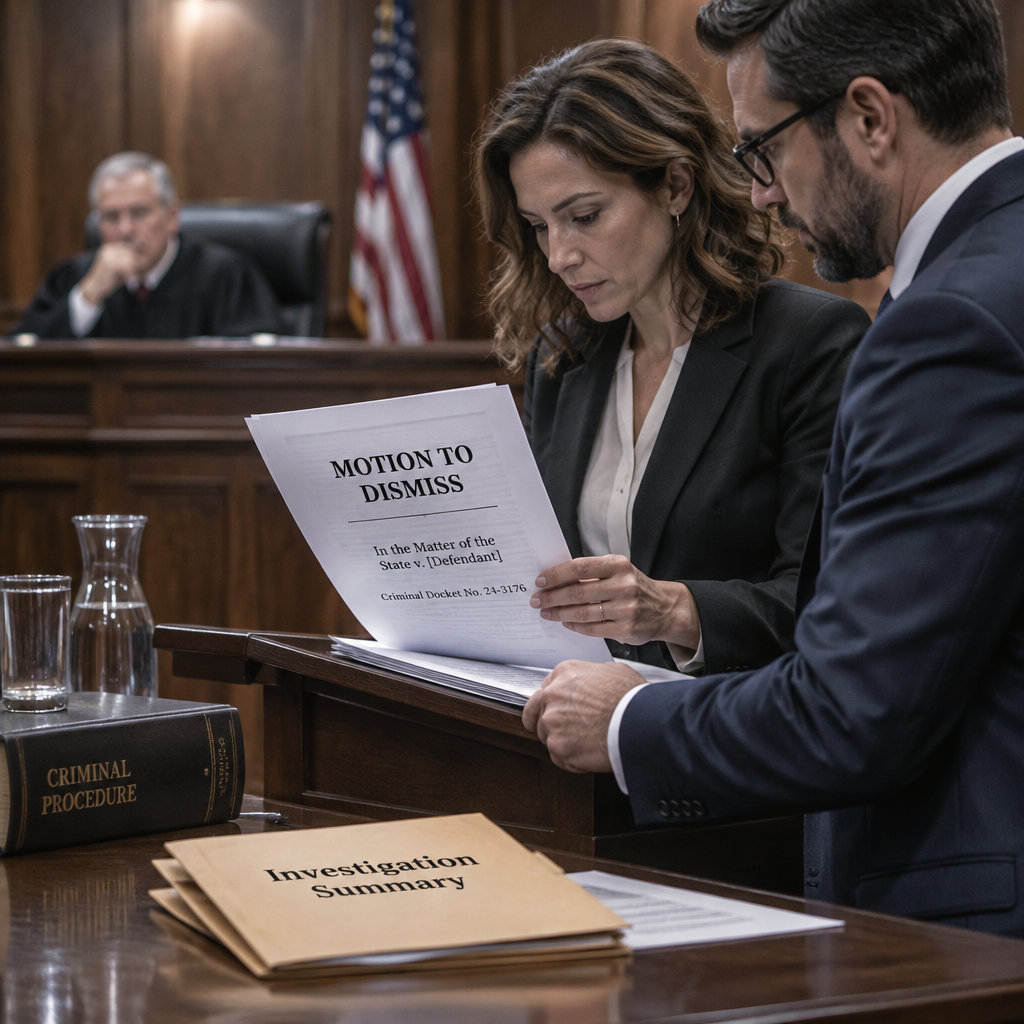
Alex Murdaugh’s lawyers were expected in court Friday to ask a judge to dismiss the indictments charging him with killing his wife and son. Their motion accuses the lead investigator, State Law Enforcement Division agent David Owen, of giving the grand jury inaccurate information about blood evidence and ammunition. The allegations are not findings by a court. The dispute comes as Murdaugh faces a retrial after the South Carolina Supreme Court overturned his murder convictions and life sentence, ruling that a court clerk improperly influenced jurors during his 2023 trial.
What happened
The motion concerns the original indictments charging Murdaugh with murdering his wife, Maggie, and their younger son, Paul, on the family’s property in South Carolina’s Lowcountry in 2021. Prosecutors have alleged that Murdaugh killed them because he believed the attention and sympathy following their deaths would give him time to conceal thefts from clients and his law firm. Murdaugh denies killing them. His convictions were set aside on appeal, so the charges are to be tried again rather than treated as a final determination of guilt.
Defense lawyers say Owen made two significant errors while presenting information to the Colleton County grand jury. First, they allege he told jurors that blood spatter had been found on a T-shirt Murdaugh wore the night of the killings. An earlier report from state agents said there were no blood stains, according to the defense. The alleged T-shirt evidence was not introduced at trial. The lawyers argue that a grand jury could have regarded such a claim as important when deciding whether to charge Murdaugh.
The second allegation concerns the ammunition used to kill Paul. The defense says Owen told grand jurors that weapons across the Murdaugh property contained the same combination of buckshot in one chamber and large birdshot in the other. The lawyers contend that was not the case. The distinction matters to their motion because the claim, if presented as described, could have suggested a broader link between ammunition found around the property and the killing than the evidence supported.
The defense’s claim that Owen lied is an allegation, not a judicial finding that he knowingly gave false testimony. The court would need to distinguish among an intentional falsehood, a mistaken description, and a dispute about what the evidence means. The precise words used before the grand jury, the records available to Owen at the time, and the context in which he made the statements may all be relevant. No conclusion about those questions is established by the motion alone.
Prosecutors say the murder charges did not depend only on the two disputed claims. They point to Paul Murdaugh’s cellphone video, which captured Alex Murdaugh’s voice at the scene and contradicted his denials that he had been there. Owen also told the grand jury about the family’s growing financial problems and the risk that Murdaugh’s schemes to take money from clients and his law firm would soon be uncovered. Prosecutors have argued that this evidence, alongside other information presented to the grand jury, supported the indictments.
The dispute over the grand jury presentation is not the same as the question a trial jury must answer. Murdaugh is serving a lengthy prison sentence for separate financial crimes, and he has admitted in court to being a thief, an insurance cheat, a bad lawyer, and a longtime opioid addict. Those admissions and convictions do not resolve the murder charges. He denies being a killer, and the prosecution must prove the murder case at a retrial under the applicable trial standard.
Legal context and the charges
An indictment is a formal charging decision, not a verdict. A grand jury generally considers whether there is sufficient basis to bring criminal charges; it does not decide whether the accused is guilty beyond a reasonable doubt. Its proceedings are not a trial, and the defense ordinarily does not have the same opportunity to challenge evidence or present its own case there. The details of grand jury procedure depend on the law that applies, but the distinction between charging and conviction is fundamental.
That distinction shapes the defense request. The question is not simply whether every statement made to grand jurors was accurate. The judge must consider the legal standard for setting aside an indictment and whether the alleged inaccuracies were significant under that standard. The court may have to assess what Owen said, whether the contested statements were wrong, whether they were knowingly or recklessly made, and whether they could have affected the grand jury’s decision. The exact questions and required showing are matters for the judge under South Carolina law.
The prosecution’s position, as described in its response, is that a mistake by itself does not amount to bad faith and that ample other evidence supported the charges. That argument does not make the alleged errors irrelevant. Rather, it puts their significance in dispute: Were the statements central to the charging decision, or were they inaccurate details amid other evidence? Did the grand jury hear the claims in a form that overstated what investigators had established? The record, not the competing characterizations, must answer those questions.
The motion also should not be confused with a request to dismiss the case permanently because the state lacks evidence to convict. The defense highlights the absence of physical evidence tying Murdaugh to the killings: lawyers have noted that investigators found no DNA or blood on him or his clothing, despite the close-range use of powerful weapons. They have also pointed out that the firearms used in the killings were never found. Those arguments may be relevant to the trial and to the strength of the prosecution’s case, but the indictment motion focuses on what the grand jury was told.
Even if Judge Debra McCaslin grants the request, the result may not end the prosecution. Prosecutors said they could seek a new set of indictments as soon as the following month, and defense attorneys said they would not try to stop them from doing so. A fresh indictment would be a new charging step, not an automatic finding that the original presentation was proper or that Murdaugh is guilty. It could allow the case to proceed while leaving the legal and evidentiary disputes for later stages.
The schedule described in the dispute called for an April retrial. The defense’s motion could prompt questions about timing, but the possibility of new indictments makes any effect on the trial calendar uncertain. The account of the dispute does not report the outcome of the Friday hearing. Until there is a ruling, the motion remains a request for relief, and the alleged grand jury errors remain contested.
Law enforcement and court response
The prosecution has emphasized the evidence it says was presented apart from the disputed statements. Paul’s video is important because it places Murdaugh’s voice at the property, contradicting his earlier denials that he was there. Prosecutors have also described a financial motive: Murdaugh’s thefts were nearing discovery, and he allegedly believed the killings would redirect attention and buy him time. These are prosecution arguments, not findings of guilt after a retrial.
The defense, in turn, stresses how little physical evidence it says connects Murdaugh to the murders. No DNA or blood was found on him or his clothes, the defense says, and the weapons were never recovered. A case can be built from circumstantial evidence, but the significance of each item and the inferences a jury may draw will be tested at trial. The retrial will require jurors to assess the evidence as a whole, not simply decide whether the grand jury should have returned indictments.
The judge’s review of the motion is likely to turn on the grand jury record and the supporting investigative materials. The reported disagreement over the T-shirt, for example, invites comparison of Owen’s account with the earlier state-agent report and any other documentation about the garment. The ammunition claim raises a similar question: What was actually found, where was it found, and how did the grand jury hear the information? Those are concrete questions that can be examined against records rather than resolved by rhetoric.
A separate murder case involving Owen has added scrutiny to his work. A judge last year threw out that case after the dead woman’s mother told Owen that her daughter had made a suicide threat days before she died. Owen did not relay that information to prosecutors or defense attorneys, according to the reported account. The incident raises a distinct disclosure concern. It does not, by itself, establish that Owen intentionally misled the Murdaugh grand jury, nor does a ruling in one case automatically decide the legal issues in another.
Owen retired in 2024, not long after being honored as State Law Enforcement Officer of the Year. The award and his retirement are part of the reported chronology, but neither establishes whether the statements at issue in the Murdaugh case were accurate or knowingly false. The judge’s task is to assess the evidence and the applicable law, not infer misconduct from a career event or assume that a previous case dictates the result here.
Community and policy implications
The dispute carries consequences beyond a single hearing because a criminal case depends on accurate communication among investigators, prosecutors, defense counsel, and courts. Investigators often gather information that prosecutors must evaluate and, when required, disclose. If an officer’s account to a grand jury materially differs from reports or physical evidence, a court must be able to determine how the discrepancy arose and whether it affected the proceedings. A careful review protects the accused and the integrity of the charging process.
At trial, prosecutors have a duty to disclose favorable evidence that is material to guilt or punishment under the rule associated with Brady v. Maryland. The U.S. Supreme Court has also explained that information known to police investigators can matter to the prosecution’s disclosure obligations. Those principles concern disclosure to the defense and should not be treated as a complete description of every rule governing grand jury presentations. Federal law, for example, draws distinctions about what prosecutors must present to a grand jury, and state law may differ. The judge must apply the South Carolina rules relevant to this motion.
The case also shows why accurate records matter. Written reports, photographs, evidence logs, laboratory findings, and contemporaneous notes can help courts establish what investigators knew and when. If testimony is disputed, documentation may clarify whether a statement was an isolated error, an imprecise summary, or a description that could have altered the impression given to grand jurors. Agencies can use review procedures and training to reduce the risk of mistaken testimony and to make sure potentially favorable information reaches prosecutors promptly.
The separate case involving the unreported suicide threat makes disclosure practices a legitimate subject of institutional attention, but the facts here do not establish that a broader review of Owen’s cases is underway or that other prosecutions are affected. Any review would need to be evidence-based and case-specific. A prior failure to relay information should prompt careful examination of what happened in that case; it should not become a substitute for proof in the Murdaugh matter or a presumption about every investigation in which the agent participated.
Public confidence is also at stake. The murder convictions were overturned because the state’s highest court concluded that a court clerk improperly influenced jurors during the 2023 trial. Now the defense is challenging the reliability of information presented before the trial began. These are different stages and different allegations. A reversal based on jury influence does not establish that the murder charges are unfounded, just as a grand jury indictment does not establish guilt. Confidence depends on courts explaining the evidence, applying the proper standards, and allowing a fair retrial.
For the Lowcountry community, the case has meant prolonged attention to the deaths of Maggie and Paul Murdaugh and to the financial misconduct Murdaugh admitted. A retrial would again place evidence and family history before jurors, while the pretrial motion asks a narrower question about the charging process. Whether the hearing changes the schedule or prompts new indictments, the public interest is best served by distinguishing established facts from disputed assertions and by allowing the court to resolve those assertions through the record.
Frequently Asked Questions
What are Murdaugh’s lawyers asking the judge to do?
They are asking Judge Debra McCaslin to dismiss the original murder indictments, arguing that investigator David Owen gave the Colleton County grand jury inaccurate information about blood evidence on a T-shirt and ammunition found on the property.
Has a court found that Owen lied to the grand jury?
No such finding is reported. The defense alleges that Owen’s statements were false. Prosecutors argue that other evidence supported the charges and that an error alone does not establish bad faith. The judge must evaluate the record and the applicable law.
Did the South Carolina Supreme Court find Murdaugh innocent?
No. The court overturned his murder convictions and life sentence after finding that a court clerk improperly influenced jurors during the 2023 trial. The reversal did not determine that Murdaugh was innocent; the murder charges are subject to retrial.
Would dismissing the indictments end the murder case?
Not necessarily. Prosecutors said they could seek new indictments, and the defense said it would not oppose that step. The timing and effect of any dismissal would depend on the judge’s ruling and the later proceedings.
What evidence do prosecutors and the defense emphasize?
Prosecutors point to Paul Murdaugh’s cellphone video, which captured Alex Murdaugh’s voice at the scene, and to evidence about financial pressure and the risk that his thefts would be discovered. The defense emphasizes the lack of DNA or blood on Murdaugh or his clothing and the fact that the weapons were never found.
The central issue is narrower than the entire murder case: whether the grand jury received materially inaccurate information and, if so, whether the law requires a remedy. That question deserves a decision grounded in the record. Whatever the ruling, it will not replace the retrial jury’s responsibility to decide whether prosecutors can prove the charges beyond a reasonable doubt.
