A multi-day hearing began Tuesday in Los Angeles in the case involving singer D4vd, who is facing murder and other felony charges in the death of a teenage...
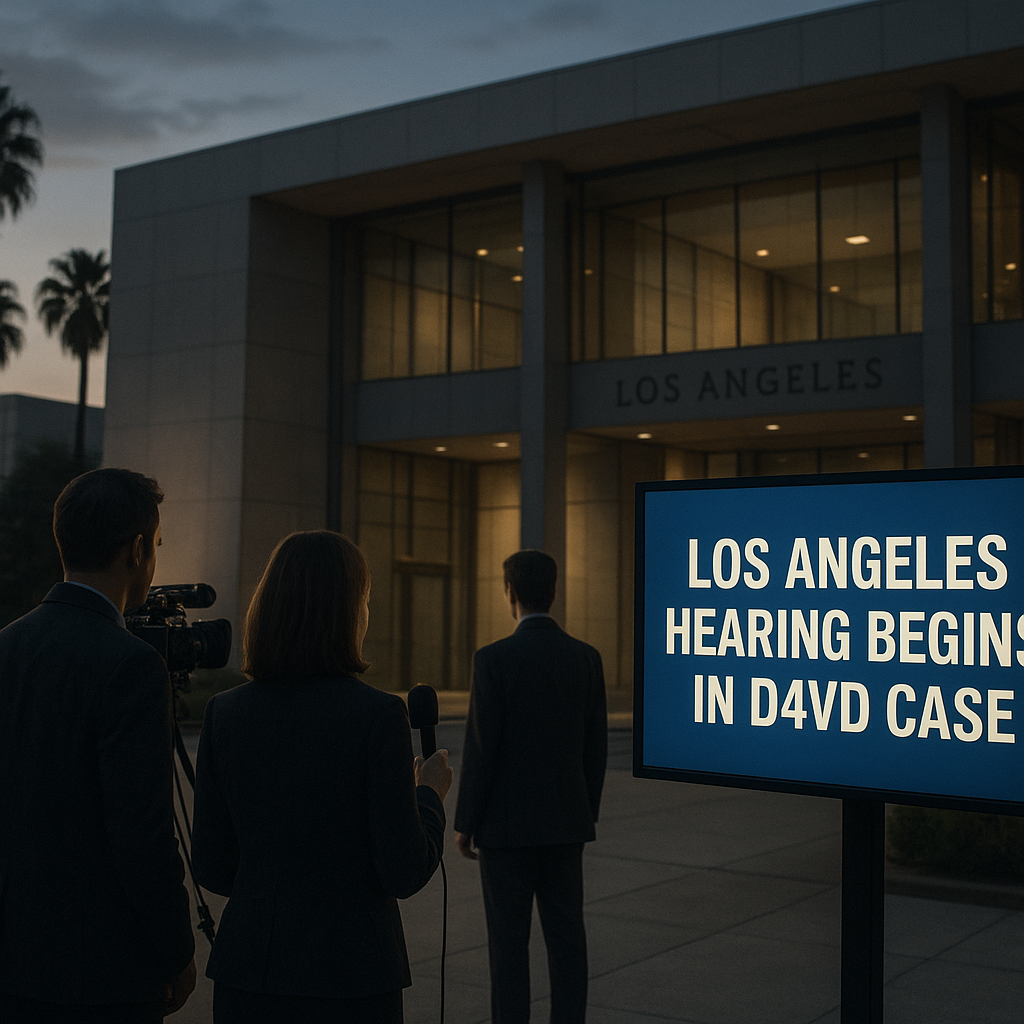
Los Angeles hearing begins in D4vd case as singer faces murder and felony charges in teen’s death
A multi-day hearing began Tuesday in Los Angeles in the case involving singer D4vd, who is facing murder and other felony charges in the death of a teenage girl. Prosecutors are expected to lay out the foundation of their case in court, while defense attorneys will have an opportunity to challenge the evidence and the legal theory behind the charges.
Key Takeaways- A multi-day hearing is underway in Los Angeles in a high-profile homicide case.
- The singer known as D4vd is facing murder and other felony charges tied to the death of a teenage girl.
- Court proceedings at this stage can shape what evidence is used later and how the case moves forward.
- The hearing is being watched closely because it combines a serious violent-crime allegation with a public figure defendant.
What happened
The hearing comes after investigators and prosecutors moved forward with a case that has drawn intense public attention because of both the nature of the allegations and the defendant’s fame. According to the report referenced by CBS News’ Gwen Baumgardner and Jessica Levinson, the proceeding began Tuesday in Los Angeles and centers on the death of a teenage girl. D4vd, the singer at the center of the case, is facing murder and additional felony charges.
At this stage, the public record remains limited. That is typical in serious homicide cases before trial. Hearings often focus on the mechanics of evidence, witness testimony, and legal disputes over what can be presented to a jury. They can also reveal how prosecutors plan to connect the facts in a way that supports the charges, or how the defense intends to weaken that connection.
Because the case is in a pretrial phase, the court is not deciding guilt or innocence now. Instead, the hearing is likely to address issues that could affect the shape of the trial itself: probable cause, admissibility of evidence, and the strength of competing narratives. In many felony cases, these early proceedings matter as much as the eventual trial because they determine what the jury will and will not hear.
For readers following the broader criminal justice system, this is also a reminder that high-profile cases often move through the same legal steps as any other homicide case, even if the coverage is wider and the public scrutiny sharper. Similar procedural issues show up in other major cases, including disputes over charging decisions, evidence handling, and witness credibility. Coverage of court filings and hearing strategy often shows how much turns on pretrial litigation, not just the dramatic facts of the alleged offense.
In a case involving a teenage victim, the stakes are especially high. Prosecutors are expected to present facts that explain not only what happened, but why the evidence supports a murder charge rather than a lesser offense. Defense attorneys, by contrast, will likely probe the timeline, challenge the sufficiency of the evidence, and question whether the prosecution can prove each element beyond a reasonable doubt.
The hearing also sits within a wider context of public concern about violence involving young victims. When a case involves a minor, the court may also confront issues related to privacy, sealed records, and how much information can be made public without harming the integrity of the process. Those protections are especially important when the victim is a teenager and the case is already attracting national attention.
Legal context and charges or proceedings
A murder charge is among the most serious accusations in criminal law. In California, prosecutors generally must prove not only that a death occurred, but that the defendant acted with the mental state required by the specific murder theory charged. Depending on the facts, that can mean premeditation, intent to kill, or other forms of malice recognized by state law.
Felony charges beyond murder can serve several purposes in a homicide case. They may reflect allegations tied to concealment, obstruction, tampering, or conduct connected to the victim’s death. They can also broaden the prosecution’s case and provide alternative theories if the evidence on the main count is disputed. For that reason, pretrial hearings often become a battleground over what counts as relevant conduct and what should be excluded as prejudicial or speculative.
If you want background on how charging decisions affect later litigation, our coverage of how prosecutors build felony cases offers a useful framework. So does our reporting on pretrial detention and bail disputes, which often shape the pace and pressure of a serious case long before a jury is seated.
Legal experts watching this case will likely pay close attention to whether prosecutors rely on direct evidence, forensic evidence, witness statements, digital records, or some combination of the four. In many modern homicide prosecutions, text messages, location data, surveillance footage, phone metadata, and social media records can be central. Those materials may help establish a timeline or corroborate one witness’s account while undermining another’s.
The defense, meanwhile, may seek to suppress certain statements or challenge the reliability of evidence gathered during the investigation. In California criminal practice, motions to exclude evidence can be decisive. If a judge limits a key piece of proof, it can reshape plea discussions or narrow the theory presented at trial.
Another issue in cases like this is how the hearing interacts with the constitutional rights of the accused. The presumption of innocence remains intact even in a case that has drawn widespread attention. So does the right to counsel, the right to confront witnesses, and the right to challenge the state’s case in open court.
That is why early hearings matter. They create the first formal record of how each side will frame the facts. They also give the judge an opportunity to manage discovery disputes, set deadlines, and enforce the boundaries of admissible evidence. For a homicide case with felony add-ons and public scrutiny, those decisions can carry real consequences.
The proceeding in Los Angeles is not occurring in a vacuum. It comes during a period in which courts across the country are dealing with heavy public attention on violent crime, celebrity criminal cases, and the long shadow of social media-driven reporting. Coverage can be fast, but criminal procedure moves more slowly. Judges generally have to decide cases on evidence, not the noise around them.
Law enforcement or court response
The court response in a case like this is usually tightly managed. Judges often limit what can be said publicly, especially if pretrial motions involve sensitive evidence or if witnesses could be affected by public commentary. Prosecutors will seek to protect the integrity of the case, while defense lawyers may push for as much transparency as possible in order to test the state’s claims.
Police and investigators, for their part, are likely under pressure to show that the case was built carefully and lawfully. In a homicide case involving a well-known defendant, any perceived misstep can become part of the defense narrative. That means chain of custody, warrant applications, interview notes, and digital evidence collection all matter. One gap in the record can become a major issue at trial.

The hearing also reflects how local criminal courts handle cases that attract broad media attention. Proceedings in Los Angeles often become a test of how the justice system balances public access against fairness. That balance can be difficult when a defendant is famous and the alleged victim is a teenager. The judiciary has to ensure that publicity does not compromise juror impartiality or the rights of the people involved.
For readers interested in the mechanics of criminal investigation, our reporting on investigative steps in major felony cases explains why prosecutors frequently spend months or longer before bringing a case to this stage. Complex forensic questions, witness coordination, and evidence review often take time, especially in potential homicide matters.
It is also worth noting that court hearings can reveal the extent to which a case is already negotiated behind the scenes. Some homicide cases ultimately resolve with plea agreements. Others move forward to trial after weeks or months of contested hearings. The public usually sees only the courtroom moments, but the real work happens in interviews, forensic labs, and chambers conferences.
If the hearing is being used to test witness accounts, the judge may have to decide who can testify and on what topics. If it centers on search warrants or digital evidence, the court may evaluate whether law enforcement had proper grounds to collect the material. If it involves venue or publicity concerns, the focus could shift to jury selection and whether the trial can be fair in a city where the case has already become news.
That is why the current proceeding is more than a procedural stop. It is a checkpoint. It tells the public something about the strength of the prosecution, the seriousness of the defense, and the court’s willingness to scrutinize every step before the case reaches a jury.
Community and policy implications
Cases like this can ripple far beyond the courtroom. For the victim’s family and friends, the legal process is often long, public, and emotionally draining. Each hearing can reopen questions that have not yet been resolved. That burden is especially heavy when the victim is a teenager and the case is followed closely online.
For the broader community, a high-profile homicide case can intensify concerns about youth safety, violence prevention, and the ability of the justice system to respond quickly and fairly. It can also lead to sharper debates about how much information should be disclosed during an active case. Families of victims often want transparency. Defense lawyers want limits. Judges must decide where fairness and openness intersect.
There are policy questions here as well. How do police investigate a case that may involve both digital evidence and celebrity scrutiny? How do courts protect juror neutrality when social media can spread information faster than official filings? How do prosecutors avoid overcharging while still pursuing a serious violent offense when the facts appear to support it? Those are not abstract questions. They shape public confidence in the outcome.
The case also illustrates how criminal proceedings involving entertainers or online personalities can blur the line between legal news and pop culture coverage. That can be a problem. When a case becomes entertainment, the underlying legal issues can get lost. Yet those issues matter: probable cause, proof beyond a reasonable doubt, witness credibility, and the proper use of forensic evidence all determine whether the state can carry its burden.
For a broader look at systemic questions raised by major criminal cases, see our coverage of criminal justice policy and public safety and civil rights concerns in high-profile prosecutions. Both help explain why the handling of one case can influence broader expectations about fairness and accountability.
There is also a wider lesson for the media. Reporting on a murder case tied to a famous figure requires careful language. Allegations are not proof. Charges are not convictions. And sensational coverage can distort how the public understands the law. The justice system depends on patience, even when the audience does not have much of it.
At the same time, cases like this can expose disparities in attention. Lesser-known defendants often move through the same process with far less coverage, even though the legal questions are identical. That difference can shape public perception, but it should not shape legal outcomes.
Frequently Asked Questions
What is happening in the D4vd case in Los Angeles?
A multi-day hearing began Tuesday in Los Angeles in a case where the singer known as D4vd is facing murder and other felony charges in the death of a teenage girl.
Is this a trial?
No. Based on the report, this is a hearing in the pretrial phase. Hearings like this can address evidence, procedure, and legal disputes before a case goes to trial.
What charges are involved?
The case involves murder and other felony charges, though the exact scope of the allegations and the prosecution’s theory may become clearer through court proceedings.
Why do pretrial hearings matter?
They can determine what evidence will be allowed, how the case is framed, and whether certain statements or materials can be used at trial.
Could the case still be resolved before trial?
Yes. Many felony cases end in plea agreements or are narrowed by court rulings before trial begins, although that outcome depends on the evidence and the parties’ decisions.
Why is this case drawing so much attention?
It involves a public figure and the death of a teenage girl, which makes it both a serious criminal case and a high-profile media story.
The next steps in the Los Angeles hearing will likely define how much of the state’s case survives early legal challenges. In a homicide prosecution, that matters. So does the discipline of the court, the rigor of the evidence, and the willingness of both sides to let procedure do its work before anyone talks about an outcome.