Jury deliberations in the murder trial of Lindsay Clancy entered a third day, underscoring how closely jurors are weighing a case that has drawn intense...
Lindsay Clancy Murder Trial Jury Deliberates for Third Day as Case Nears a Verdict
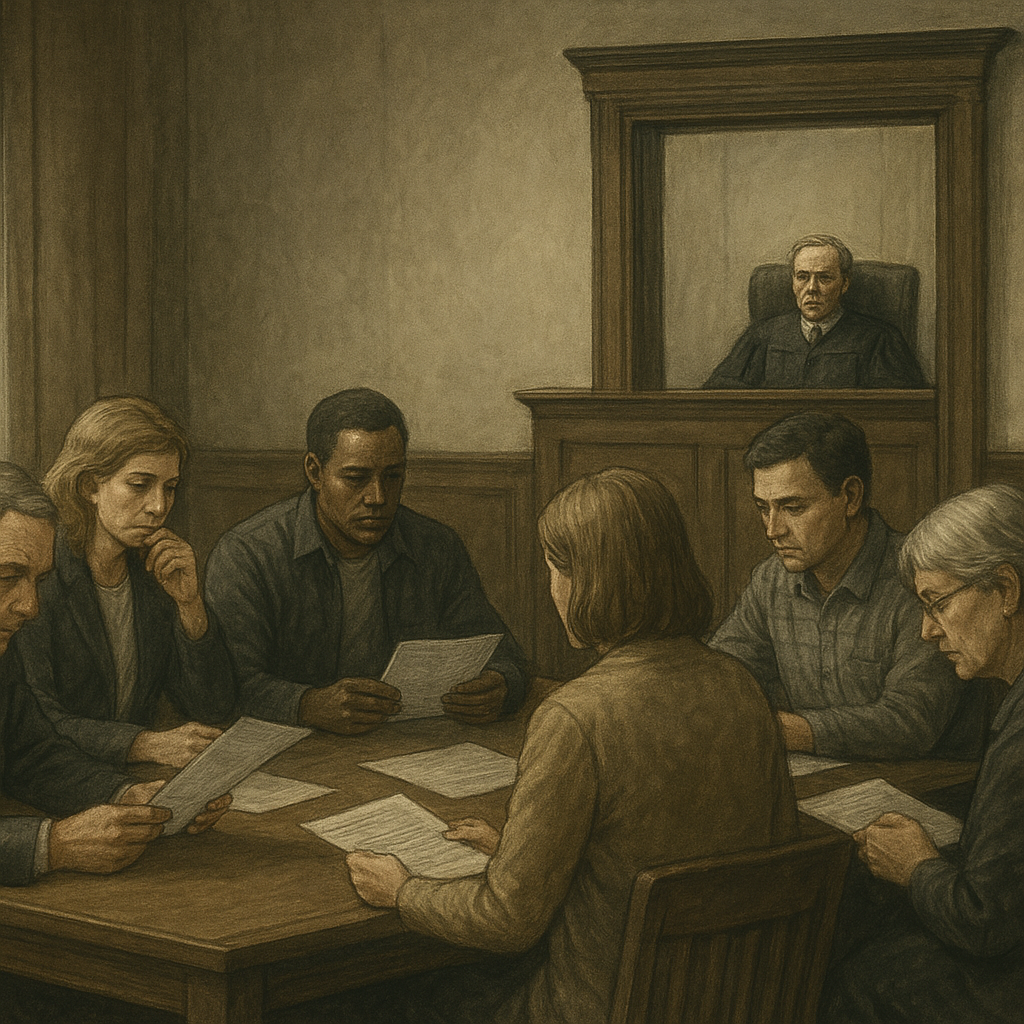
Jury deliberations in the murder trial of Lindsay Clancy entered a third day, underscoring how closely jurors are weighing a case that has drawn intense attention because of its extraordinary facts and the difficult questions it raises about mental health, criminal responsibility, and parental violence.
Key Takeaways:- Jurors have not yet returned a verdict after three days of deliberations.
- The case centers on the deaths of Clancy’s three children and the competing narratives presented by prosecutors and the defense.
- The trial has highlighted how Massachusetts law treats criminal responsibility, mental health evidence, and the burden of proof.
- The outcome may influence public debate over postpartum mental illness, while remaining bound to the evidence presented in court.
The Clancy trial has unfolded under heavy public scrutiny, but the jury’s work is governed by a simple legal task: decide whether prosecutors proved beyond a reasonable doubt that Lindsay Clancy committed the charged killings, and whether the defense created reasonable doubt about her criminal responsibility at the time.
The deliberations reflect the structure of a high-stakes homicide case. Jurors have already heard weeks of testimony, reviewed medical and forensic evidence, and listened to closing arguments that asked them to choose between starkly different accounts of what happened inside the Clancy home in Duxbury, Massachusetts. Prosecutors described an intentional and devastating act. The defense argued that Clancy was suffering from severe psychiatric illness that left her unable to form the necessary intent or appreciate what she was doing.
That conflict is at the heart of the case, and it is one reason the jury’s continued deliberation has drawn attention well beyond the courtroom. The legal questions are serious and narrow, even if the underlying facts are tragic and emotionally charged.
What happened
The criminal case stems from the deaths of Clancy’s three children, an event that shocked the Massachusetts community and immediately raised questions about domestic safety, mental health treatment, and the limits of the criminal justice system when a defendant’s mental state is in dispute.
According to the evidence presented at trial, the prosecution alleged that Clancy killed the children and then attempted to take her own life. The defense did not contest that the children died in the family home, but it argued that Clancy’s mental condition at the time was central to understanding her actions and determining whether she was legally responsible in the ordinary way.
That distinction matters. In homicide prosecutions, the state does not simply need to show that a death occurred. It must prove the defendant’s identity, the act itself, and the level of intent required by the charged offense. In a case involving mental health evidence, jurors are also asked to consider whether the defendant had the capacity to form that intent or whether some recognized legal defense applies.
The Clancy case has become one of the most closely watched murder trials in the state because it sits at the intersection of several hard issues at once: child deaths, psychiatric records, postpartum mental illness, and the limits of expert testimony. The trial has also drawn interest because of the unusual and tragic contrast between a largely private family case and the very public debate that followed it.
For readers following the broader criminal justice picture, the case is not simply about one family. It shows how prosecutors, defense lawyers, judges, and juries handle cases where the central dispute is not whether a tragic event occurred, but what it meant legally and whether the defendant can be held fully criminally liable.
The jury’s third day of deliberations suggests the evidence has not produced a quick consensus. That is not unusual in a case of this size and complexity. When jurors spend multiple days behind closed doors, it can mean several things: they are carefully working through the elements of each charge, they are comparing competing expert opinions, or they are sorting out whether the defense theory creates enough doubt to prevent conviction on one or more counts.
In a murder trial, slow deliberation does not itself reveal the outcome. But it does show that the panel is treating the evidence as serious and difficult, which is exactly what the legal system expects in a case where the stakes are so high.
Legal context and charges or proceedings
The legal framework in the Clancy case is built around Massachusetts homicide law and the state’s rules on criminal responsibility. While details of the specific charges matter, the larger issue is the same in many serious criminal cases: the prosecution bears the burden of proving the charges, and the defendant is presumed innocent unless the jury decides the evidence overcomes that presumption.
If the state charged murder, jurors would need to determine whether prosecutors proved the required mental state. If the defense raised mental illness, the jury would also have had to consider whether Clancy met the legal standard for an insanity-type defense or whether her condition, while serious, fell short of the threshold for relieving criminal liability.
That is where the case becomes especially complicated. Mental illness is not the same as legal insanity. A person may be deeply unwell, hospitalized, or suffering from a severe psychiatric condition and still be legally responsible under criminal law. Courts generally require more than evidence of distress or diagnosis. They require proof tied to the specific legal standard in the jurisdiction.
The prosecution’s role was to present evidence that Clancy acted intentionally and that the law did not excuse the conduct. The defense’s role was to show that her psychiatric condition was not merely background but central to the events and to her capacity to form intent or understand her actions.
This kind of dispute is common in high-profile criminal cases involving mental health, but it is rarely simple. Jurors must evaluate witness credibility, expert testimony, medical records, timeline evidence, and the legal instructions given by the judge. Often, the most important issue is not whether the defendant was suffering, but whether the suffering meets a legal test that the jury has been told to apply.
The third day of deliberations may also indicate that jurors are working through specific counts or lesser-included offenses. In many homicide trials, juries must decide one count at a time, and they may take longer if the evidence differs across charges or if unanimity on the most serious count proves elusive.
The judge’s instructions are central here. Jurors are usually told they must not be swayed by sympathy, media coverage, or personal disagreement with the law. They are instructed to apply the law as written to the facts as they find them. That is especially important in a case that has generated emotional reactions from the public.
For those interested in how serious criminal cases are handled more broadly, this trial sits within a familiar pattern seen in homicide prosecutions, competency disputes, and cases involving psychiatric evidence. Similar tensions often arise in cases reported under Courts coverage and in long-running Investigations where the legal meaning of a suspect’s mental health becomes a disputed issue.
Law enforcement or court response
The court’s response in a case like this is shaped by procedure. Once a case reaches the jury, the judge’s job is to ensure the process remains orderly, fair, and legally sound. That includes responding to jury questions, handling requests for readbacks or exhibits if allowed, and making sure the deliberation room remains insulated from outside influence.
Prosecutors, meanwhile, have already presented their case. Their task was to show the jury what happened and why the law supports conviction. In a child homicide case, that often means relying on forensic evidence, witness testimony, medical findings, and the sequence of events leading up to the deaths. The state usually emphasizes intent, planning, or conduct inconsistent with accident or legal excuse.
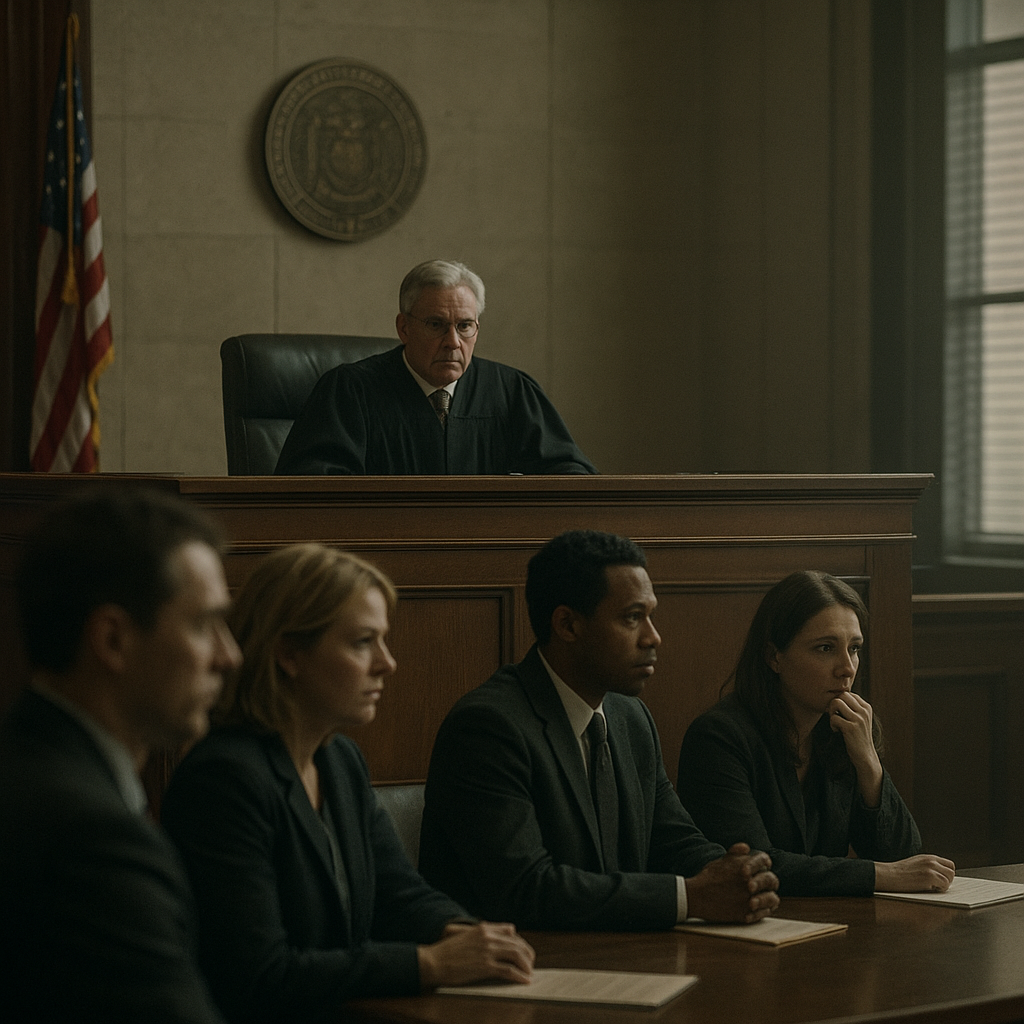
The defense likely focused on mental health evidence, including expert testimony about psychiatric illness, medication history, and the defendant’s state of mind. In cases like this, defense lawyers often argue that the defendant was in crisis and that the state has not met its burden to prove criminal culpability beyond a reasonable doubt.
The judge’s role in managing the trial deserves attention as well. Homicide trials involving mental health defenses are sensitive because they demand careful boundaries. Judges must allow the jury to hear relevant evidence while excluding material that is prejudicial or not supported by law. They also must ensure the jury understands that sympathy for the family, the defendant, or the victims cannot substitute for legal proof.
Law enforcement’s role in a case like this typically begins long before trial. Police investigators, crime scene specialists, medical examiners, and prosecutors work together to build the case file. In a family homicide investigation, every piece of evidence matters: phone records, home security information, witness statements, medical history, and the timeline around the deaths and any attempted self-harm.
By the time the case reaches trial, much of the police work is no longer visible to the public. What the jury sees is the distilled version of months of investigation. That is one reason jury deliberations can take time: they are not only weighing live testimony, but also reconstructing the case from the evidence that survived pretrial litigation and courtroom objections.
The court response also includes protecting the integrity of the proceeding. In a widely reported murder trial, judges and court staff have to guard against the risk that publicity will distort the process. That matters both for the defendant’s rights and for public confidence in the verdict.
If a verdict is reached, it will not end the legal conversation. There can be post-trial motions, appeals, or sentencing proceedings depending on the outcome and the charges. If the jury is unable to agree on some or all counts, the case could move into another phase, including the possibility of a retrial on unresolved charges.
Community and policy implications
The Clancy trial has broader significance because it touches on a set of issues that are increasingly part of criminal justice reporting: mental health, postpartum psychiatric care, family violence, and how the legal system responds when a defendant’s illness is central to the case.
Public reaction to the case has often moved between sympathy and outrage, but policy discussion should stay grounded in what the criminal case can and cannot answer. A murder trial is not a public health hearing, and a jury verdict is not a psychiatric diagnosis. The courtroom can determine guilt or innocence under the law. It cannot resolve the larger questions of why severe mental illness sometimes goes untreated or how families can be better supported before a crisis becomes fatal.
That distinction matters for lawmakers and advocates. Cases like this often prompt calls for improved maternal mental health screening, easier access to psychiatric treatment, more robust postpartum follow-up, and better coordination between obstetric care, primary care, and behavioral health services. Those are policy questions, not criminal findings. But the criminal case brings them into sharper focus.
The trial also raises perennial questions about the role of mental health evidence in violent crime cases. Some advocates worry that highly publicized cases can distort public understanding of serious psychiatric illness by encouraging the idea that mental illness is always linked to violence. That is not supported by the broader evidence base. Most people with mental illness are not violent, and criminal cases of this kind are exceptional rather than typical.
At the same time, the justice system must confront the reality that severe psychiatric symptoms can affect behavior, judgment, and intent. The law has long recognized that distinction through doctrines involving competency, criminal responsibility, and mitigation. But those doctrines are narrow, and they can be hard for the public to understand when the facts are tragic.
The case may also influence how defense lawyers and prosecutors frame mental health evidence in future trials. Prosecutors may seek to make clearer distinctions between illness and legal excuse. Defense attorneys may continue pushing for juries to understand that a defendant’s mental state can be so impaired that ordinary assumptions about decision-making do not hold.
In that sense, the Clancy case is part of a larger set of civil rights and policy debates about access to care, crisis intervention, and the criminalization of psychiatric failure. It also connects to ongoing discussions in Courts and Policy coverage about whether the legal system is equipped to handle defendants with complex mental health histories without flattening those histories into either excuse or malice.
Community impact is harder to measure, but no less important. High-profile child homicide cases often leave local residents searching for explanations that the legal process cannot provide. Families, neighbors, and school communities may want certainty where the evidence only supports legal standards. When a case reaches jury deliberation, it means the courtroom has done what it can; the rest depends on how jurors interpret the record.
For victims’ families, the process can be punishingly slow. For defendants, the uncertainty is equally severe. For the public, the case can feel like a referendum on mental illness, parenting, and the justice system all at once. It is none of those things exclusively. It is a homicide trial governed by evidence and law.
Readers following similar cases may also be interested in how courts handle expert testimony and criminal responsibility in other proceedings reported under our Courts, Investigations, and Policy coverage. Those cases often show the same pattern: emotionally charged facts, careful legal instructions, and a jury that must make sense of competing narratives without stepping outside the record.

Frequently Asked Questions
What is happening in the Lindsay Clancy murder trial right now?
The jury has been deliberating for a third day, which means jurors have not yet reached a verdict and are still reviewing the evidence, the law, and the charges.
What did prosecutors argue?
Prosecutors argued that the evidence proved Clancy intentionally killed her children and that the state met its burden under Massachusetts homicide law.
What is the defense saying?
The defense has focused on Clancy’s mental health, arguing that severe psychiatric illness affected her state of mind and raised doubt about criminal responsibility.
Why can jury deliberations take several days?
Deliberations can take time because jurors must work through multiple charges, legal instructions, expert testimony, and competing interpretations of the evidence.
Does mental illness automatically excuse a defendant from criminal liability?
No. Mental illness alone does not automatically excuse criminal conduct. The legal standard depends on the jurisdiction and the specific defense raised at trial.
What happens if the jury cannot agree?
If jurors are unable to reach a unanimous verdict on one or more counts, the judge may declare a mistrial on those counts, which can leave room for a retrial.
Why has the case drawn so much attention?
The case involves the deaths of three children, mental health evidence, and a set of legal questions that are both tragic and complex, which has made it a major criminal justice story.
What broader issues does the trial raise?
The case has prompted discussion about postpartum mental health care, access to treatment, and how the justice system evaluates defendants whose psychiatric condition is central to a homicide case.
The most important point now is that the jury, not the public, must decide the verdict based on the law and the evidence presented in court. However the case ends, it will remain a difficult example of how homicide law, mental health evidence, and courtroom procedure meet under extraordinary pressure.