Duane Davis, known as "Keefe D," is one step closer to a jury verdict after attorneys and the judge finalized instructions Friday, following the close of...
Keefe D Trial Nears Jury Deliberations After Witness Testimony in Tupac Shakur Case
Duane Davis, known as "Keefe D," is one step closer to a jury verdict after attorneys and the judge finalized instructions Friday, following the close of witness testimony Thursday in the Nevada trial over the 1996 drive-by shooting that killed Tupac Shakur. Davis has denied prosecutors’ allegation that he orchestrated the attack.
Key Takeaways:- Jury instructions were finalized after testimony ended Thursday.
- Duane Davis is on trial in Nevada in connection with Tupac Shakur’s killing.
- Prosecutors allege Davis helped orchestrate the 1996 drive-by shooting; Davis denies it.
- The case has drawn national attention because of the long-unsolved nature of the killing.
What happened
The trial centers on one of the most closely watched cold cases in modern American criminal justice. Prosecutors say Davis played a central role in the events that led to Tupac Shakur’s death in Las Vegas in September 1996. The case has spent decades in the public eye, but only recently moved into the courtroom on a charge serious enough to put Davis at risk of a lengthy prison sentence if convicted.
Witness testimony wrapped Thursday, and the court then turned on Friday to jury instructions, the roadmap jurors will use when they begin deliberations. Those instructions are critical. They define the legal standards the jury must apply, explain the elements of the offense, and set the boundaries for how jurors may evaluate evidence and witness credibility.
In a high-profile case like this, the instructions can matter as much as the closing arguments. Jurors are not being asked to decide whether Davis was morally responsible in a broader sense or whether the killing changed music history. They are being asked whether prosecutors have proved the charged offense beyond a reasonable doubt under Nevada law.
The allegations center on a drive-by shooting that killed Shakur while he was in Las Vegas. The murder has long carried a halo of rumor, competing stories, and false leads. For years, public fascination outpaced the courtroom record. That changed when investigators and prosecutors brought the case into court, turning a pop-culture mystery into a criminal proceeding governed by rules of evidence and criminal procedure.
The trial has therefore become more than a celebrity case. It is also a test of whether prosecutors can convert decades-old statements, prior accounts, and witness testimony into a coherent case that satisfies a jury. That is difficult in any homicide prosecution. It is harder when the events at issue took place nearly 30 years ago.
A case this old also raises basic questions about memory, documentation, and delay. Witnesses may have forgotten details, documents may be incomplete, and some evidence may no longer exist. Defense lawyers often argue that time erodes fairness. Prosecutors, by contrast, may point to the persistence of the underlying crime and to statements made by people who were close to the events.
The final stage of the trial is now underway because the evidentiary record is closed. What remains is the legal framing and the jurors’ assessment of whether the state has met its burden. If they convict, the case becomes part of the long afterlife of the Tupac Shakur homicide. If they acquit, the trial will still stand as a rare attempt to resolve a case that has remained open in the public imagination for decades.
For readers following the broader court system, this moment recalls how long-running investigations can eventually turn into charged cases even after years of silence. Similar dynamics have shaped other major criminal proceedings, including recent court coverage, law enforcement developments, and ongoing investigations that move slowly before reaching a courtroom.
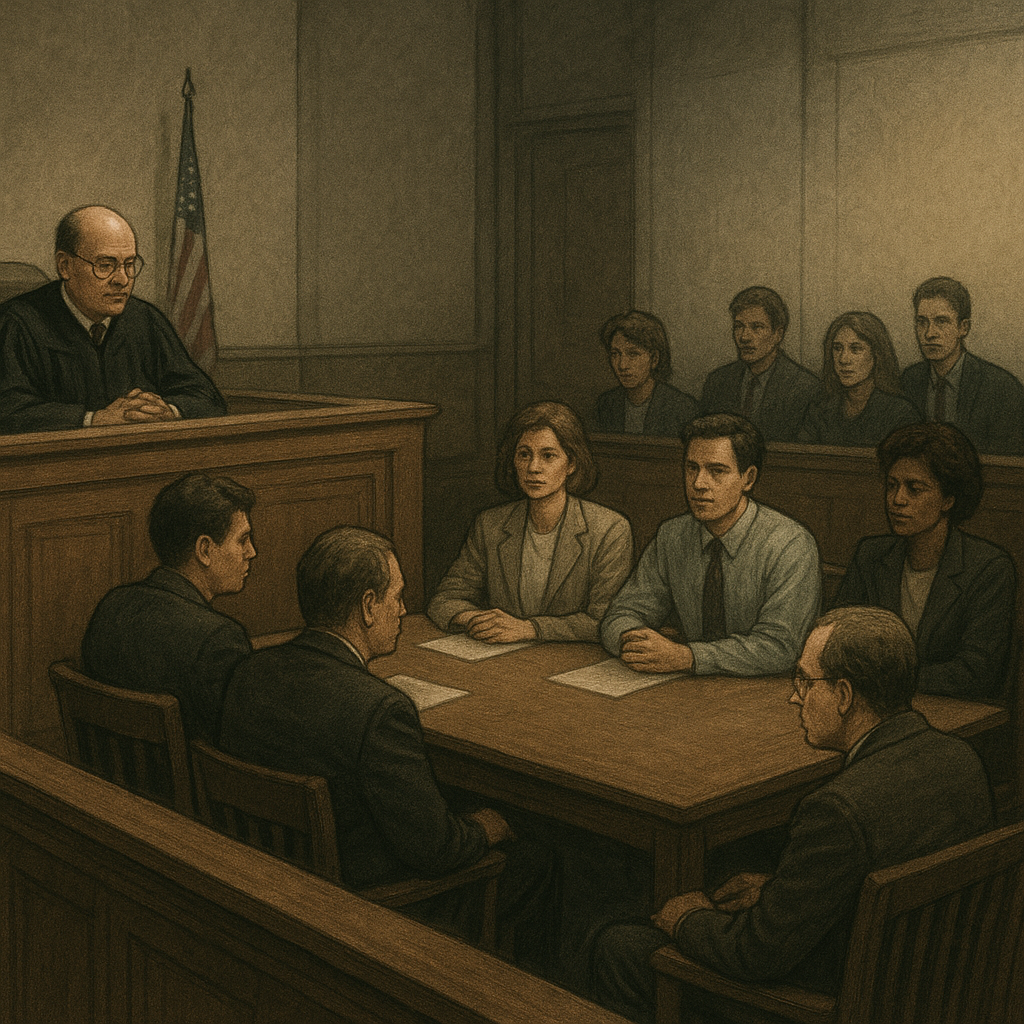
Legal context and charges or proceedings
The legal stakes in the Davis case are shaped by both the charge itself and the age of the underlying allegations. In homicide-related cases, prosecutors must prove the defendant’s role beyond a reasonable doubt. If the theory is that a defendant organized or facilitated the killing rather than firing the weapon, the state must still tie that person to the criminal plan with admissible evidence.
That distinction matters. Jurors do not convict on suspicion, media reports, or a sense that someone may have known more than he admitted. They convict on the evidence presented in court, tested through cross-examination and measured against the instructions the judge gives them.
Davis has denied the allegations, and that denial places the state under the usual criminal burden. The defense likely emphasizes the passage of time, the possibility of inconsistent statements, and any gaps in the prosecution’s proof. It may also argue that witnesses had motives to shift blame, seek attention, or reshape old stories after many years.
Because the case involves events from 1996, the court must also manage issues that do not always arise in fresher prosecutions. Evidence preservation, witness availability, and the reliability of historical accounts can all become central questions. Even when the basic narrative seems familiar to the public, the courtroom version must be built from evidence that satisfies the rules of criminal procedure.
Jury instructions become the final filter. They explain concepts such as reasonable doubt, the presumption of innocence, and how jurors should evaluate testimony from people who may have their own interests or criminal histories. In a case with intense public attention, those instructions are also a warning: jurors must decide the case on the record, not on decades of speculation.
The trial also reflects a recurring feature of American criminal law: high-profile cases often arrive in court long after public opinion has already hardened. That creates pressure on both sides. Prosecutors must avoid overreaching. Defense attorneys must prevent the jury from being swayed by notoriety alone. The judge’s role, especially at the instruction stage, is to keep the trial within legal bounds.
A verdict in the Davis case will likely hinge on whether the jury believes the prosecution’s account of who did what, when, and with what intent. The exact labels in the charge matter less than the state’s ability to prove participation and culpability under Nevada law. That is true whether the trial concerns a local robbery, a long-unsolved homicide, or a case that has captured national attention.
The criminal justice system often deals in delayed accountability. The public may see delay as frustration or even failure. Courts, however, operate on the principle that time alone does not erase the state’s authority to prosecute serious crimes, especially homicide, so long as the case remains legally viable.
For an overview of related legal and policy issues, see crime coverage, civil rights reporting, and policy analysis that examines how old cases, new evidence, and prosecutorial discretion intersect.
Law enforcement or court response
The court’s move to finalize jury instructions signals that the presentation of evidence is complete and the case is in its final phase. That procedural step matters because it shows the trial has moved from fact-finding to decision-making. The jury will soon be asked to deliberate under the judge’s guidance, not to listen for new testimony or additional theories.
Law enforcement’s role in a case like this extends beyond the arrest. Investigators spent years piecing together a homicide file rooted in a 1990s shooting, likely relying on witness accounts, old reports, and any surviving records that could support charges. Once prosecutors filed the case, the burden shifted from investigation to courtroom proof.
This is where major criminal cases often reveal the divide between investigation and trial. Police and prosecutors may believe they have a strong narrative. But a jury sees only what can be admitted and challenged in open court. The defense gets the opportunity to probe weaknesses, expose inconsistencies, and argue that the state’s case is built on unreliable memories.
The judge’s instructions will also reflect the court’s effort to keep jurors focused. In a famous case, there is always a risk that the story outside the courtroom overwhelms the one inside it. The court can’t erase public awareness, but it can insist on due process. That is one reason detailed instructions are so important.
The process also highlights how old cases can become legally actionable when investigators continue to review them. Cold-case work has become a larger part of modern policing, especially in homicide units and specialized investigative teams. Some cases are reopened because of new witnesses; others because of shifting cooperation agreements, new forensic tools, or renewed public pressure.
In a case this prominent, every procedural move is scrutinized. The finalization of jury instructions may sound routine, but it is a visible sign that the court is nearing a verdict. For prosecutors, it is the culmination of a long effort to bring charges in a case that had lingered for decades. For the defense, it is the point at which legal arguments must give way to a jury’s judgment.
Court watchers often compare such moments to other major proceedings where factual disputes and legal standards collide. For broader context on criminal proceedings and agency responses, readers can follow courts coverage, law enforcement coverage, and investigations coverage.

Community and policy implications
The Tupac Shakur case carries unusual cultural weight, but the criminal justice issues it raises are familiar. Long-unresolved homicides often become proxies for larger questions about investigative priorities, case backlogs, and whether all victims receive equal attention from law enforcement.
When a famous case finally reaches trial decades later, it can renew scrutiny of how police manage old homicide files. Why did the case take so long? What evidence persisted? What witness cooperation became available only later? Those questions matter not just here but in cold-case work nationwide.
The trial may also shape public understanding of how prosecutors use witness testimony in older cases. Jurors in delayed prosecutions often hear from people whose lives have changed, whose recollections have shifted, or whose credibility is attacked because of the passage of time. That is not unique to this case. It is a common issue in cases involving old violence, prison informants, or cooperator testimony.
There are policy implications as well. Some criminal justice reform advocates argue that resources should be directed toward preventing violence and solving current cases more quickly. Others counter that serious homicides should remain prosecutable until the facts can be assembled, no matter how long it takes. Both views can coexist within the same public debate.
The case also intersects with concerns about transparency. When a prosecution arises years after the event, the public wants to know what changed. Was there new evidence? A new witness? A new prosecutorial strategy? The answers can shape trust in the justice system. If the public sees a case as finally being handled with care, confidence can improve. If the case is perceived as symbolic or opportunistic, skepticism can grow.
For communities affected by violence, long delays can be exhausting. Families may feel trapped between grief and the absence of closure. A trial cannot restore the person lost, but it can provide a formal reckoning. That is one reason homicide prosecutions remain so important even after long periods of inaction.
For the defense, policy debates are secondary to the specific evidence. Still, older prosecutions often raise fair-trial concerns that extend beyond one defendant. Defense attorneys routinely argue that memories fade, documents disappear, and witness incentives become harder to assess over time. Those concerns are especially potent in a case that has lived in public memory for nearly three decades.
The broader policy lesson is that delayed justice is not the same as denied justice, but delay changes the meaning of justice. It can make trials more fragile, more heavily dependent on credibility, and more sensitive to what jurors are told in the instructions. That is precisely why the final legal framework in this case matters.
Readers interested in how courts and policy debates overlap can also review policy coverage, civil rights coverage, and prisons coverage, where long-term justice system outcomes are examined through a broader lens.
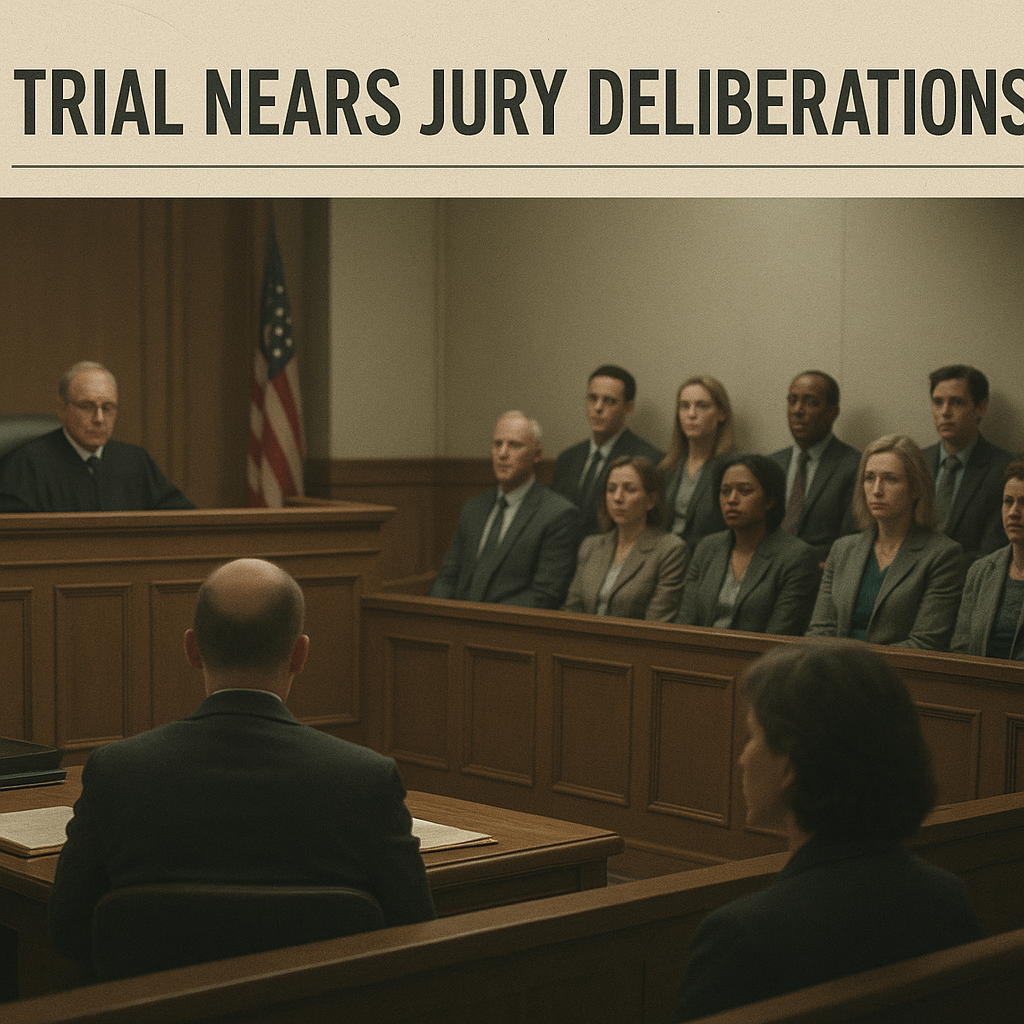
Frequently Asked Questions
What is Duane Davis accused of?
Davis is accused by prosecutors of orchestrating the drive-by shooting that killed Tupac Shakur in 1996. He has denied the allegations.
Why are jury instructions important?
Jury instructions tell jurors the law they must apply, the elements of the charged offense, and how to evaluate evidence. They are essential in every trial, especially in a high-profile case.
Has the evidence phase ended?
Yes. According to the report, witness testimony wrapped Thursday, and attorneys finalized jury instructions with the judge Friday.
Why is this case happening so many years later?
The killing occurred in 1996, and the case remained unresolved for years before prosecutors brought Davis to trial. Long delays are common in some cold cases, especially when evidence or witnesses take time to surface.
What happens next?
The jury is expected to begin deliberations after receiving the final instructions and hearing closing arguments, if those have not already occurred.
Could this case affect other cold-case prosecutions?
Potentially. High-profile cases can influence how police and prosecutors handle old homicide files, witness statements, and evidentiary review in other long-running investigations.
The end stage of this trial is a reminder that criminal cases are decided less by public memory than by admissible evidence, burden of proof, and the jury instructions that shape deliberations. However widely known the case may be, the legal system still comes back to the same question: has the state proved its case beyond a reasonable doubt?
If jurors answer yes, the verdict will mark a major moment in a decades-old homicide investigation. If they answer no, the case will still stand as an example of how difficult it can be to prosecute a long-cold murder after nearly 30 years. Either way, the trial underscores a basic fact of criminal justice: time can change everything except the need for proof.