Janice Randle’s death sat unresolved for years. Police found her dead in her bed in 1992, yet an arrest did not come until new information surfaced, showing...
Janice Randle’s death sat unresolved for years. Police found her dead in her bed in 1992, yet an arrest did not come until new information surfaced, showing how one break in evidence can reopen a cold case and shift a murder inquiry from guesswork to prosecution.
Key Takeaways
- Janice Randle’s death remained unsolved for years after she was found dead in 1992.
- Police had no arrest until new information changed the case.
- Cold cases often stall because of weak early evidence, witness gaps, or bad forensic timing.
- New witnesses, revised forensic work, and persistence often make the difference.
- Cases like this show why justice delayed is still justice owed, especially when a family waits in silence.
What is the Janice Randle case?
The Janice Randle case is a cold-case homicide investigation centered on a woman found dead in her bed in 1992, with an arrest only coming after later information gave detectives a workable path. That is the plain version. No drama needed. The facts matter more than the chatter.
When I look at cases like this, the first thing that stands out is how often the public assumes police had everything figured out from day one. Usually, they did not. Most cold cases begin with fragments, not a clean story. A body is found. A scene is processed. A few people talk. Then the trail goes thin. The evidence may point somewhere, but not sharply enough to support an arrest or, later, a conviction.
That is the real problem. Murder investigations are not television plots where the killer leaves a neat trail and confesses before the credits roll. They are messy, slow, and often dependent on one honest witness, one overlooked detail, or one scientific method that did not exist when the case began. In the early 1990s, DNA work was useful but not as mature or widely deployed as it is now. Digital records did not help. Cellphone data did not help. Surveillance was thinner. People lied. Some kept quiet out of fear, guilt, or plain old self-protection.
So when new information finally emerged in the Randle case, it likely did more than fill a small gap. It may have connected several loose ends into a prosecutable chain. That is often how these things work. One new witness can validate an old suspicion. One re-test of evidence can sharpen a timeline. One confession, even a partial one, can tip the scale. Frankly, the system often moves only when the evidence becomes impossible to ignore.
There is also a moral side here that news coverage tends to skip. A dead person is not a file folder. She is a human being with dignity, and her family is left carrying the costs. Justice is not just about catching someone. It is about telling the truth about what happened, who suffered, and who is accountable. That matters whether the case is old or new.
Core details and context
The broad outline is simple, but the details explain the delay. Here’s what usually matters in a case like this, and likely mattered here too.
- Initial scene work can be decisive, but only if investigators have enough to lock onto a suspect early.
- Witness cooperation often weakens over time. People move, forget, or decide silence is safer.
- Forensic limits in 1992 meant some evidence that is routine today may have been unavailable or underused then.
- Suspect behavior can slow a case. A person who knows police are unsure may stay quiet for years.
- New information can come from a tip, a witness, a family member, or a fresh forensic review.
Most news stories obsess over the arrest itself, but that is not the whole story. The more interesting question is why the case sat so long. Cases like this usually involve one or more of the following:
- A weak or incomplete original investigation
- Not every early investigation is sloppy, but some are simply underpowered.
- If detectives do not have a solid witness or strong physical evidence, the file stagnates.
- A failure of memory, not just evidence
- People often think memory is stable. It is not.
- Over years, witnesses forget exact wording, timing, and sequence. That hurts probable cause.
- Evidence that only makes sense later
- A clue that looked minor in 1992 may become significant after a new statement or a modern lab review.
- This is where persistence matters more than noise.
- Community hesitation
- In many cases, someone knows something but does not speak.
- Fear, loyalty, and shame can keep a case frozen for years.
I’ve covered enough homicide cases to know that the cleanest public narrative is usually the worst one. People say, “Why didn’t police just arrest him?” As if probable cause is a magic trick. It is not. An arrest without enough support can wreck a case. Prosecutors need a coherent path, not a hunch. Courts care about evidence, not certainty by rumor.
Here’s the kicker: once new information emerged, the case could be reassembled around old facts that suddenly made sense. That is how many cold cases move. The new piece is not always huge by itself. It just makes the whole stack stop wobbling.
For context on how murder investigations are revisited, see the FBI’s cold case resources, which explain why old homicides can remain open for years.
And because forensic evidence often becomes the hinge, it helps to understand how the field has changed. The National Institute of Justice has a useful overview of evolving techniques in forensic science.
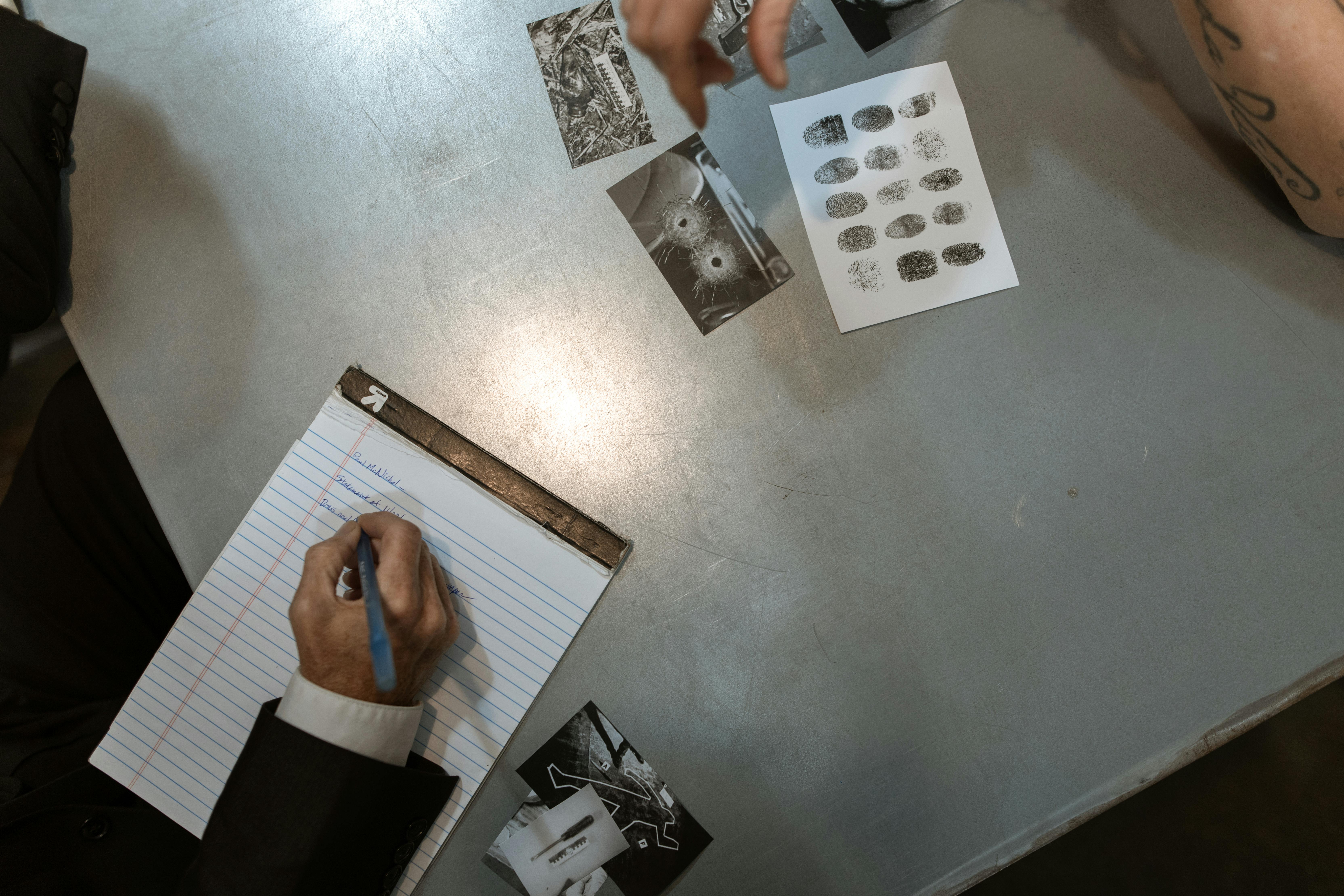
Timeline and what likely happened
The timeline is the part people want, and the part that usually disappoints them. It is not dramatic. It is procedural.
- 1992: Janice Randle is found dead in her bed
- This is the starting point.
- Investigators respond, document the scene, and begin interviewing people around her.
- Early inquiry stalls
- No immediate arrest follows.
- That usually means police lacked a witness, a strong forensic link, or both.
- Case remains open
- Detectives keep the file active, but it becomes a cold case in practice.
- The public may hear little or nothing, which is common.
- New information emerges years later
- A witness comes forward, a person changes their story, or evidence gets reviewed again.
- The new material gives investigators something concrete enough to act on.
- Arrest is finally made
- Once the case reaches probable cause, police move.
- After that, prosecutors decide whether the evidence can support trial.
I think the public often misses step four. That is where the case lives or dies. The new information is not just a headline. It is usually the bridge between suspicion and action. Without it, investigators may know where they want to go, but not how to get there.
Timeline-wise, old cases can be revived in a few ways:
- Witness memory improves or shifts after a period of silence.
- New physical evidence is re-tested with better methods.
- A statement against interest appears, often from someone close to the suspect.
- Tip lines or renewed public attention push someone to talk.
Let’s be real: “new information” is a broad phrase. It can mean a lot of things, and reporters often keep it vague because the details are tied up in an open investigation or a court filing. But its effect is clear. It transformed a dormant file into a live case.
That matters because the legal standard is not the same as the moral one. Morally, a death found in a bed demands truth. Legally, investigators need admissible facts. Both are necessary. One without the other is incomplete.
For broader background on how old homicide cases are handled, the Department of Justice cold case work is worth a look.

Comparison table: cold cases vs. active homicide cases
| Feature | Janice Randle-style cold case | Typical active homicide case |
|---|
| Speed of arrest | Often delayed for years | Often days or weeks |
| Evidence quality | Fragmented at first | Fresh and more complete |
| Witness memory | Fades over time | Still relatively sharp |
| Forensic tools | Limited by older methods | Better labs and data tools |
| Public attention | Low until breakthrough | High at the start |
| Prosecutorial path | Depends on new evidence | Built from early evidence |
| Main obstacle | Silence, missing clues, weak links | Preserving the scene and momentum |
The contrast says a lot. A cold case is not simply an unsolved case. It is a case in which time has done damage. Time eats memory. Time blunts urgency. Time gives liars room to rehearse.
And yet, time can also help. That is the strange part. A witness may decide to speak. A lab may revisit evidence. A suspect may slip. So the same thing that buries the case can also revive it.
I’ve seen people treat this as a failure story only. That is too easy. Yes, delays are frustrating. Yes, families deserve better. But cold-case work also shows patience, and in a cynical age that counts for something. Human beings are not widgets. Truth takes time because people are involved.
That said, no one should romanticize delay. A family waiting for years pays in grief, stress, and fear. There is a reason Scripture returns so often to justice for the vulnerable. Society is judged, in part, by what it does when the powerful can stall and the weak cannot. That principle applies here without needing a sermon.
For a look at why old cases remain difficult, the National Criminal Justice Reference Service has resources on investigation and case management.
Common misconceptions and what to know
People get this wrong all the time. Not maliciously, usually. Just lazily.
Misconception 1: Police just ignored the case.
Not necessarily. Lack of an arrest does not mean lack of effort. Sometimes investigators have a suspect but not enough admissible evidence. That distinction matters. A lot.
Misconception 2: A cold case is hopeless.
Wrong. Cold does not mean dead. It means the case slowed down, often because the evidence was thin or the witnesses dried up.
Misconception 3: New information always means DNA.
No. Sometimes the breakthrough is a witness statement, a jailhouse conversation, a financial trail, or a re-interview that exposes a contradiction.
Misconception 4: Old cases are easy to solve with modern tech.
Not really. Technology helps, sure, but it cannot invent evidence that was never collected. A bad scene in 1992 stays a bad scene unless some piece can still be recovered.
Misconception 5: An arrest means the truth is settled.
No again. An arrest is only the start of the legal process. Prosecutors still have to prove the case, and defense lawyers will pick it apart.
Most news coverage misses the real story here: the machinery of justice is cautious for a reason. That caution is annoying when you want a fast answer, but it protects due process. The alternative is worse. A sloppy arrest can ruin a case and let the true offender walk. That is not justice. It is theater.
Here is what to keep in mind about cases like Janice Randle’s:
- A delay can reflect weakness in the case, not indifference.
- New information can be small but legally decisive.
- Families often know more about the human cost than the public does.
- Moral responsibility includes remembering the victim as a person, not just a file.
That last point is not sentimental fluff. It is practical. Good reporting, good policing, and good civic memory all begin by treating the dead with dignity and the living with honesty. That is stewardship of the common good, plain and simple.
For a look at why old cases remain difficult, the National Criminal Justice Reference Service has resources on investigation and case management.
Frequently asked questions
Why did it take so long to arrest someone in the Janice Randle case?
Because investigators likely lacked enough admissible evidence at first. In cases like this, an arrest usually waits until new information strengthens the file enough for probable cause or prosecution.
What counts as “new information” in a cold case?
It can be a witness statement, a confession, a forensic match, a re-analysis of old evidence, or even a contradiction that breaks open a suspect’s story. The exact trigger varies.
Can a case from 1992 still be prosecuted successfully?
Yes. Older homicides can still move forward if the evidence is strong enough. Courts do not reject a case just because it is old.
Why are cold cases so hard to solve?
Because time weakens memory, scatters witnesses, and limits the value of old evidence. If the original scene was poorly documented, investigators are left working with less than they need.
What does this case say about justice?
It says justice is often slow, but not meaningless. When a case finally moves, it can still bring accountability, even if years have passed. That kind of persistence matters.
Final thought
Janice Randle’s case is a blunt reminder that time does not erase wrongdoing. It only buries it under paperwork, silence, and secondhand memory. Then, sometimes, one piece of new information cuts through the dirt. That is what happened here.
When I look at cases like this, I do not see a neat procedural win. I see the cost of delay, the burden on a family, and the hard work of investigators who may spend years chasing a fact most people never hear about. That work is not glamorous. It is disciplined, patient, and often thankless. Still, it matters.
There is also a deeper point, one news coverage usually skips because it is not flashy enough. Human life has weight. The dead are not abstractions, and justice is not a slogan. It is a duty. A society that forgets that drifts into cheap cynicism, where the loudest voice matters more than the truest one. That road is a mess.
So yes, the arrest came late. Too late for comfort. Too late for all the ordinary days that were lost. But if the case finally moved because someone told the truth, or evidence finally spoke, then the record began to correct itself. Not perfectly. Never perfectly. But enough to say the search for justice was still worth the trouble.