Five Indianapolis police officers are now facing criminal charges after prosecutors said they used Flock automated license plate reader cameras to track...
Indianapolis officers charged over alleged misuse of Flock cameras as concerns grow about license plate reader oversight
Five Indianapolis police officers are now facing criminal charges after prosecutors said they used Flock automated license plate reader cameras to track romantic partners and other people for reasons unrelated to law enforcement. The case has intensified scrutiny of how police departments use vehicle surveillance tools that can map a person’s movements across a city in seconds.
Key Takeaways:- Five Indianapolis officers were charged after allegedly using Flock cameras for personal tracking.
- The case raises questions about access controls, audit logs, and supervisor oversight.
- Automated license plate readers can help solve crimes, but they also create privacy and civil liberties risks.
- The charges may lead to tighter rules on who can query camera networks and why.
The allegations, if proven, are not about a technical glitch or an isolated policy lapse. They go to the core of public trust. License plate reader systems are marketed as investigative tools that can help locate stolen cars, identify vehicles tied to violent crime, and provide time-stamped location data to detectives. But the same features that make the technology useful in criminal investigations can also make it easy to misuse.
When officers with direct access to a camera network use it to monitor former partners, friends, or other private targets, the harm is not abstract. It can expose where someone lives, works, worships, or seeks medical care. It can also show patterns of travel that reveal relationships and routines. That makes the Indianapolis case part of a broader debate over whether law enforcement agencies have adopted surveillance tools faster than they have built the safeguards needed to govern them.
The officers’ charges came as advocates and local officials across the country are reconsidering how much discretion police should have to query automated license plate readers, often abbreviated ALPRs. In many departments, the devices are placed on poles, patrol cars, or fixed camera systems and feed data into searchable databases. A request for a plate can return a trail of sightings that may stretch across weeks or months. The technology has quickly become part of routine policing, yet public rules around storage, searches, and audits vary widely.
The Indianapolis case also arrives at a moment when police surveillance policy is under broader pressure. Cities and states have adopted different approaches to body cameras, facial recognition, and data-sharing arrangements with private vendors. Flock, one of the best-known companies in the ALPR market, has become a frequent subject of public records disputes and privacy complaints. The central issue is not whether the cameras exist, but who controls access to the information and what happens when that access is abused.
The criminal charges against the five officers may prove to be an unusual test of accountability. In many public-sector privacy controversies, the public learns about improper searches only through audit reports, lawsuits, or internal discipline. A prosecution changes the stakes. It signals that prosecutors believe the conduct may amount not just to a policy violation but to criminal wrongdoing.
That distinction matters. If the allegations are accurate, the officers were not merely pushing the edges of a vague rule. They were using state-authorized surveillance infrastructure for personal ends. The public question is whether existing criminal statutes are sufficient to punish that conduct, or whether lawmakers will decide that police misuse of digital surveillance needs a more precise legal framework.
The case could also affect how departments think about digital evidence and access logs. In theory, every query should leave a trail. In practice, oversight depends on whether supervisors review those trails, whether audits are frequent, and whether violations trigger real consequences. When officers know that a search can be traced, misuse becomes harder. When logs are incomplete, poorly reviewed, or easily bypassed, the accountability system weakens.
For residents, the concern is straightforward: if police can search a citywide camera network to track a romantic partner, what stops the same tool from being used against a neighbor, protest organizer, witness, journalist, or critic? That fear is why ALPR policy has become a civil liberties issue, not just a law enforcement one.
As this case develops, it will be watched for what it reveals about internal controls, prosecutorial standards, and the practical limits of surveillance oversight. It may also shape the next round of policy fights in city councils and statehouses over how long plate data can be stored, who may query it, and whether independent audits are required.
What happened
According to the reported allegations, five officers in Indianapolis used Flock camera data to monitor people for personal reasons, including romantic partners. That conduct, if substantiated in court, would represent a serious breach of department policy and an abuse of a surveillance network intended for public safety. The officers are not accused of using the cameras in the course of a routine criminal investigation. Instead, prosecutors say the searches were made outside any legitimate law enforcement purpose.
That detail is central. Automated license plate readers are often defended on practical grounds. Police departments use them to identify vehicles linked to robberies, shootings, kidnappings, drug trafficking, and stolen-property cases. The systems can read thousands of plates quickly and compare them with hotlists or investigative targets. In the best-case scenario, they help solve crimes faster and recover victims or stolen property sooner.
But the same efficiency creates risk. If an officer can type in a plate or scan a vehicle and instantly receive location history, the system becomes a powerful surveillance tool. Without firm rules, it can be used to follow people who are not suspected of crimes. That is why the Indianapolis case has drawn attention well beyond the department itself.
The charges also raise the question of how the alleged misuse was discovered. In many cases involving surveillance abuse, the first signs come from an internal audit, a complaint, or a review of access logs after a suspicious pattern appears. If the records show repeated searches tied to personal phone numbers, home addresses, or former partners’ vehicles, prosecutors may be able to build a case around the pattern itself. The exact evidentiary record will matter greatly as the case moves forward.
The public has become more aware of ALPR systems because they are often installed in neighborhoods, business districts, and major intersections with limited public discussion. Drivers may not realize that their vehicles can be photographed and logged repeatedly as they move through a city. Unlike a one-time traffic stop, ALPR networks collect data at scale. That data can create a travel record even when no crime has been reported.
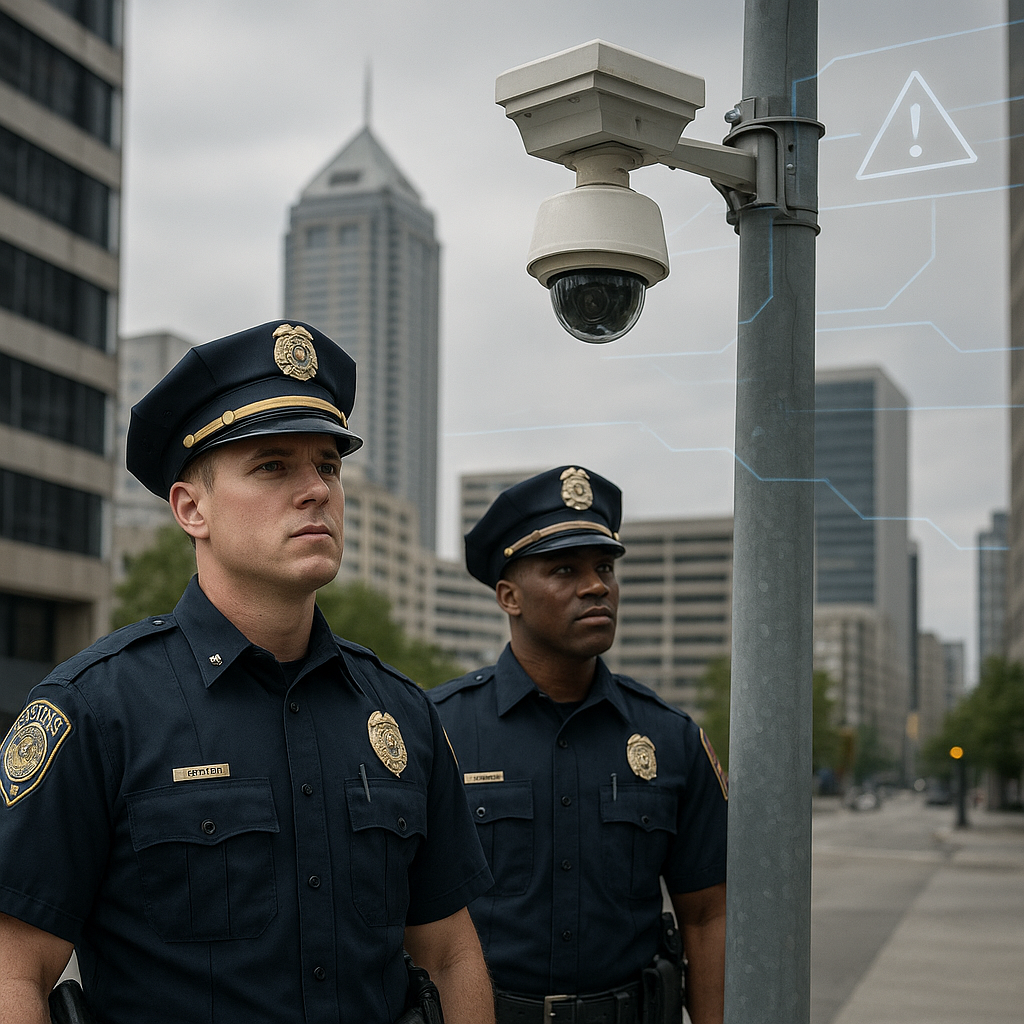
In Indianapolis, the allegations have triggered renewed skepticism about whether the convenience of such systems has outpaced the safeguards around them. Questions now extend beyond the individual officers to the department’s approval process, how often access is reviewed, and whether supervisors had enough visibility into queries to stop improper use sooner.
The allegations also fit a pattern privacy advocates have warned about for years: surveillance tools designed for exceptional cases becoming routine, then being misused because routine access feels normal. Once a technology becomes part of daily policing, the barrier between legitimate and improper use can blur unless agencies clearly define the purpose of every search.
Legal context and charges or proceedings
The legal significance of the case depends on the specific charges prosecutors filed and the statutes they rely on. In cases involving public officials who misuse government systems, prosecutors may consider offenses related to official misconduct, computer-related crimes, privacy violations, or unauthorized access. The precise charge language matters because it shapes what the state must prove: intent, lack of authorization, and whether the conduct caused harm or was done for personal benefit.
If the officers are accused of using police databases or vendor systems without a law enforcement purpose, the case may turn on whether department policy clearly limited access and whether the officers knew those limits. Written policy can be critical evidence. So can training records, login timestamps, query histories, and any messages showing why the searches were made.
This is where surveillance cases often become legally complicated. A search that is inappropriate under department rules is not always a standalone crime. Prosecutors must show that the conduct fits a criminal statute. That means the case could become a test of how existing laws treat misuse of digital systems by sworn officers. In some jurisdictions, prosecutors have to prove the officer knowingly exceeded authority. In others, they may need to show deception, falsification, or a pattern of unauthorized access.
There is also a constitutional layer in the background. Courts have increasingly recognized that location data can be sensitive because it reveals intimate details of daily life. Although ALPR data is not identical to cellphone location tracking, the privacy concern is similar: repeated data points can create a detailed map of where someone goes. That has led judges and lawmakers to examine whether government access to such records should be treated as a search with stricter limits.
The Indianapolis charges may not themselves resolve those constitutional questions, but they sit squarely inside them. When police use a camera network to track a private person rather than a suspect, the case becomes a vivid example of why data-retention and access policies matter. Even when no court declares a constitutional violation, the facts can still drive legislative reform or policy changes.
The proceedings will likely also test the role of internal discipline versus criminal enforcement. Departments often respond to misconduct through suspension, reassignment, termination, or decertification proceedings. But when the conduct involves deliberate misuse of technology, the line between policy violation and criminal act can narrow. A prosecutor may decide that internal discipline alone is not enough to restore public confidence.
The existence of vendor-managed systems adds another layer. Flock and similar companies maintain databases or interfaces that allow agencies to search camera hits. This raises questions about auditability, data ownership, and whether private vendors can help or hinder oversight. If the company system preserved strong logs, that may help investigators. If the tools permit broad access without meaningful friction, critics will say the product design itself contributed to the misuse.
Legal scholars and civil liberties groups have long argued that surveillance policy should not depend on trust alone. It should require rules that are enforceable, auditable, and comprehensible to the public. In this case, the charges suggest that the guardrails were either insufficient or insufficiently enforced.

The proceedings may also intersect with broader criminal justice policy debates in Indiana. State lawmakers and local officials could face pressure to clarify what data police may collect, how long it may be stored, and whether non-criminal searches should trigger automatic alerts to supervisors or outside monitors. If the case produces evidence of repeated misuse, it may become a catalyst for statutory limits.
For now, the legal process will likely move through arraignment, pretrial motions, and discovery. Defense lawyers may argue that the officers acted within a gray area or that policies were unclear. Prosecutors, by contrast, will likely stress the personal nature of the searches and any evidence that the officers understood the requests were improper. The outcomes could vary widely depending on what records exist and what each officer knew.
Law enforcement or court response
Police departments generally defend ALPR systems as force multipliers. They point to rapid recovery of stolen cars, help in locating wanted fugitives, and added investigative speed in violent-crime cases. Many agencies say the problem is not the technology itself, but the misuse of access. In that view, a stricter audit system, better training, and more robust discipline can preserve the benefits while limiting abuse.
Still, the Indianapolis case makes that position harder to sustain without qualifications. When multiple officers are accused of misusing the same system, the issue may be less about one bad actor and more about institutional weakness. That can include poor supervision, inadequate logging review, unclear rules on permissible searches, or a culture that does not treat privacy violations as serious enough.
If the department has released a statement, the language will matter. Agencies often emphasize that alleged misconduct does not reflect the work of most officers. That is true, but it can also obscure the operational question: how did the searches go unnoticed, and for how long? If the cameras are truly deployed at scale, oversight has to be more than a promise.
Courts may eventually see motions over access records, digital evidence, or employment-related statements. Defendants in public-corruption or misconduct cases often challenge how the investigation was initiated and whether any evidence was obtained lawfully. If the case includes internal records from the vendor platform, chain-of-custody issues may also arise.
There is also a personnel side to the response. Officers facing criminal charges may be suspended, placed on leave, or terminated. In some states, certification boards can take separate action that affects whether an officer may continue working in law enforcement elsewhere. Those steps are important because one agency’s discipline does not always prevent an officer from seeking another badge.
The prosecution may also influence other agencies’ own audits. When one department’s misuse becomes public, neighboring departments often review their ALPR access logs and policy manuals. They may discover that their own standards are loose, even if no misconduct has yet been reported. That ripple effect is one reason the Indianapolis case matters well beyond the city.
Public response has followed a familiar split. Some residents see the charges as proof that police surveillance needs stronger limits. Others worry that the focus on misuse will obscure the practical value of ALPRs in solving crimes. Both reactions are understandable. The harder task is deciding what oversight model can preserve legitimate investigations while reducing the chance of personal or retaliatory searches.
That debate is not confined to Indianapolis. Across the country, police agencies use plate readers in settings ranging from freeway corridors to neighborhood intersections. Some local governments require public notices, data-retention limits, or warrant rules for certain searches. Others leave more discretion to departments. The result is a patchwork that can be difficult to explain to the public and easy to exploit by insiders.
Community and policy implications
For communities, the stakes are practical and constitutional. People do not need to understand the technical details of every ALPR platform to grasp the core concern: constant surveillance changes the relationship between residents and the state. If a system can reconstruct where a car has been, it can also reveal whether someone attended a political meeting, visited a clinic, met a lawyer, or stayed overnight at another address.
That is why the misuse allegations are resonating with civil rights advocates. They are not arguing that police should abandon all digital tools. They are arguing that the public should not be required to trust surveillance systems without meaningful boundaries. If an officer can access a citywide camera network for a personal purpose, then the threat is not hypothetical. It is documented.
The policy implications are likely to focus on four areas. First, access controls: agencies may need stronger role-based permissions so only certain personnel can make searches. Second, logging and audits: departments may need regular, independent review of query histories. Third, retention: shorter storage windows reduce the amount of historical data available for abuse. Fourth, public transparency: residents may want published policies and annual reports on how often the systems are used.
There is also a labor and culture component. Officers are trained to think about investigations, probable cause, and officer safety. They are not always trained to think about surveillance ethics in the same way they think about use-of-force policy. If departments want fewer abuses, they may need to treat digital privacy training with the same seriousness as firearm training or evidence handling.
The Indianapolis case could become a reference point in state legislatures debating surveillance rules. Some lawmakers may use it to argue for narrower authority and stricter penalties when officers misuse public data. Others may push back, warning that heavy-handed restrictions could slow investigations. The likely result, if reform happens, will be narrower and more specific rules rather than a wholesale ban.
For defense attorneys and prosecutors alike, these cases also raise due process questions. If access rules are vague, it becomes harder to distinguish intentional misconduct from sloppy practice. Clear policy is good for everyone. It protects the public, but it also protects officers by reducing ambiguity about what is allowed.
At the same time, civil liberties groups will likely argue that clearer rules are not enough if there is no outside oversight. They may advocate for civilian review boards, inspector general audits, or statutory reporting requirements. That position reflects a basic reality of surveillance governance: systems meant to collect data about the public are difficult for the public to monitor unless the government is compelled to disclose how they are used.
The case also underscores how much modern policing depends on private technology vendors. When surveillance systems are sold as simple tools for public safety, the policy debate can lag behind the deployment. But once allegations of misuse emerge, the conversation changes quickly. Communities begin asking who owns the data, who can access it, and who gets notified when access is inappropriate.
If Indianapolis responds with reforms, other cities may follow. If it does not, the case could add to a growing body of examples used by critics of expansive digital surveillance. Either way, the charges will likely remain part of the broader argument over how much location tracking police should be allowed to conduct without judicial oversight.
Frequently Asked Questions
What are automated license plate readers?
Automated license plate readers are cameras and software that capture vehicle plates and compare them against databases or investigative lists. They can help police identify stolen cars, track suspects, and document vehicle movement.
Why is alleged misuse a serious issue?
Because the systems can reveal where someone has been over time. Using them for personal reasons, such as monitoring a romantic partner, can expose private information and violate trust, policy, and possibly criminal law.
Are ALPR searches always legal?
Not necessarily. Their legality depends on department policy, state law, and in some situations constitutional limits. A search that is allowed for investigative work may be improper if done for personal reasons.
What charges could apply to officers who misuse the system?
Depending on the facts and state law, prosecutors may consider official misconduct, unauthorized computer access, privacy offenses, or related charges. The exact statutes vary.
Will this case change ALPR policy?
It could. Cases like this often lead agencies and lawmakers to tighten audit rules, limit access, shorten data retention periods, or require more public transparency.
The Indianapolis case is still unfolding, and its full significance will depend on what prosecutors prove in court. But even at this stage, it has clarified a basic truth: surveillance tools do not regulate themselves. If agencies want public support for license plate readers, they will need to show that access is limited, audited, and enforceable. Without that, the technology’s promise will keep colliding with the risk of abuse.