Farwell Jury Reports Deadlock in Sandra Birchmore Murder Trial
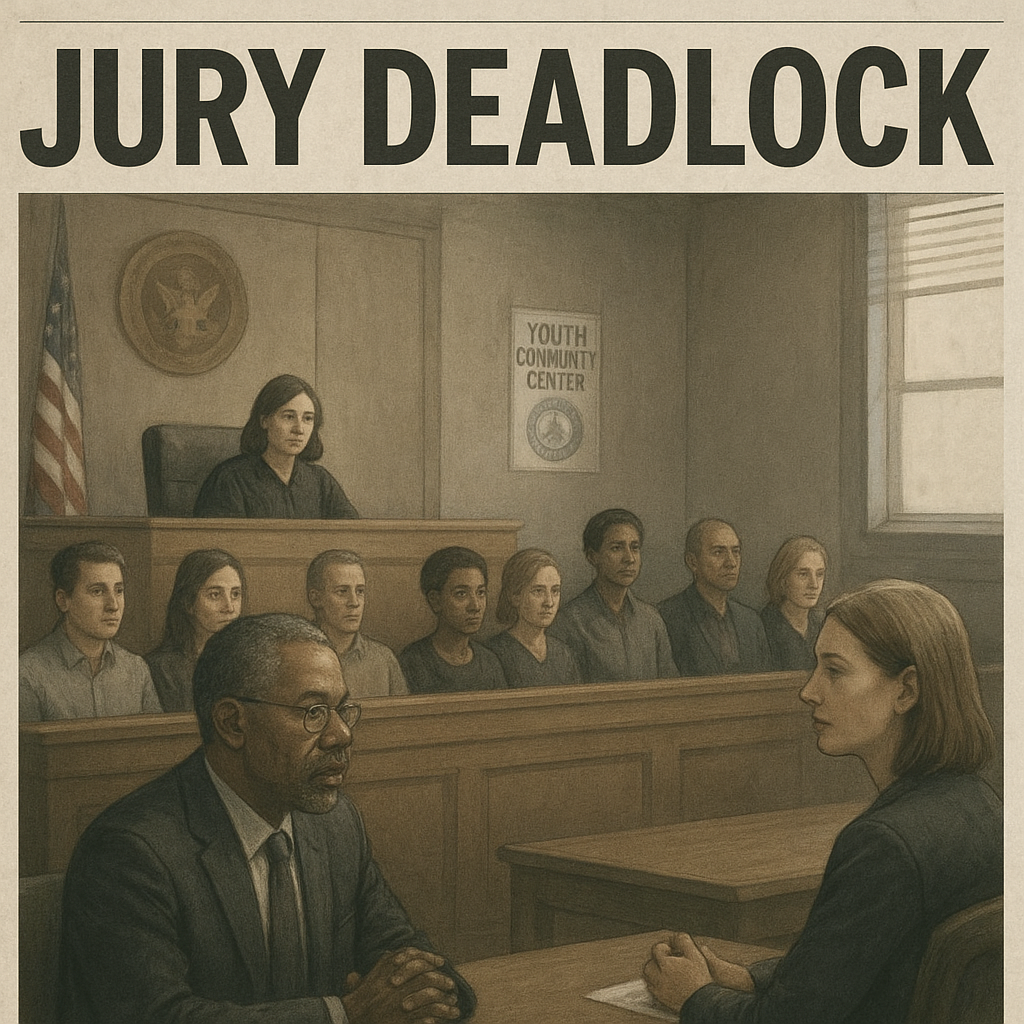
Jurors in the federal trial of former Stoughton police officer Matthew Farwell told Judge Denise Casper on Monday that they were deadlocked over whether he killed Sandra Birchmore in 2021. The note did not end the case: Casper told jurors they could continue deliberating Tuesday, and they were free to return on subsequent days if needed. No verdict had been reached as of Monday evening.
What happened
The jury began deliberating Friday and worked for a little more than three hours before leaving for the weekend. After returning Monday, jurors sent notes to the court indicating they could not agree. Casper addressed them at the start of the day, urging them to take the time they needed. She explained that the courthouse could not stay open past 6 p.m., but that the jurors could return on later days to continue their work.
The note marked an early and uncertain turn in a case built around two sharply different accounts of Birchmore’s death. Jurors must consider whether Farwell caused her death, but the government’s theory also places his alleged reason for doing so at the center of the case. As NBC10 Boston chief legal analyst Michael Coyne explained, jurors who do not believe Birchmore died by suicide still must decide whether Farwell killed her to keep her from reporting alleged crimes to law enforcement.
Federal prosecutors allege that Farwell killed Birchmore on Feb. 1, 2021, after learning she was pregnant with what he believed was his child. They say he tried to make the death appear to be a suicide. At the time, Farwell was a married detective with the Stoughton Police Department. Birchmore, who was 23, had taken part in a youth program connected to the department when she was a child.
In closing arguments, Assistant U.S. Attorney Brian Fogarty described the alleged killing as an effort to erase the consequences of conduct that had begun years earlier. “He went to clean up the mess he created for himself years earlier,” Fogarty told jurors, arguing that the threat of serious charges and damage to Farwell’s life supplied a motive. “He cleaned up the mess by taking Sandra’s life.” Those statements were the prosecution’s argument, not findings by a jury.
Farwell’s lawyers offered a different account. They acknowledge that he had an extramarital relationship with Birchmore, but deny that he killed her. They also say the sexual relationship did not begin until Birchmore was old enough to consent under Massachusetts law. The defense argued that Birchmore had previously threatened suicide and was devastated when Farwell came to her apartment that February to end the relationship.
Defense attorney Kimberly Stevens asked jurors to consider whether Birchmore might have taken her own life while alone and in despair. “When all is lost and all hope is gone and you’re alone in the world, are you going to pick your phone up?” she asked. “Or did she sit down and take that strap and make the pain stop?” The account of the trial does not report the jury’s vote, the exact language of its notes, or which pieces of evidence jurors were discussing. A deadlock alone does not disclose any of those details.
The competing closing arguments underscore why the jury’s task is not simply to choose which side’s account sounds more persuasive. The government must prove the charged offense and its required intent beyond a reasonable doubt. The defense does not have to prove a different account; it can argue that the government has not met that burden. The jurors’ inability to agree on Monday meant they had not reached a unanimous verdict, not that the court had determined what happened.
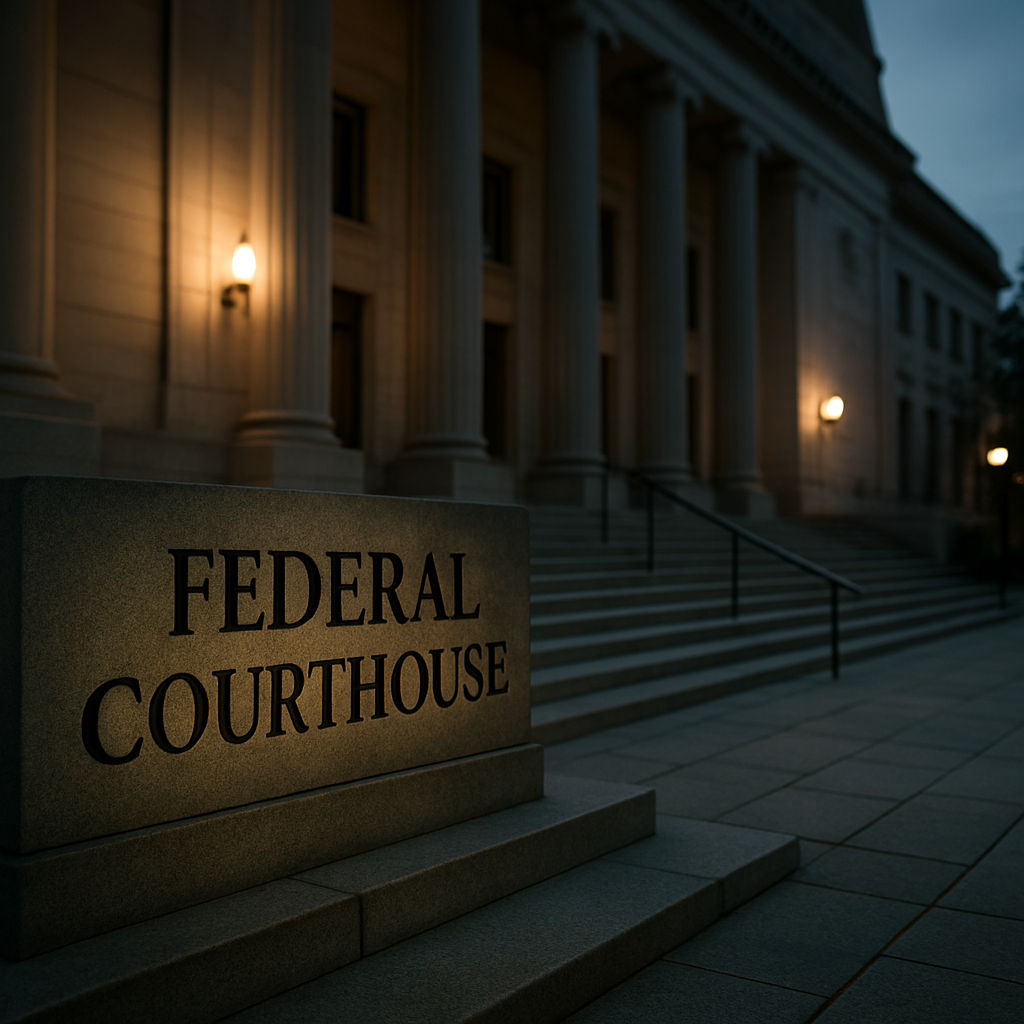
Legal context and the charge
The prosecution’s theory, as described in the arguments to the jury, is that Farwell killed Birchmore to prevent her from telling law enforcement about alleged criminal conduct. That claimed purpose matters because the federal case is not presented as a general inquiry into every aspect of the relationship or as a simple determination of whether a death occurred. The government must establish the elements of the federal charge, including the specific intent required by the law and set out in the judge’s instructions.
A federal statute, 18 U.S.C. § 1512(a)(1)(C), addresses killing someone with the intent to prevent that person from communicating to law enforcement information about the commission or possible commission of a federal offense. The statutory language is available in the U.S. Code. The jury’s actual instructions and the charging document define the questions jurors must answer in this case; a summary of the prosecution’s theory cannot substitute for those documents.
That distinction gives the alleged motive a legal role. Prosecutors say Farwell feared Birchmore could report crimes, including alleged sexual abuse that they say began when she was 15. The defense disputes that account of when the relationship became sexual and argues that Farwell did not kill her. The jury therefore must assess the evidence and apply the legal instructions, rather than treat either side’s description as established fact.
The parties’ arguments about age and consent should also be kept separate from the murder allegation. Farwell’s lawyers say the sexual relationship began only after Birchmore was old enough to consent under Massachusetts law. Prosecutors allege abuse began when she was 15. The facts described at trial do not establish that jurors were asked to return a separate verdict on every allegation concerning the relationship. Their central task is to decide the charge before them under the elements the judge provides. The legal significance of any alleged underlying conduct depends on the specific charge and instructions, not simply on whether the parties describe the relationship as consensual or extramarital.
As in other federal criminal trials, jurors must reach a unanimous verdict to convict. They must also apply the beyond-a-reasonable-doubt standard. That standard does not require certainty beyond all possible doubt, but it requires more than suspicion or a belief that guilt is merely more likely than not. Each juror must assess the evidence independently while taking part in deliberations with the others.
A deadlock is not itself a verdict. It does not mean the judge has accepted the defense account, nor does it show that the jurors have rejected the prosecution’s case. The note says only that, at that point, the jury had not reached agreement. The number of jurors favoring any position was not reported, and the court’s instruction to keep deliberating did not require any juror to abandon an honest view of the evidence.
Court response and what may follow
Casper’s Monday instruction gave jurors more time without telling them to reach a particular result. She said the courthouse could not remain open after 6 p.m., while making clear that deliberations could continue on later days. The schedule was a practical limit on that day’s work, not a deadline requiring a verdict by closing time.
Coyne said he expected Casper might give a supplemental instruction if the jury remained unable to agree. In federal court, such a direction is commonly called an Allen charge, after the U.S. Supreme Court’s decision in Allen v. United States. That decision is available through Justia’s case archive. In Massachusetts state courts, a related instruction is often called a Tuey-Rodriguez charge. The trial was in federal court, and the judge had not given an Allen charge as of the Monday report.
A balanced deadlock instruction may ask jurors to listen carefully to one another, consider whether their views should change, and try to reach agreement if they can. It should not tell a minority to surrender a sincere conviction merely to produce a verdict. A judge may decide whether and when to give such an instruction based on the circumstances; a legal analyst’s prediction that it is likely is not a court order or a certainty.
Federal procedure gives a judge options when jurors say they cannot agree. The judge may allow further deliberations, give an additional instruction, or, if it becomes clear the jury cannot reach a verdict, declare a mistrial and discharge it. Federal Rule of Criminal Procedure 31 addresses jury verdicts and the procedure for a mistrial when a jury cannot agree. A hung jury is not an acquittal. In general, a mistrial caused by a genuinely deadlocked jury does not prevent prosecutors from seeking a new trial, though any next step would depend on the court’s ruling and the case’s circumstances.
At the time described, none of those later outcomes had occurred. The jury was scheduled to return Tuesday. The court had not announced a mistrial, and Farwell had not been found guilty or acquitted. The reported information also does not say whether Casper had received a further note by the end of Monday or what, if anything, jurors asked for beyond more time.
Community and policy implications
The case places a former police officer’s alleged conduct alongside Birchmore’s earlier connection to a youth program involving the department where he worked. That background makes questions of boundaries, supervision and safe reporting relevant to the broader public discussion. It does not, by itself, establish that a particular policy failed or that any other person knew of alleged misconduct. Those questions require evidence and should not be answered by inference from the charge alone.
Youth programs linked to public agencies depend on trust. Agencies can support that trust through clear rules for adult-student contact, documented supervision, accessible ways to report concerns and procedures that allow complaints about staff to be reviewed independently. Those safeguards matter whether a program is run by police, a school, a community organization or another public body. They are general measures, not findings about the Stoughton program in this case.
The allegations also underline why reporting routes matter. A young person or former participant who believes an authority figure has crossed a boundary may be uncertain about whom to tell, especially if the person they fear is connected to the institution. Effective policies should identify reporting options outside the accused person’s immediate chain of command, explain how reports will be handled, and protect the person reporting from retaliation. Any discussion of those principles must avoid implying that Birchmore was responsible for the alleged conduct or for the legal decisions now facing the jury.
The federal trial is one part of a wider accountability question: whether alleged misconduct by a law enforcement officer receives an impartial investigation and a fair adjudication. The fact that this case is being tried in federal court does not, on its own, prove why particular investigative or charging decisions were made. It does show that the allegations are being tested through a criminal process in which prosecutors bear the burden of proof and Farwell has the right to contest the case.
A prolonged deliberation can be difficult for families and a community to watch, but its length does not tell the public whether the evidence is strong or weak. Jurors may disagree over credibility, the meaning of particular evidence, the required intent, or another issue. Which, if any, of those matters caused the impasse was not reported. No public statement from Birchmore’s family or local officials is included in the account of Monday’s developments, so their views should not be assumed.
For the court, the immediate responsibility is to protect both the jury’s independence and the fairness of the process. That means giving jurors time to work, answering procedural questions without steering their decision, and declaring a mistrial only if continued deliberations are unlikely to produce agreement. For the public, the same restraint is necessary: the allegations are serious, but they remain allegations until proved in court, and a reported deadlock is not a substitute for a verdict.
Frequently Asked Questions
What did the jury report Monday?
Jurors told Judge Denise Casper that they were deadlocked in deciding whether Matthew Farwell was guilty in the case over Sandra Birchmore’s 2021 death. The report did not include a vote count or explain the disagreement. Deliberations were set to continue Tuesday.
What does it mean when a jury is deadlocked?
It means jurors have not reached the unanimous verdict required in a federal criminal case and have told the court they are unable to agree at that point. It is not a verdict, an acquittal or an automatic mistrial. The judge may give the jury more time or take other procedural steps.
What is an Allen charge?
An Allen charge is a supplemental instruction a federal judge may give jurors who report difficulty reaching agreement. It generally encourages them to consider one another’s views and continue deliberating, while preserving each juror’s responsibility to reach an independent judgment. Casper had not given that instruction as of Monday’s report.
What do prosecutors allege Farwell did?
Prosecutors allege that Farwell killed Birchmore on Feb. 1, 2021, and tried to make her death look like a suicide. They say he acted to prevent her from reporting alleged crimes, including sexual abuse that they contend began when she was 15. Farwell denies killing her, and the allegations must be proved at trial.
What happens if the jury cannot agree?
If the judge concludes that further deliberations are unlikely to produce a verdict, the court can declare a mistrial and discharge the jury. A hung jury is not an acquittal; prosecutors may generally seek another trial after a mistrial caused by a deadlock. No mistrial had been declared at the time described.
The jury’s Monday note left the central question unresolved. Its next steps belonged to the jurors, working under the judge’s instructions; until they returned a verdict or the court took another formal action, neither side’s account had become the judgment of the court.