The defense has rested in the murder trial of Lindsay Clancy, closing a case that has drawn intense public scrutiny because it sits at the intersection of...
Defense Rests in Lindsay Clancy Murder Trial as Jurors Weigh Mental Health, Intent, and Responsibility
The defense has rested in the murder trial of Lindsay Clancy, closing a case that has drawn intense public scrutiny because it sits at the intersection of tragedy, criminal responsibility, and mental health evidence. Clancy is accused in the deaths of her three young children in a case that has forced a Massachusetts courtroom to confront questions about intent, psychiatric illness, and how the law treats defendants who claim a severe mental health crisis.
The defense rest was a major procedural turning point in a trial that has already been closely watched far beyond the courthouse. The case has drawn national attention not only because of the age of the victims, but also because it raises an unusually difficult question for a criminal court: how should jurors assess a defendant who is accused of killing her children while the defense says she was suffering from a profound psychiatric breakdown?
In many homicide cases, the legal fight centers on identity, alibi, or the reliability of forensic evidence. Here, the debate is different. There appears to be no serious dispute over who the defendant is or whose deaths are at issue. Instead, the controversy turns on mental state, expert testimony, and whether the prosecution can prove beyond a reasonable doubt that Clancy acted with malice aforethought, the mental element required for murder under state law.
The trial has tested how jurors evaluate competing narratives in a case that is both emotionally wrenching and legally technical. On one side is the state’s view that the killings were intentional and criminal. On the other is the defense claim that Clancy’s mental condition was so severe that it impaired her ability to form the requisite intent or appreciate what she was doing in the way the law requires.
That tension is familiar to criminal courts, but the facts here have made it especially stark. The death of three children in one incident has understandably intensified public reaction, while the legal system has tried to keep the focus on evidence and statutory standards rather than outrage. That can be hard in any emotionally charged case, and it is especially hard when the case touches on severe mental illness, postpartum psychiatric issues, and parental violence.
What happened
The trial stems from the deaths of Clancy’s three children, a case that shocked Massachusetts and drew immediate attention from police, prosecutors, and child welfare observers. The underlying events were devastating in scope and have remained central to public conversation ever since. But in court, what matters most is the sequence of proof: what the prosecution says happened, what the defense says happened, and what the jurors are permitted to conclude from the evidence.
The defense’s decision to rest signals that it believes it has given the jury enough to support its theory of the case. In a criminal trial, the defense is not required to prove innocence. It only needs to raise reasonable doubt, unless it is advancing an affirmative defense that carries a separate burden. In a case like this, the defense’s core strategy is usually to show that the state has not carried its burden on intent, or that a mental condition prevents a murder conviction as charged.
Psychiatric testimony is often central in such cases. Jurors may hear from doctors who describe diagnoses, symptoms, delusions, suicidal ideation, psychosis, depression, or other forms of impairment. Those experts can be critical, but they are not the ultimate decision-makers. Jurors must decide how much weight to give them and whether the facts are consistent with the diagnosis and the legal standard.
That distinction matters. A diagnosis alone does not answer the legal question. A person can be extremely ill and still be found criminally responsible. Conversely, a defendant may not meet the legal threshold for insanity or another mental state defense even if the illness is significant. The law asks not simply whether someone was unwell, but whether the illness negated a required element of the offense or meets a specific statutory defense.
The prosecution, for its part, is likely to emphasize planning, conduct before and after the incident, and any evidence suggesting awareness of wrongdoing. In homicide cases, prosecutors often point to actions that indicate consciousness of guilt, attempts to conceal conduct, or statements inconsistent with the claimed mental state. The state’s burden is to persuade jurors that the evidence fits the criminal statute, not merely a tragic personal breakdown.
The public conversation around the case has also been shaped by the fact that it involves a mother and her children. That dynamic makes the case feel different from many other homicide trials. But the courtroom still has to answer the same legal questions any murder case presents: what happened, what did the defendant intend, and what does the law require for guilt? The emotional stakes do not lower the burden of proof, nor do they relieve the jury from evaluating the evidence carefully.
For readers following similar cases, the legal process can be hard to parse. A useful comparison is how courts handle complicated criminal responsibility questions in other contexts, including serious violence and mental illness. Coverage of high-profile proceedings often overlaps with issues discussed in cases like mass shooting court proceedings, mental health and criminal responsibility, and child homicide prosecutions, because the same basic legal framework appears again and again: evidence, expert testimony, and the statutory definition of culpability.
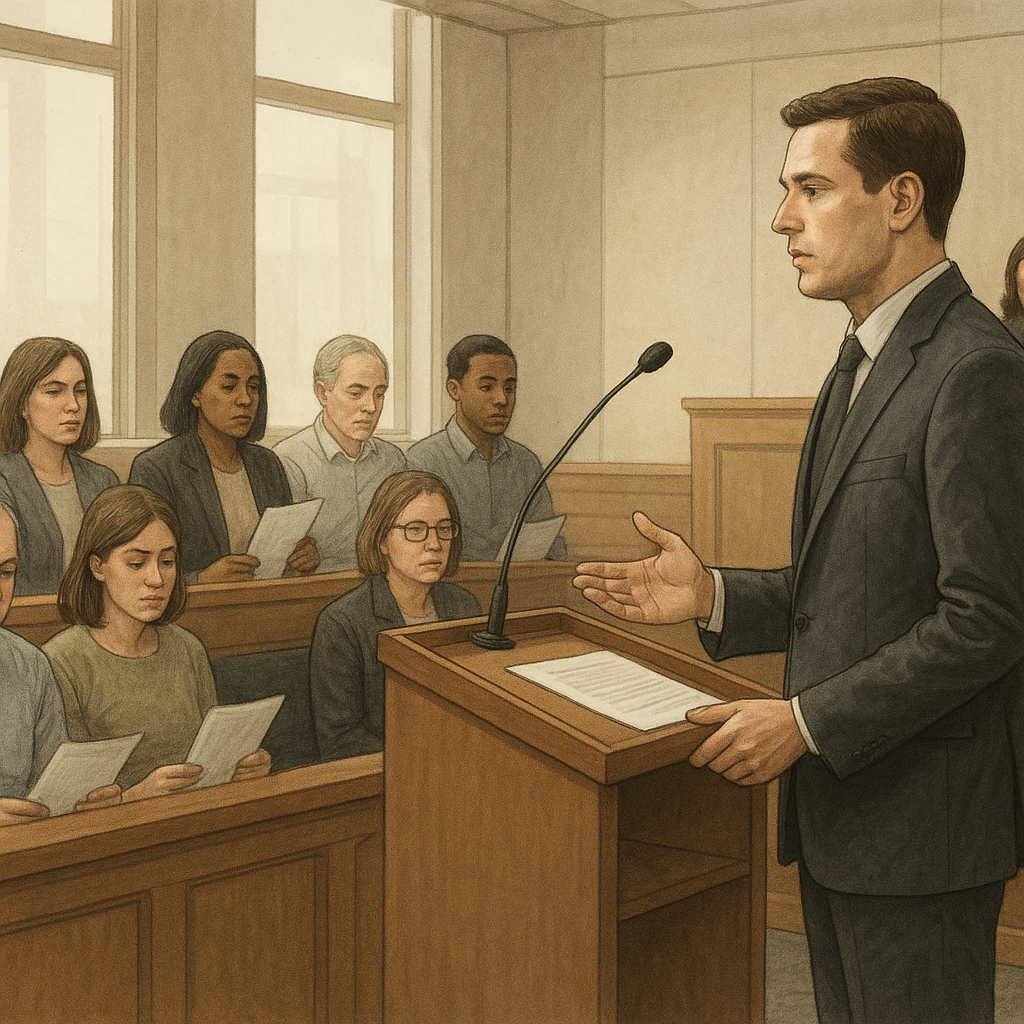
Legal context and charges or proceedings
Massachusetts murder law, like homicide law elsewhere, turns on the mental state attached to the charged offense. The prosecution must show that the defendant committed the act with malice. Depending on the degree charged and the facts proven, that may involve intent to kill, intent to cause grievous bodily harm, or conduct that a reasonable person would know created a plain and strong likelihood of death.
When a defendant raises mental illness in a murder trial, there are several possible legal pathways. The defense may argue lack of specific intent, diminished capacity, or legal insanity, depending on the jurisdiction and the evidence. Each doctrine functions differently, and each has different consequences. Some are complete defenses; others may reduce the degree of the offense. In Massachusetts, the law is especially particular about what mental health evidence can and cannot do.
That is why this trial has become more than a tragic family case. It is also a public lesson in how narrow the law can be when it comes to psychiatric claims. The legal system does not simply ask whether someone was in crisis. It asks whether the crisis undermined the elements of the offense as defined by statute and precedent.
The defense likely wanted jurors to understand Clancy’s mental state in the context of severe psychiatric deterioration, potentially tied to postpartum conditions or psychosis. Those concepts are medically significant, but in court they are filtered through legal standards. A doctor may diagnose a condition; a judge instructs the jury on the law; and jurors decide whether the evidence meets that law.
That process can create a gap between what the public hears and what the jury must decide. Outside the courtroom, people often use terms like “insane,” “not responsible,” or “sick” interchangeably. In a courtroom, those words have sharply different meanings. Jurors are not asked to decide whether a defendant deserves sympathy. They are asked to decide whether the state has proven guilt under the criminal code or whether the defense has established a recognized legal barrier to conviction.
The trial also highlights the limits of hindsight. After a horrific event, it can be tempting to interpret earlier signs as proof that the outcome was inevitable. Criminal trials do not permit verdicts based on hindsight alone. The jury must look at evidence as it was presented and assess whether it meets the standard of proof beyond a reasonable doubt.
That includes any evidence about prior hospitalizations, treatment history, medication, suicidal thoughts, family stress, or episodes of disorganized behavior. Each of those facts may matter, but none answers the question alone. The issue is whether Clancy’s state of mind at the time of the killings defeats the prosecution’s case under the law.
The case also sits within broader discussions about how the justice system handles defendants with serious psychiatric conditions. Some advocates argue that criminal courts are often the wrong venue for untreated mental illness and that more resources should be directed toward intervention before tragedy occurs. Others caution that the public should not confuse mental illness with legal nonresponsibility and should not assume that every tragic act involving a psychiatric diagnosis should be treated outside the criminal process.
Those policy debates are longstanding and unresolved. For now, the judge and jury must work within the law as written. That means applying Massachusetts standards to the facts they find credible.
Law enforcement or court response
From a law enforcement perspective, the case has been methodical and heavily scrutinized. Investigators had to gather evidence from the home, the scene, medical records, digital evidence, and witness statements. Prosecutors then had to decide not only what charges to bring, but how to present a case that would likely face a robust mental health defense from the outset.
In serious homicide cases involving psychological evidence, prosecutors often spend substantial time preparing for expert battles. They may retain their own psychiatrists or psychologists to counter the defense’s experts. They may also build a timeline using text messages, phone records, medical encounters, and other records that can help jurors understand the defendant’s condition before and after the alleged crimes.
The court’s role is equally important. Judges must control the flow of testimony, rule on evidentiary disputes, and instruct the jury in a way that accurately explains the law without tilting the case toward either side. That is not easy in a proceeding with so much emotional weight. A judge has to keep the focus on admissible evidence, not public reaction.
The courtroom response in a case like this often reveals the tension between human tragedy and legal structure. Prosecutors speak for the public interest and the victims. The defense speaks for the accused, who is presumed innocent until proven guilty. The judge stands in the middle, ensuring the trial remains fair. Jurors then carry the burden of translating testimony into a verdict that the law can support.
Because Clancy’s case involves the deaths of children, it also invites scrutiny of any prior family or medical intervention that might have occurred. In cases involving child victims, police and child welfare agencies are often asked whether warning signs were missed. That can lead to broader public pressure, even if the trial itself is narrowly focused on criminal responsibility.
The criminal justice system often learns from such cases in slow, uneven ways. If the jury convicts, the case may reinforce prosecutorial confidence in presenting mental health evidence to juries. If the jury acquits on some or all charges, the case could prompt renewed debate about the adequacy of mental health treatment, hospital discharge decisions, or the gap between treatment systems and public safety responses.
Either way, the defense resting means the trial has entered its final phase. The focus now is on closing arguments, jury instructions, and deliberations. Those final steps are where abstract legal concepts become practical verdict choices.
For readers interested in how courts handle similar issues, it is useful to compare this proceeding with coverage of homicide trial strategy, expert testimony in criminal court, and sentencing and mitigation in violent crime cases. Trials involving mental health evidence often turn less on spectacle than on whether jurors can sort through competing experts and legal instructions.

Community and policy implications
Cases like this do not remain confined to the courthouse. They ripple outward into debates about mental health care, criminal liability, and the role of the state in preventing violence before it occurs. In the aftermath of a tragedy involving children, public discourse often moves quickly toward prevention: Could this have been stopped? Were there missed warning signs? Did medical professionals, family members, or institutions have enough information to act sooner?
Those are painful questions, but they are also policy questions. Legislators and policymakers often look at cases like this when considering funding for crisis intervention, maternal mental health services, involuntary treatment standards, and better coordination between hospitals and law enforcement. Yet policy responses are rarely simple. Expanding mental health systems requires money, trained staff, and a willingness to confront difficult civil liberties concerns.
There is also the question of how much the criminal law should absorb. Some reform advocates argue that too many social failures are ultimately processed in the courts, even when the underlying issue is untreated illness. They contend that prisons and jails are poor substitutes for treatment. Others say criminal accountability still matters, especially where the result is death and the evidence supports prosecution.
The Clancy case sits directly inside that debate. If the defense persuades jurors that mental illness prevented criminal intent or responsibility, the case may strengthen arguments for earlier and more intensive intervention in psychiatric crises. If the prosecution wins, it may reinforce the principle that severe mental distress does not automatically erase criminal culpability.
The case also has implications for how the media covers defendants with mental illness. Public attention can quickly become polarized, with some observers focusing on sympathy and others on punishment. Responsible reporting requires resisting both simplifications. Mental illness can be real and severe without eliminating legal responsibility. Likewise, a prosecution can be legally sound without denying the tragedy or minimizing suffering.
The broader justice policy implications are significant. Courts across the country continue to wrestle with the overlap between mental health and violence. Many systems still lack enough community treatment options, crisis beds, or follow-up resources after psychiatric hospitalization. That gap can leave families, clinicians, and police responding late, when crisis has already escalated.
At the same time, criminal courts cannot become the only mechanism for solving psychiatric failure. They are designed to determine guilt, not to build mental health infrastructure. That means cases like Clancy’s often expose a structural mismatch: the legal system is asked to do the work of multiple institutions, and the resulting trial becomes a proxy battle over broader social shortcomings.
The public interest in this case is therefore not only about one verdict. It is about how Massachusetts and other states decide to respond to severe mental illness before tragedy occurs, how prosecutors frame culpability, and how juries understand the line between illness and legal excuse.
Frequently Asked Questions
What does it mean that the defense rested?
It means the defense has finished presenting its evidence and witnesses. The trial now moves to the closing arguments, jury instructions, and deliberations.
What is the main issue in the Lindsay Clancy trial?
The central issue is whether Clancy had the mental state required for a murder conviction, or whether psychiatric evidence undermines the prosecution’s case.
Does mental illness automatically mean someone cannot be convicted?
No. Mental illness may support a defense in some cases, but it does not automatically bar conviction. The legal effect depends on the law and the evidence.
What happens next in the trial?
After both sides finish, the attorneys give closing arguments. The judge then instructs the jury on the law, and jurors deliberate to reach a verdict.
Why is this case drawing so much attention?
The case involves the deaths of three young children and raises difficult questions about mental health, criminal responsibility, and the role of the justice system.
The coming verdict will matter not only to the parties in the courtroom, but also to a broader public wrestling with hard questions about grief, treatment, culpability, and the limits of criminal law. Whatever the jury decides, the case is likely to remain part of the legal conversation about how courts handle severe mental illness in homicide prosecutions, and how society responds when those failures end in irreversible loss.