A court is expected to play an interview with the roommate of Tyler Robinson, the suspect in the killing of Charlie Kirk, on Thursday, a development that could...
Court to Play Interview With Tyler Robinson’s Roommate as Prosecutors Outline Alleged Confession in Charlie Kirk Killing
A court is expected to play an interview with the roommate of Tyler Robinson, the suspect in the killing of Charlie Kirk, on Thursday, a development that could become a central piece of the prosecution’s case if investigators say Robinson confessed to the shooting in that conversation.
Key Takeaways:- Prosecutors plan to use an interview with Robinson’s roommate in court.
- According to reporting, Robinson allegedly confessed to killing Charlie Kirk in that conversation.
- The evidence could shape both the criminal case and public debate over political violence.
- The proceeding raises questions about admissibility, corroboration, and the next steps in the case.
What happened
The most immediate development is procedural, but it carries obvious weight. Prosecutors are preparing to present an interview with Robinson’s roommate, in which Robinson allegedly admitted responsibility for Kirk’s killing. CBS News correspondent Carter Evans reported that the interview is set to be played in court Thursday, signaling that the state may use the roommate’s account to help establish both identity and intent.
That kind of evidence can matter for several reasons. A direct confession, if admitted, can be powerful in court. But confessions rarely stand alone. Investigators and prosecutors typically need to show that the statement is reliable, voluntary, and consistent with other evidence gathered in the case. That may include phone records, messages, forensic evidence, surveillance footage, witness testimony, or physical evidence tied to the scene.
The role of the roommate also matters. Roommates, friends, relatives, and other private individuals often become key witnesses in serious cases because suspects may speak more freely in familiar settings than in police interviews. Those accounts can be persuasive, but they also invite scrutiny. Defense lawyers often question whether a witness accurately remembered the conversation, whether context was lost, or whether later events influenced what the witness says happened.
This case is drawing intense attention because it sits at the intersection of criminal prosecution and political violence. Kirk was a prominent public figure, and his killing has already triggered broad public reaction. The fact pattern described in reporting suggests prosecutors are trying to build a case around not only the alleged act itself, but the statements Robinson is said to have made afterward.
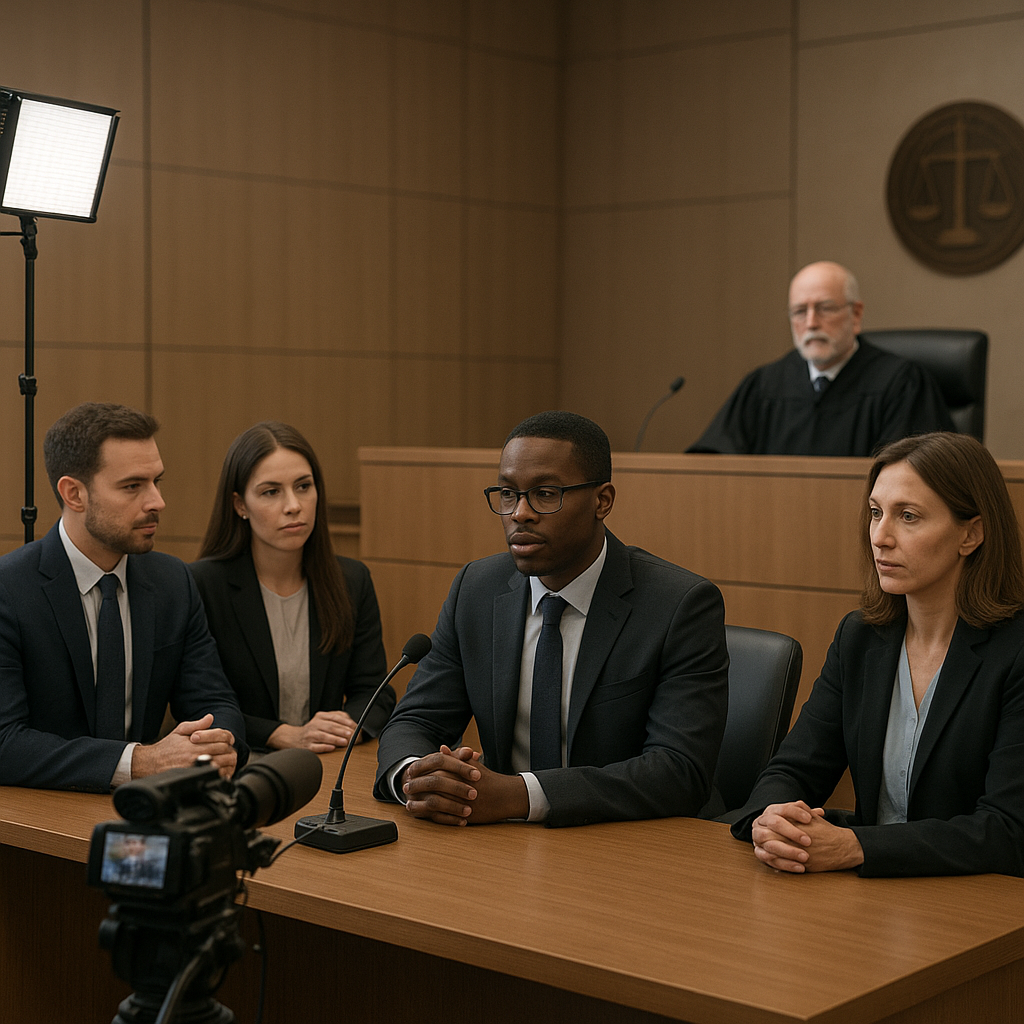
The court hearing is likely to focus on the evidentiary value of the interview rather than the public reaction surrounding it. Judges in criminal cases must decide what jurors can hear, how the evidence is presented, and whether any part of a statement should be excluded because of legal concerns. If the interview is admitted, the jury — or judge, depending on the posture of the case — will be asked to weigh it alongside the rest of the record.
Legal context and charges or proceedings
At this stage, the key legal questions are about admissibility and proof. If Robinson is formally charged with homicide or related offenses, prosecutors will need to prove each element of the offense beyond a reasonable doubt. A confession can help meet that burden, but courts generally do not rely on it in isolation. In many jurisdictions, a defendant’s statement must be corroborated by independent evidence showing that a crime occurred and that the defendant was connected to it.
That is especially important in serious felony cases. Courts want to guard against false confessions, misunderstandings, or unreliable retellings. If Robinson’s alleged statement came in a private conversation with a roommate rather than during a recorded police interrogation, the defense may argue that the jury should hear it with caution. The state, by contrast, is likely to argue that a spontaneous admission to someone close to the suspect is highly probative because it is less likely to be the product of coercion.
The legal posture also depends on how the statement was obtained and preserved. Was the interview recorded? Did the roommate speak with police promptly? Were notes taken? Was the original conversation relayed before or after news coverage intensified? Those details can affect whether a judge allows the evidence and how much weight it receives.
If the roommate’s interview is played in court, lawyers may litigate issues of hearsay, authentication, relevance, and prejudice. In some cases, a witness’s interview can be admitted as prior testimony, as an out-of-court statement with an exception, or as a recorded account used to refresh memory or impeach testimony. The exact route matters. Criminal procedure is often decided as much by evidentiary rules as by the dramatic facts of the case.
This is where broader criminal justice policy becomes relevant. Confession evidence has long been a focal point for courts and reform advocates because it can be compelling even when imperfect. The Role of Criminal Justice Reform in Shaping the Future of the U.S. Legal System remains central to debates over interrogations, witness reliability, and the risk of wrongful convictions. Even in a case where the alleged confession appears straightforward, defense counsel may press the court to keep the jury focused on the legal standard rather than public outrage.
Another issue is whether the hearing is pretrial, a probable cause proceeding, or part of a preliminary evidentiary fight. If prosecutors are presenting the interview early, they may be trying to preserve momentum, secure detention, or support a charging decision. If the case is already in the pretrial phase, the hearing may preview what the jury will later hear at trial. Either way, the court’s ruling could shape the trajectory of the prosecution.
The Understanding the Bail and Bond Process in Criminal Cases is relevant here as well. In violent-felony prosecutions, judges often weigh public safety, flight risk, and the strength of the evidence when deciding whether a defendant should remain in custody. A statement that appears to be a confession can weigh heavily in that calculation.
There is also a civil rights dimension. Defendants in high-profile cases are entitled to the same procedural protections as anyone else. That includes counsel, confrontation rights, and a fair hearing. Public pressure does not change the rules of evidence. Nor does the seriousness of the allegations permit shortcuts. If the government believes it has strong proof, it still has to present it in a lawful way.
Law enforcement or court response
The police and prosecutors in a case like this usually move on two tracks: evidence development and public communication. Investigators will continue piecing together the timeline, testing statements against digital and forensic records, and interviewing anyone who had contact with Robinson before or after the alleged killing. Prosecutors then decide what to disclose, when to disclose it, and how to frame it in court.
That process often reflects caution. Officials may avoid giving too much detail before key hearings because pretrial publicity can complicate jury selection and create defense arguments about prejudice. At the same time, in a case involving a widely known victim, law enforcement may feel pressure to explain what they know so far without compromising the case.

If the interview is played publicly in court, it may become one of the most cited pieces of evidence in the case. Jurors tend to pay close attention to admissions, particularly when a defendant allegedly speaks in plain terms about responsibility. But the courtroom setting matters. Judges may issue limiting instructions, rule on redactions, or restrict the use of surrounding commentary that could improperly sway the factfinder.
Defense attorneys will almost certainly challenge the state’s use of the interview if they believe it was handled unfairly or lacks context. They may argue that the roommate misunderstood the conversation, that the alleged admission was ambiguous, or that the words were taken out of a broader exchange. They may also seek to suppress other evidence if there are questions about search warrants, digital seizures, or chain of custody.
For prosecutors, the interview is likely valuable because it places Robinson’s alleged own words at the center of the case. The law treats admissions as especially important when they line up with physical evidence. If investigators can show that the confession matches the timing, method, or aftermath of the killing, the prosecution’s narrative becomes stronger.
But the courtroom response will not be limited to the prosecution and defense. Judges often try to keep the case on procedural rails. That means controlling witnesses, managing exhibits, and making sure the process is not overwhelmed by media attention. In a politically charged case, those duties can be as important as the legal rulings themselves.
The larger system also has a stake in how carefully the evidence is handled. When serious charges involve public figures, every step is scrutinized. Mistakes can erode trust. That is why courts focus so closely on process, even when the facts appear simple at first glance.
Community and policy implications
A killing that draws national attention tends to produce immediate public debate about safety, extremism, and the vulnerability of public events. But criminal justice reporting should keep the focus on verifiable facts. Right now, the central issue is what Robinson allegedly said, whether that statement can be admitted, and how the case is being built.
Still, the implications go beyond one courtroom. If prosecutors succeed in introducing a confession shared with a roommate, the case may reinforce the role of informal witnesses in modern homicide investigations. Friends and family members often become critical sources of information when suspects speak after the fact. That can help solve cases. It can also create difficult situations for people suddenly thrust into the legal process.
There is also the broader issue of political violence and public trust. When a public figure is killed, communities often ask whether warning signs were missed, whether security protocols were adequate, and whether online rhetoric or personal grievance played a role. Those are valid questions, but they should not blur the legal standard in court. The prosecution must prove the case with admissible evidence, not with public frustration.
For policymakers, the case may renew discussion about how law enforcement investigates politically charged crimes and how courts manage publicity. High-profile cases test whether the justice system can remain steady under pressure. They also test whether local agencies have enough resources to process digital evidence, protect witnesses, and conduct thorough background investigations.
The case may also influence conversations about confession evidence more generally. In serious felony prosecutions, the defense bar routinely argues for safeguards because confessions can be misunderstood or overstated. Prosecutors, meanwhile, rely on admissions because they often reveal motive and identity more clearly than circumstantial proof alone. That tension is not unique to this case, but the visibility of the matter means the public will likely hear more about it.
The How Police Investigations Are Conducted in High-Profile Criminal Cases is a useful frame for understanding why investigators move carefully. They need to avoid contaminating witnesses, preserve digital evidence, and keep statements consistent across interviews. In a case that has already become politically charged, those basics are even more important.
There is a public safety angle too. Officials are often asked whether they can prevent the next attack, especially when the victim is a recognizable political figure. The honest answer is that no system can eliminate all risk. What courts and police can do is preserve evidence, test claims rigorously, and enforce the law without favoritism.
For readers trying to follow the case responsibly, the most useful questions are also the most basic ones: What exactly did the roommate report? Was the statement recorded? What independent evidence corroborates it? Has the court ruled on admissibility? Are there any plea negotiations, detention hearings, or motions that may shape the evidence before trial? Those details matter more than speculation.
As the hearing approaches, the case may become another example of how criminal justice unfolds in stages. Public attention comes first. Then the charging documents, pretrial motions, witness interviews, and evidentiary rulings decide what actually reaches the jury. In that sense, the room where the interview is played may matter less than the rules governing how it is used.
Frequently Asked Questions
What is expected to happen in court Thursday?
The court is expected to hear or view an interview with Tyler Robinson’s roommate, in which Robinson allegedly confessed to killing Charlie Kirk.
Why is the roommate’s interview important?
If admitted, it could serve as evidence of Robinson’s own statements about the killing and help prosecutors establish identity or intent.
Does an alleged confession automatically decide the case?
No. Prosecutors still need to prove the charge beyond a reasonable doubt, and courts often require corroborating evidence.
Can the defense challenge the interview?
Yes. Defense lawyers can challenge admissibility, reliability, context, and whether the statement is supported by independent evidence.
Why does this case matter beyond the courtroom?
Because it involves the killing of a prominent public figure, it has prompted broader discussion of political violence, witness evidence, and criminal procedure.
The core issue now is not the public reaction to the killing, but whether the evidence can be presented fairly and tested in court. High-profile cases can produce strong assumptions early on. The justice system’s job is to slow that reaction down, verify the facts, and decide the case according to law.