Cole Allen remains in custody ahead of trial. The move is not theater. It is the plain machinery of criminal justice, where judges weigh danger, flight risk...
Cole Allen remains in custody ahead of trial. The move is not theater. It is the plain machinery of criminal justice, where judges weigh danger, flight risk, and the gravity of an alleged attack tied to a high-profile Washington event; the public gets headlines, but the court has to sort evidence, procedure, and restraint.
Key Takeaways
- Allen has agreed to stay jailed before trial.
- The case is linked to the White House Correspondents' Dinner shooting.
- Pretrial detention turns on risk, not guilt.
- High-profile cases bring security, legal, and public-order questions.
- The bigger issue is how courts balance safety with due process.
What is the Cole Allen case?
This is a criminal case involving a suspect identified as Cole Allen, who is linked to the shooting that drew attention around the White House Correspondents' Dinner. The core point is simple, even if the surrounding coverage is not. He has agreed to remain in jail while the case moves toward trial.
Why does that matter? Because pretrial detention is not a verdict. It is a temporary legal status, and it usually reflects concerns about public safety, witness pressure, or the chance a defendant might skip court. Frankly, that distinction gets mangled in a lot of news coverage. People hear “jailed” and assume guilt. The law does not work that way.
In cases with political or media visibility, prosecutors and judges tend to act carefully. The setting matters. The White House Correspondents' Dinner is not just another gala; it is a federal security environment with an audience full of journalists, officials, donors, and public figures. A shooting connected to that kind of event raises questions that go beyond one defendant. It reaches into public safety, security planning, federal coordination, and the baseline duty of government to protect human life and order.
I’ve covered enough court cases to know the real story is usually less dramatic than the cable-news version. The headlines focus on the “who,” but the law focuses on the “what now.” What does the evidence show? What charges are filed? What risks can be documented? What conditions, if any, can reasonably protect the public? That’s the grind here.
There is also a moral layer people skip. A just system does not pretend victims are abstractions, and it does not treat the accused as disposable either. That balance—justice without vengeance, safety without cruelty—should be the standard. It rarely gets the airtime it deserves.
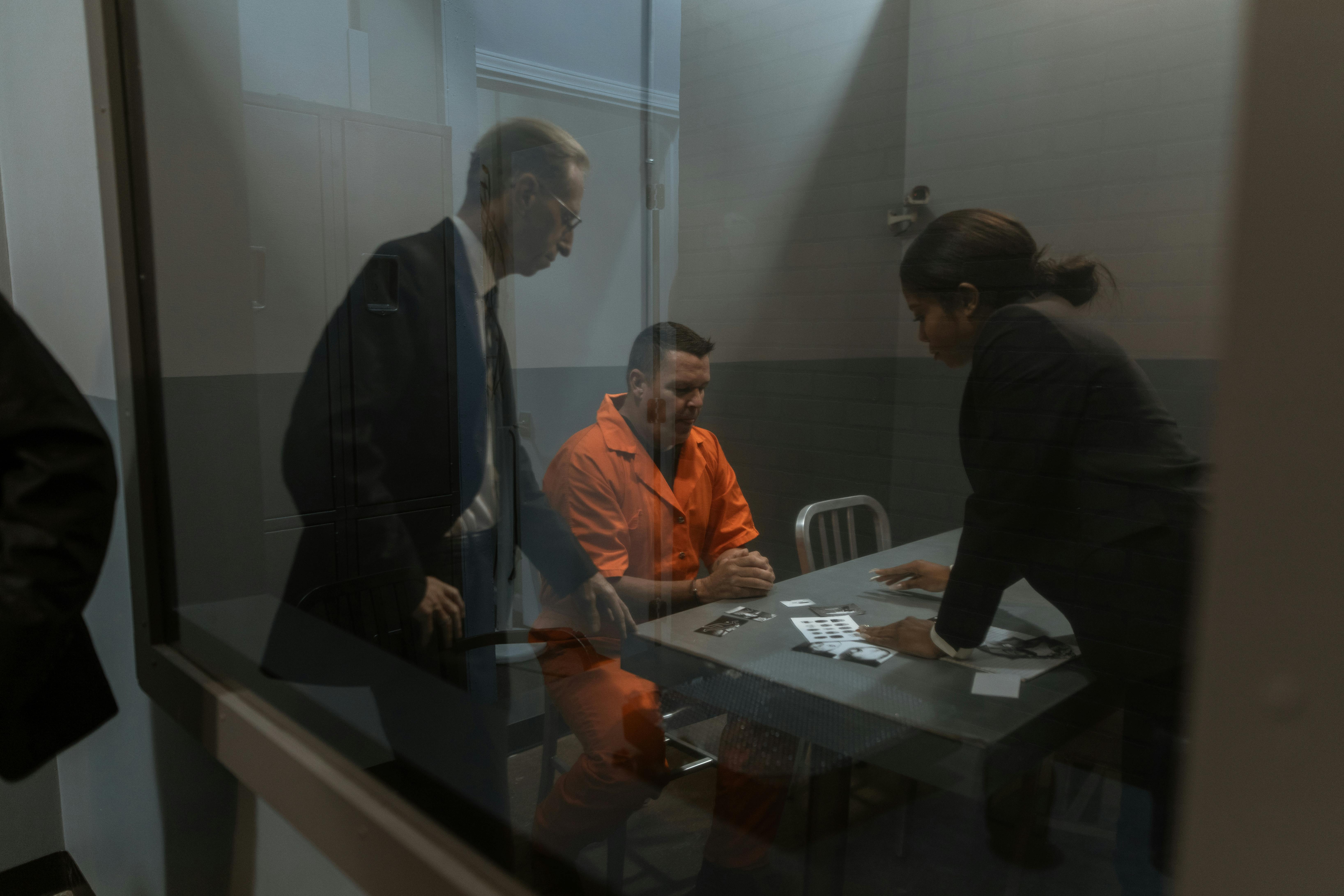
Core Details and Context
Here’s the practical frame. The reported agreement for Allen to remain detained ahead of trial tells us several things, even if the public record is still developing.
- Pretrial detention is common in serious cases. Courts look at the severity of the allegations, the strength of the evidence, and whether release conditions can actually work.
- The White House Correspondents' Dinner connection raises the stakes. A case tied to a major Washington event is not treated like a routine street offense.
- Security concerns are real. When a case brushes against federal power centers, investigators and judges often become more cautious, not less.
- The defendant’s rights remain intact. Being held before trial does not erase the presumption of innocence.
- Victims and witnesses matter. Courts are wary of intimidation, direct or indirect, especially where public attention is heavy.
Most news coverage misses the bureaucratic plumbing behind a case like this. The real action happens in affidavits, detention hearings, charging documents, and pretrial motions. That may sound dull. It is not. It is where a case lives or dies.
The bigger question is how the justice system treats notoriety. Public outrage can push officials toward overreach. Public indifference can push them toward carelessness. Neither is acceptable. The common good requires order, but order without fairness becomes its own kind of corruption.
If you want the broader context, it helps to compare this with other politically sensitive legal matters. For example, when courts confront high-profile security incidents, the same basic principles apply: evidence, detention standards, and constitutional safeguards. Related background on federal oversight and public accountability can be found in our coverage of White House security review measures, the legal framework around pretrial detention rules, and the broader public-safety implications in federal security events. Those issues are not identical, but they rhyme.
Here’s the kicker: people often confuse a defendant’s temporary confinement with the final punishment. That confusion is useful to pundits and terrible for public understanding. The law does not exist to satisfy mood swings.
There is also a strategic reason defendants sometimes agree to remain jailed. It can simplify proceedings, reduce repeated hearings on release conditions, and keep the case moving. Sometimes it is a sign the defense wants to limit disputes. Sometimes it means the evidence is strong enough that fighting detention is a losing game. Sometimes it is both.
In high-visibility cases, prosecutors also have to think about optics, and they usually hate that part. Still, optics matter because public trust matters. A legal system that appears reckless loses legitimacy. A legal system that appears toothless loses authority. Judges are stuck between those poles more often than people realize.
If the alleged shooting is proven, then the legal system will need to answer not just criminal liability but also how the event exposed vulnerabilities. If it is not proven, then the system must still respect the presumption of innocence. That tension is not a bug. It is the price of civilized law.

Timeline and Step-by-Step
- The incident tied to the White House Correspondents' Dinner became a law-enforcement matter. The immediate response would have involved securing the scene, identifying witnesses, and preserving physical evidence. That is standard, but in a federal-adjacent setting it happens under a harsher spotlight.
- Investigators linked a suspect to the shooting. This is the stage where probable cause becomes central. I’ve seen plenty of reports that rush past this point. They shouldn’t. A name is not proof. A theory is not proof. Charges require evidence that can survive scrutiny.
- The court addressed custody before trial. Pretrial detention hearings ask whether release would pose a danger or risk of nonappearance. In a serious case, judges may be less inclined to gamble with public safety.
- Allen agreed to remain jailed ahead of trial. That agreement suggests the immediate custody fight is over for now. It does not end the case. It just freezes one part of the dispute while the courtroom machinery continues.
- The case will move toward evidentiary testing. That means motions, discovery, possible plea discussions, and ultimately trial preparation. This is where facts get subjected to pressure. Fancy commentary won’t help. Only the record will.
A lot of people think legal cases progress in a neat, cinematic line. They do not. They lurch. They stall. They are shaped by witness availability, forensic work, court calendars, and procedural objections. That is not inefficiency for its own sake. It is the system trying, often clumsily, to avoid wrongful outcomes.
When I analyze cases like this, I keep coming back to one hard truth: speed is not the same thing as justice. Sometimes a rushed process harms the accused. Sometimes a slow process frustrates the public. The challenge is to protect both the rule of law and real-world safety.
If you want another example of how public-facing institutions handle scrutiny under pressure, see our reporting on federal court procedure basics and security response to public events. Those pieces show how formal process works when the stakes are high and everyone is yelling.
The timeline also reminds us that major events create ripple effects. A single shooting can affect event planning, venue security, local policing, federal coordination, and public confidence. That is not abstract. It touches jobs, budgets, and the duty of institutions to steward resources carefully. Waste and sloppiness in this arena are not just annoying. They are morally relevant.
Comparison Table
| Issue | Cole Allen Case | Typical Local Shooting Case |
|---|
| Public visibility | High, because of White House Correspondents' Dinner link | Usually limited to local coverage |
| Security implications | Federal and national attention | Mostly local law enforcement concern |
| Pretrial detention scrutiny | Intensified due to sensitivity and risk | Standard detention review |
| Media pressure | Heavy and immediate | Moderate or low |
| Political significance | Elevated because of proximity to Washington institutions | Usually minimal |
| Court handling | Likely careful, procedural, and closely watched | More routine docket management |
| Broader impact | Questions about public-event security and government preparedness | Mostly criminal-justice and community safety issues |
The obvious competitor here is the ordinary criminal case. That comparison matters because it shows how much higher the stakes become when a case is attached to a major national event. The legal standard does not magically change, but the pressure around the standard does.
Most coverage acts as if visibility itself equals importance. Not quite. The real difference is institutional consequence. A local shooting may devastate a family and a neighborhood. This case may also force policymakers, event planners, and security officials to examine what failed and what needs fixing.
The most useful comparison is not glamorous. It is procedural. In both cases, the justice system must do the same thing: gather evidence, protect defendants’ rights, and serve the public without turning into a spectacle. That sounds obvious. It usually isn’t in practice.
Here’s the thing nobody tells you. High-profile cases often expose how fragile public trust really is. If officials look careless, citizens assume the rules are fake. If officials look heavy-handed, citizens assume the rules are rigged. The only durable answer is disciplined process.
The table also highlights something else: federal-adjacent cases tend to affect more than one institution. Courts, law enforcement, event organizers, and sometimes Congress or federal security bodies can all be pulled in. That is why these cases are studied so closely. They are not just about one defendant. They are about systems under stress.
Common Misconceptions and What to Know
The first misconception is that detention means guilt. It does not. It means the court has decided custody is warranted for now, based on legal criteria. That’s a big difference, and the media often blurs it on purpose because certainty sells.
The second misconception is that a high-profile case must be politically motivated. Sometimes politics does shape the public reaction. That is not the same as saying the charges themselves are political. People conflate those two things constantly, and it muddies the water.
The third misconception is that the whole matter is only about one person. It isn’t. A shooting linked to a major event raises questions about venue security, screening procedures, response protocols, and the accountability of the people paid to protect the public. Institutions are stewards of the common good; when they fail, the failure is shared.
The fourth misconception is that silence from officials means nothing is happening. Usually it means the opposite. In active criminal cases, investigators keep details tight to protect witnesses, preserve evidence, and avoid tainting a jury pool. People call that secrecy. Lawyers call it prudence.
The fifth misconception is that public outrage should guide the process. Bad idea. Outrage can point to real harm, sure, but if you let emotion run the courtroom, you get nonsense. Justice needs steel in the spine and restraint in the hands. That is not glamorous. It is necessary.
One more thing. A lot of commentary pretends security failures are only technical. They are not. They are ethical failures too. If public institutions fail to guard life, dignity, and order, then the problem is not merely administrative. It is moral.
When I look at this case, I keep the same question in mind: what protects the public without trampling the innocent? That is the right question. Everything else is noise.
Frequently Asked Questions
Why is Cole Allen staying in jail before trial?
Because the court process allows pretrial detention when judges believe it is necessary for safety, appearance in court, or other legal reasons. It is not a finding of guilt.
Does remaining jailed mean Allen admitted to the charges?
No. A detention decision, or an agreement to remain detained, is separate from the question of guilt. The case still has to be proven in court.
Why does the White House Correspondents' Dinner link matter?
It matters because a shooting tied to a major Washington event raises security, public safety, and institutional accountability issues beyond a normal criminal case.
What happens next in the case?
The case should move through discovery, motions, and other pretrial steps before trial. The exact pace depends on the evidence, the court schedule, and the parties’ filings.
Final Thought
This case is bigger than one courtroom order, but not in the way people usually mean. It is bigger because it tests how seriously the system takes public safety, due process, and the dignity of everyone involved. The press wants a headline. The public wants a clean answer. The law, annoyingly but rightly, wants proof.
That is the burden of a civil society. Not the easy talk. The hard work. If the allegations are true, then the truth should come out through lawful process, not mob noise. If they are not, then restraint matters just as much. Either way, the measure of the system is whether it can protect the community and still remember that justice is supposed to be measured, not loud.