Lindsay Clancy’s murder trial is moving toward closing arguments this week, with jurors hearing the final stretch of testimony in a case that has drawn...
Closing Arguments Near in Lindsay Clancy Murder Trial as Religion Question Interrupts Testimony
Lindsay Clancy’s murder trial is moving toward closing arguments this week, with jurors hearing the final stretch of testimony in a case that has drawn intense attention because of the deaths of her three young children and the mental health issues that the defense says are central to the charges.
Key Takeaways:- Closing arguments are expected this week in the trial of Lindsay Clancy, who is charged in the deaths of her three children.
- A witness was cut off Monday after comments about religion prompted a courtroom interruption, highlighting how carefully judges must police trial testimony.
- The case turns not only on the underlying facts, but on questions of criminal responsibility, mental state, and how jurors evaluate expert evidence.
- The proceedings are being watched closely as a major Massachusetts criminal case with broader implications for mental health defenses.
The trial has already become one of the most closely watched criminal cases in Massachusetts this year. Prosecutors have argued that the evidence supports murder charges arising from the deaths of Cora, Dawson, and Callan Clancy. The defense has countered that Lindsay Clancy was in the grip of severe postpartum mental illness and that her state of mind at the time of the killings is the central issue for the jury.
The moment on Monday, when witness testimony was cut short after comments touching on religion, added another layer of complexity. Courtroom disputes like that can seem minor in the moment, but they often carry real significance. Judges are responsible for keeping the trial focused on admissible evidence, and comments that drift toward religious belief, moral judgment, or speculation can quickly raise objections. In a case as emotionally charged as this one, that line becomes especially important.
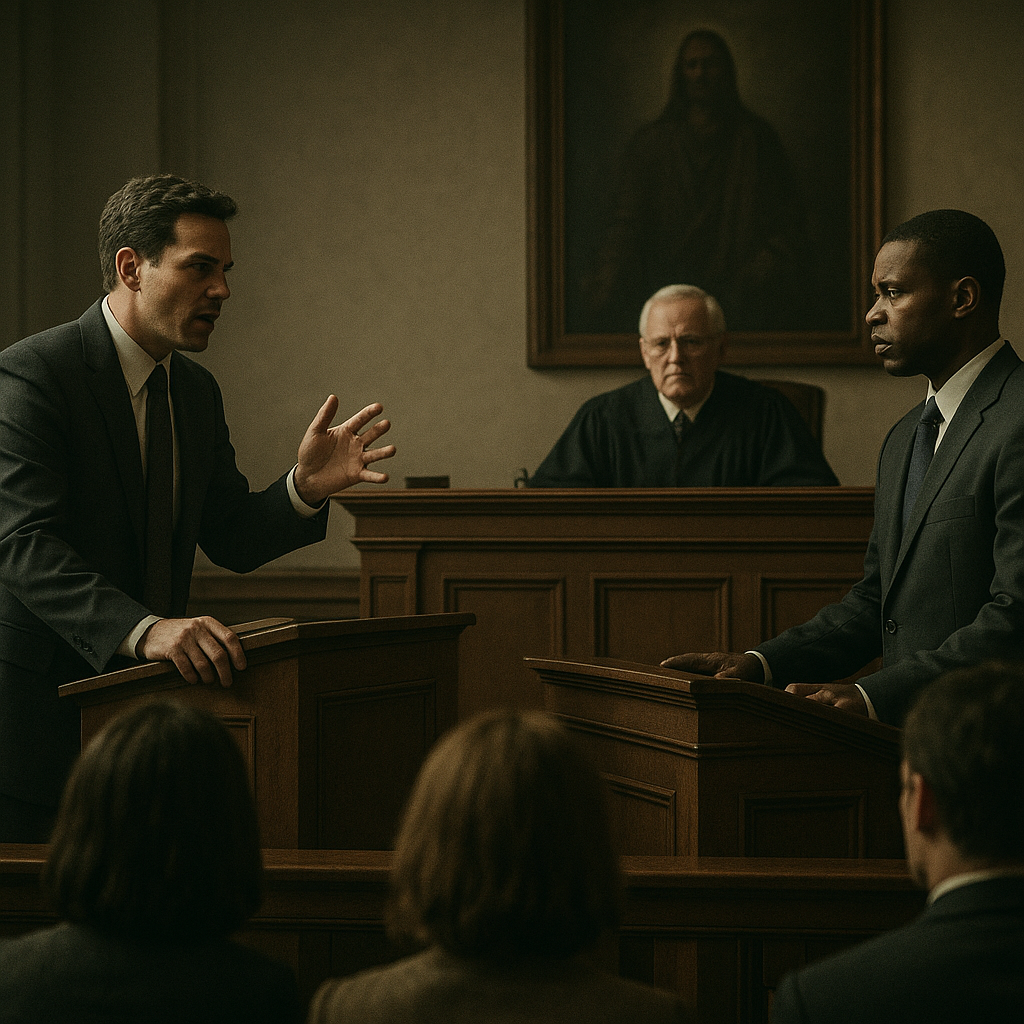
What happened
The underlying allegations in the Clancy case are stark. Prosecutors say the deaths of the three children stemmed from acts committed by their mother in January 2023 in Duxbury, Massachusetts. The case immediately became a local and national flashpoint because it involved the death of young children, the collapse of a family tragedy, and a defense built around severe psychiatric impairment rather than denial of the conduct itself.
That framing has shaped the entire trial. Unlike many homicide cases, this one does not appear to turn on a dispute over who was physically present or whether the children died by violent means. The contested issues are legal and medical: what was Clancy’s mental condition, what did she understand at the time, and whether the law recognizes that condition as negating criminal responsibility.
The public has followed the case closely because it sits at the intersection of crime, mental health, and parenting stress. It has also prompted broader discussion about how courts handle evidence of depression, psychosis, and postpartum disorders. Those issues often remain invisible until a catastrophic event forces them into view.
The trial has therefore been about more than one family’s tragedy. It has also become a test of how the justice system deals with defendants who may have been experiencing a profound mental break. For readers following related criminal justice developments, the case fits within a broader category of court disputes involving mental state defenses, similar in some ways to other high-profile homicide cases analyzed in coverage such as criminal responsibility and mental illness and courtroom rulings on expert testimony.

Legal context and charges or proceedings
Massachusetts murder law, like homicide law elsewhere, requires prosecutors to prove the elements of the offense beyond a reasonable doubt. But when a defendant raises severe mental illness, the practical legal question changes. The jury may still be asked to decide whether the acts occurred, but also whether the defendant’s condition should affect criminal culpability, the degree of the offense, or the availability of a verdict short of murder.
That is why testimony from psychiatrists, clinicians, and family members can take on outsized importance. In a case like this, jurors are not only hearing about symptoms. They are being asked to assess how those symptoms affected perception, intent, and awareness. If the defense succeeds in persuading jurors that Clancy lacked the ability to form the mental state required for murder, the outcome could differ sharply from a straightforward homicide conviction.
The legal stakes are substantial. Murder convictions can carry life sentences, while a finding of not guilty by reason of mental illness, or another lesser resolution depending on the precise charges and instructions, can lead to confinement in a state hospital system rather than prison. The legal labels matter, but so do the practical consequences for treatment and public safety.
Monday’s interruption over religion may also matter in a narrower evidentiary sense. Courts generally allow relevant testimony, but not everything a witness says is admissible. A judge must decide whether a statement helps the jury or invites unfair prejudice. If religion was introduced in a way that risked suggesting moral blame, spiritual causation, or unsupported opinion, the court had reason to cut the testimony short.
That kind of ruling is common in serious criminal cases. Judges regularly intervene when testimony begins to stray from the evidence and into speculation. In homicide trials, especially those involving mental health, the court must keep a careful balance: jurors need enough context to understand a defendant’s condition, but they should not be swayed by emotionally charged material that has little legal value.
For a broader look at how trial judges control evidence, see court procedure in major felony cases and rules governing expert testimony.
The defense and prosecution likely also differ on how to frame the relationship between mental illness and responsibility. Prosecutors often emphasize that serious symptoms do not automatically erase criminal intent. Defense lawyers, by contrast, seek to show that a defendant’s grasp on reality was so impaired that ordinary concepts of intent no longer apply. That clash is at the center of many cases involving psychiatric evidence, and it is likely to shape the closing arguments.
Law enforcement or court response
The case has been handled as a major felony prosecution, with the court process reflecting both the gravity of the allegations and the heightened public interest. Police investigators, medical examiners, prosecutors, and defense experts have each played a role in building competing narratives around what happened and why.
From a law enforcement perspective, the initial response in a case involving child deaths is usually immediate and intensive. Investigators must secure the scene, gather physical evidence, interview witnesses, and reconstruct the timeline as quickly as possible. They also need to preserve digital communications, medical records, and any other materials that may help establish the defendant’s state of mind in the days before the event.
In court, the focus shifts from investigation to proof. Prosecutors have to present a coherent case that jurors can follow even when the legal issues are complicated. Defense counsel, meanwhile, must explain a medical and psychological narrative that may be difficult for laypeople to assess. The judge becomes the gatekeeper, deciding what the jury may hear and how it should be framed.
The Monday incident involving religion illustrates how trial management works in practice. A witness may begin to answer in a way that appears relevant, but if the answer crosses into a forbidden area, the judge can interrupt, strike the testimony, or instruct the jury to disregard it. Such interventions are not unusual, but in a case under close public scrutiny they can draw outsized attention.
The broader criminal procedure here is worth noting. High-profile homicide trials often generate real-time debate among observers about what a judge “should” allow. But trial courts are not free-for-all forums. They operate under rules of evidence, standards of relevance, and constitutional protections that are meant to produce a reliable verdict. That is especially important when the case involves a defense rooted in mental illness, because prejudice can easily overpower nuance.
The Clancy trial also fits into a larger conversation about the criminal legal system’s handling of mental health crises. Although every case is different, prosecutors and defense lawyers nationwide face the same difficult question: when does a psychiatric episode explain conduct, and when does it excuse it? That debate has surfaced in numerous states and in policy discussions about the availability of treatment, crisis intervention, and forensic beds.
For related reporting on how authorities handle major felony prosecutions, readers may also find context in law enforcement responses to serious crimes and mental health in the justice system.
Community and policy implications
Cases involving child deaths and mental illness reverberate far beyond the courtroom. Families in the community often feel the loss most acutely, but the public process also forces broader questions: Could this have been prevented? Did warning signs go unaddressed? Were there enough treatment options? And what should the law do when a parent suffering from severe psychiatric illness harms children?
Those questions do not have easy answers. The justice system is built to determine guilt and impose consequences, but it is less well suited to the deeper social problem of preventing mental health crises from becoming tragedies. That gap is why cases like this routinely draw attention from advocates, clinicians, prosecutors, and lawmakers.
There is also the issue of public confidence. In a case this emotionally charged, some observers want a simple moral judgment. Others want the law to account for mental disease in a way that avoids punishment for conduct carried out in the grip of psychosis. The trial may not resolve that larger debate, but it will shape how people think about it.
Mental health defenses remain controversial because they often sit uneasily between compassion and accountability. Critics worry they can be misunderstood as an attempt to avoid responsibility. Supporters argue that ignoring severe illness creates injustice and can lead to inappropriate incarceration of people who need treatment. Courts are forced to sort through that tension one witness at a time.
The Clancy case also highlights the importance of courtroom decorum in emotionally intense trials. The interruption over religion was not just a procedural footnote. It underscored the extent to which jurors must decide the case on admissible facts rather than belief systems, instinct, or sympathy. That discipline is crucial in every felony trial, but especially when the facts involve the death of children and a defendant whose condition may not be obvious to the lay observer.
For more on how criminal courts handle public pressure and sensitive evidence, see courtroom management in homicide trials and the role of mental health evidence.
Frequently Asked Questions
What is Lindsay Clancy charged with?
She is facing murder charges in connection with the deaths of her three children. The exact charges and legal theories have been the focus of the trial.
Why is mental health so important in this case?
The defense has argued that Clancy was suffering from severe postpartum mental illness, and that her condition affected her ability to understand or control her actions. That makes mental state a central legal issue.
Why did the judge cut off testimony on Monday?
According to the report, comments about religion prompted the interruption. Judges can stop testimony if it becomes irrelevant, prejudicial, or otherwise improper.
Could a mental illness defense lead to a different verdict?
Yes. Depending on the evidence and the jury instructions, mental illness can affect whether jurors find the defendant guilty of murder, guilty of a lesser offense, or not criminally responsible under applicable law.
Why is this trial getting so much attention?
It involves the deaths of three young children, a mother as the defendant, and a defense centered on severe psychiatric illness. Those facts make it both legally complex and emotionally resonant.
Closing arguments are likely to distill a case that has already been packed with legal and moral tension. Prosecutors will try to persuade jurors that the evidence proves criminal responsibility. The defense will argue that a catastrophic mental health episode altered everything about what happened and how the law should respond.
However the jury sees it, the case will leave a mark. It is a reminder that criminal trials are often about more than facts alone. They are also about the law’s limits, the weight of expert testimony, and the hard question of what justice looks like when tragedy and mental illness collide.