Dr. Brian Monahan, the U.S. Capitol’s attending physician since 2009, has resigned as the Defense Department’s inspector general reports weaknesses in...
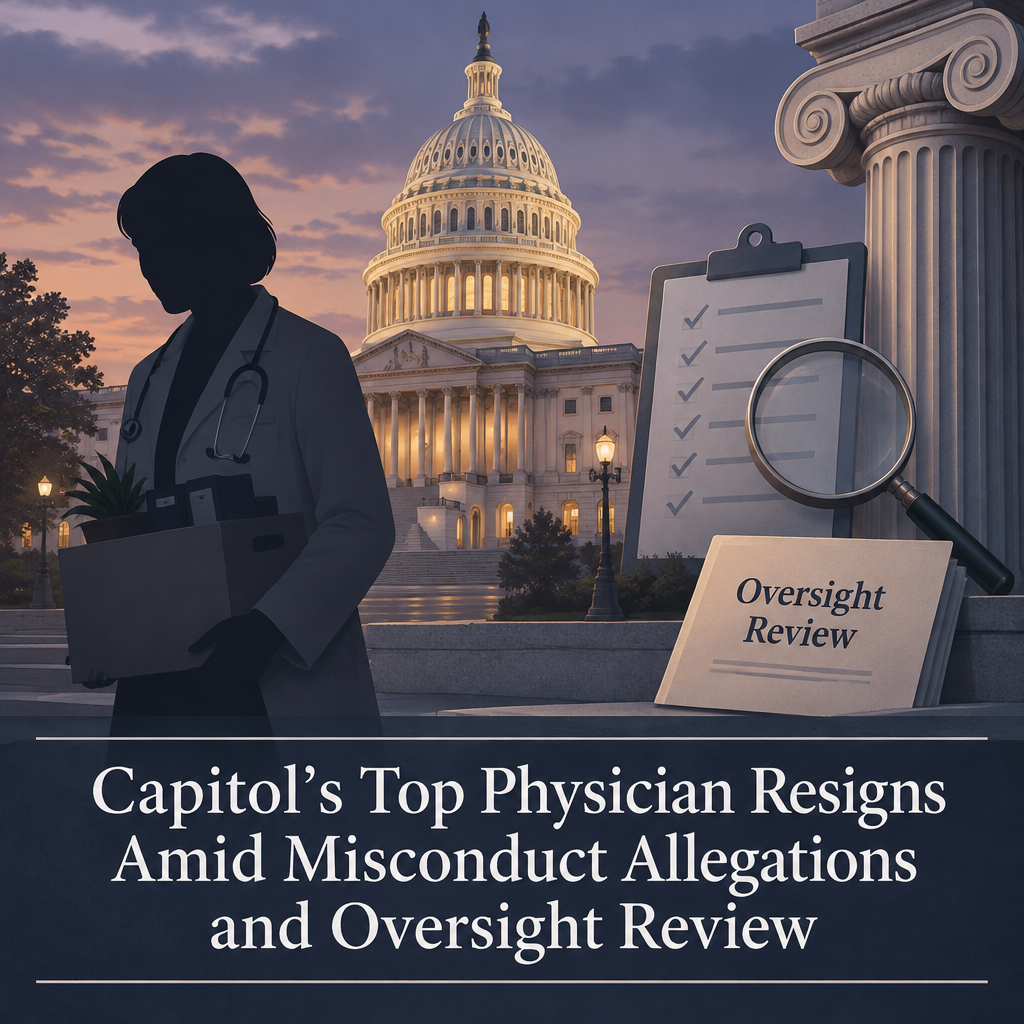
Capitol’s Top Physician Resigns Amid Misconduct Allegations and Oversight Review
Dr. Brian Monahan, the U.S. Capitol’s attending physician since 2009, has resigned as the Defense Department’s inspector general reports weaknesses in oversight of the office responsible for medical care across the Capitol complex. The public report says prescription drugs, including sleep aids and pain medication, were not properly inventoried or tracked, and warns that unmonitored clinical practices could expose patients to health and safety risks. A separate Navy inquiry is also underway.
What happened
Thune told reporters Thursday that his understanding was that Monahan had resigned. The statement followed reporting by Punchbowl News that Monahan was being removed from the position. CBS News, citing one source familiar with the matter, reported that the resignation followed misconduct allegations related to what Monahan chose to do and what he asked sailors under him to do in providing care. The source did not publicly identify specific incidents, patients or dates, and the allegations have not been established as findings of misconduct.
The timing of the resignation coincides with the release of a public version of a Defense Department inspector general report examining oversight of the Office of the Attending Physician, or OAP. The unclassified version is heavily redacted and limited in detail. It describes a gap in clinical quality management and says some prescriptions, including sleep aids and pain medication, were not properly inventoried or tracked. The inspector general warned that the shortcomings could leave OAP beneficiaries unknowingly exposed to health and safety risks because clinical and prescribing practices were not monitored.
That warning describes a potential risk, not a public finding that a particular patient suffered injury. The available report, as described by CBS News, does not identify the drugs, the number of prescriptions involved, the duration of the inventory problems or any patient outcome. Nor does the public account explain whether the failures were isolated or reflected office-wide procedures. Those unanswered questions matter: a medication tracking lapse can raise serious safety concerns, but its meaning depends on the details of the drug, the clinical safeguards in place and whether a patient’s care was affected.
The Navy is conducting a separate inquiry into the OAP, CBS News reported. The public has not been told the inquiry’s scope, when it began, whether it is focused on particular allegations or when officials expect it to conclude. The existence of an inquiry is not a finding against Monahan or any other employee. It does mean that investigators may be examining issues beyond the inspector general’s published account.
Monahan has led the office since 2009. He is a two-star Navy admiral and a physician certified in internal medicine, hematology and medical oncology by the American Board of Internal Medicine. He is also a professor at the Uniformed Services University in Bethesda, Maryland, and previously chaired its department of medicine. His medical credentials and seniority establish the level of responsibility he held; they do not, by themselves, resolve the allegations or explain the reported management failures.
The OAP has a distinctive role in Washington. Since 1928, the Navy has provided medical care through the office to Congress, congressional staff, the Supreme Court and visitors to the Capitol complex. Its work includes routine medical support and first aid, as well as planning for and responding to emergencies that could affect the complex. The House’s description of the Office of the Attending Physician outlines that broad remit.
The public account also includes concerns about working conditions. Navy Times reported that military personnel assigned to the office were pressured to work weeks of 70 to 80 hours and to perform personal or nonclinical tasks for lawmakers, including cutting a congressman’s toenails or delivering medication to a private residence at 3 a.m. Those accounts are attributed to the publication’s reporting; the inspector general’s public summary does not independently confirm each example. The Navy inquiry may clarify whether such duties were requested, how often they occurred and whether employees felt able to refuse them.
The Office of the Attending Physician did not respond to multiple requests for comment, CBS News reported. House Minority Leader Hakeem Jeffries said he had no knowledge of the circumstances surrounding Monahan’s departure. He said the priority was ensuring that lawmakers’ health remained protected. His response highlights a practical concern: the immediate question for people who rely on the office is not only who is in charge, but whether care remains reliable while reviews proceed.
Legal context and charges or proceedings
The public information describes an inspector general review and a Navy inquiry, not a criminal prosecution. No arrest, criminal charge, civil lawsuit or court proceeding involving Monahan has been reported in connection with these allegations. Resignation is an employment action; it is not an admission of wrongdoing, a finding by an investigative body or a substitute for a legal judgment.
The inspector general’s work concerns oversight and clinical quality management. Its public report says the office did not adequately monitor certain clinical and prescribing practices and that some prescription drugs were not properly inventoried or tracked. These are administrative and patient-safety issues. They can warrant corrective action even when there is no evidence of criminal conduct or a confirmed injury. Conversely, an inquiry into alleged misconduct may examine individual decisions or workplace conduct not fully described in the inspector general’s public report.
The distinction is important because the records now available are incomplete. The public version includes numerous redactions and provides few specifics about the circumstances reviewed. Redactions can protect sensitive medical information, personnel matters or investigative details, but they also limit what the public can assess. Without the unredacted record or additional findings, it would be premature to characterize the report as proof of a particular act, identify a patient or infer that a prescription was improperly given to a specific person.
The inspector general made five recommendations to improve the OAP. Among them were designating an outside group to oversee quality control and establishing policies and procedures for employees. The report’s stated concern is not merely whether a prescription was entered correctly; it is whether the office had dependable systems to review clinical practice, track medication and identify problems. The full recommendations and the Navy’s response will be important in judging whether reforms address the weaknesses the watchdog identified.
A complete accounting would also distinguish between responsibility for system design and responsibility for individual conduct. A weak tracking process can arise from unclear rules, inadequate staffing, poor training or insufficient supervision. An allegation about particular instructions to sailors raises a different question: whether those directions were appropriate, within their duties and consistent with professional standards. Investigators would need evidence and a fair process to answer those questions. The public report, as currently described, does not settle them.
Law enforcement or court response
Thune’s public statement was brief: he said his understanding was that Monahan had resigned. He did not describe the allegations or say whether he had received details from the Navy or the inspector general. That limited statement confirms the leadership change but leaves the sequence of events and the reasons for it largely to reported accounts and ongoing inquiries.
The Navy’s inquiry is the clearest announced investigative step concerning the office. It may examine management practices, the treatment of military personnel, clinical duties or the allegations surrounding Monahan. Officials have not publicly specified which of those subjects are within its remit. Nor has the Navy announced findings, disciplinary measures or a timetable. Until it does, claims about what investigators have concluded should be treated cautiously.
The inspector general’s five recommendations offer a separate measure of the response. Naming an independent outside body to oversee quality control could create distance between clinical review and the office being reviewed. Written policies and procedures could clarify who may make clinical decisions, how medicines are recorded, what services personnel may be asked to provide and how staff can report safety concerns. The report’s public description does not say whether the recommendations have been accepted, assigned to a responsible official or put into effect.
Congressional leaders also have a role in ensuring that the service remains available and safe. Jeffries said he did not know the circumstances of Monahan’s departure but emphasized protecting members’ health. Any oversight should look beyond the question of who temporarily or permanently leads the office. It should ask whether patients can obtain care during the transition, whether prescriptions are being managed under clear controls and whether independent clinicians can review quality without pressure from the office’s leadership or its prominent patients.
There is no reported court response because no court case has been announced. If an administrative inquiry later produces a finding, the next steps could depend on the nature of that finding and the applicable military or federal procedures. At present, there is no public basis to predict a disciplinary outcome, a referral for prosecution or a lawsuit. Reporting the distinction between an investigation and a proven violation is essential in a case involving a named physician and sensitive health-care work.

Community and policy implications
The OAP’s patient population makes oversight especially consequential. Its responsibilities are not confined to members of Congress. The office serves congressional staff, the Supreme Court and visitors, and supports emergency planning for a complex where large numbers of people work and gather. A lapse in medication controls or clinical review could therefore affect people with different needs, levels of access and expectations of privacy. The report does not say that anyone was harmed, but its warning is a reason to examine safeguards rather than wait for a documented injury.
The office also operates in an unusual environment. Its patients include elected officials and other high-profile people, while its staff includes military personnel working within a chain of command. That combination can make ordinary boundaries important. Clear rules should distinguish professional care from personal assistance, establish how requests for care are handled and give employees a safe way to question instructions that appear outside their duties. Navy Times’ account of extended shifts and personal tasks, if confirmed, would raise questions about both staff welfare and the independence of clinical judgment.
Long workweeks can have practical consequences in a clinical setting. Fatigue may affect attention, communication and documentation, although the public reporting does not establish that fatigue caused a specific error at the OAP. Any review should determine whether staffing levels, schedules and workload were consistent with safe practice. It should also consider whether military staff had adequate supervision and whether the office’s command structure made it clear where concerns could be raised.
Medication inventory is another basic but consequential control. Reliable records help staff know what is available, prevent missing supplies from going unnoticed and support accountability for prescribing and dispensing. The inspector general’s report, as publicly summarized, does not identify the particular medicines or the exact failure points. That makes the recommended independent quality oversight especially relevant: an outside review could test whether changes work in practice, rather than relying solely on written assurances from the organization being examined.
The question of confidentiality must also be handled carefully. Patients receiving care in a government workplace are entitled to appropriate privacy, and a public investigation should not expose their medical histories unnecessarily. At the same time, confidentiality should not prevent responsible oversight from determining whether processes were safe. A sound review can examine aggregate records, controls, staffing and supervision while limiting disclosure of identifying medical details. Public summaries can then explain the nature of any confirmed deficiencies without revealing patients’ private information.
There is a broader accountability issue in assigning medical responsibilities to a military office that serves the legislative and judicial branches. The arrangement dates to 1928 and supports continuity of care and emergency readiness. The inspector general’s findings do not, by themselves, show that the arrangement is unsound. They do raise the question of how quality control is organized when an office’s leadership, staff and patients are connected to several institutions with different responsibilities. Independent review and clear reporting lines may help ensure that operational convenience does not replace clinical oversight.
The transition after Monahan’s resignation will be a test of whether safeguards depend on one senior physician or are built into the institution. A durable response would clarify who is responsible for reviewing prescriptions, how medications are counted and reconciled, how clinical concerns are escalated, and what tasks are appropriate for uniformed staff. It would also set a process for checking that recommendations have been completed and for reporting progress to the relevant oversight bodies.
For patients and staff, reassurance will depend on verifiable steps. Officials can explain how care continues during leadership changes, identify the independent body responsible for quality review and publish a timeline for implementing the watchdog’s recommendations. They can also report whether the Navy inquiry has concluded and what general corrective measures follow, while protecting confidential medical and personnel information. Such updates would not prejudge the allegations; they would show that service continuity and accountability are being treated as separate, necessary obligations.
Frequently Asked Questions
Why did Brian Monahan resign?
Senate Majority Leader John Thune said Thursday that his understanding was that Monahan had resigned. A source familiar with the matter told CBS News that the resignation followed misconduct allegations concerning Monahan’s actions and tasks he asked sailors under him to perform in providing care. The public information does not detail the specific allegations, and no investigative finding establishing them has been reported.
What did the inspector general find?
The public version of the Defense Department inspector general report identified a gap in clinical quality management. It said some prescription drugs, including sleep aids and pain medication, were not properly inventoried or tracked. The report warned that inadequate monitoring could expose OAP beneficiaries to health and safety risks. The public account does not identify a patient who was harmed.
Is Monahan facing criminal charges?
No criminal charges, arrest or court proceeding involving Monahan in connection with the reported allegations has been announced. The known steps are the inspector general’s review, the Navy inquiry and his resignation. An investigation or allegation is not proof of a criminal offense or professional misconduct.
What is the Office of the Attending Physician responsible for?
The Navy has provided medical care through the OAP since 1928. The office serves Congress, congressional staff, the Supreme Court and visitors to the Capitol complex. Its responsibilities include minor first aid and general medical support, as well as planning for and responding to emergencies that may affect the complex.
The central issue now is whether the Navy and the institutions served by the OAP can turn a limited public record into clear, independently checked safeguards. The report raises serious questions about medication tracking and clinical oversight, while the allegations concerning individual conduct remain unresolved. Protecting patients, treating staff fairly and making the eventual findings understandable to the public are distinct duties—and all three require a response that can be measured, not merely promised.