The murder trial of former "American Idol" contestant Caleb Flynn entered its eighth day as prosecutors continued presenting evidence tied to the death of his...
Caleb Flynn murder trial enters Day Eight as jurors watch police interview videos
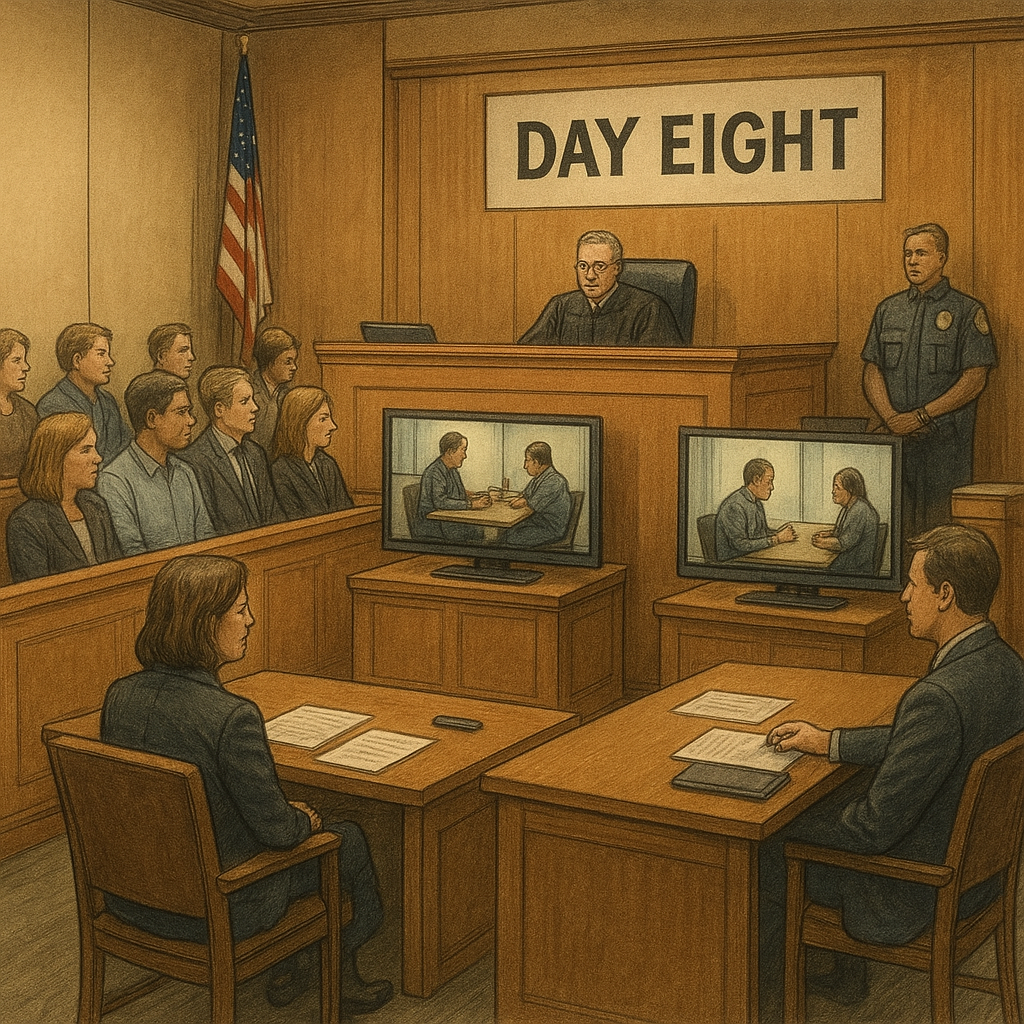
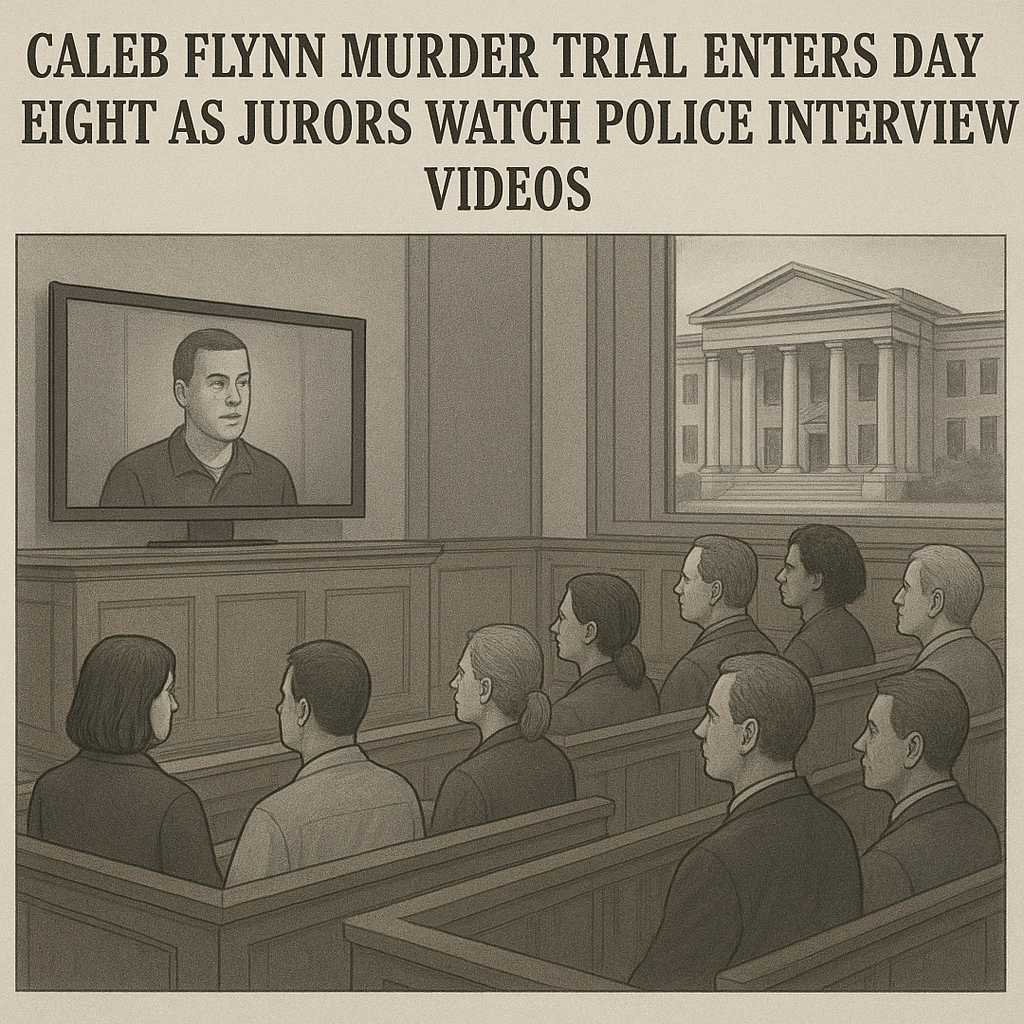
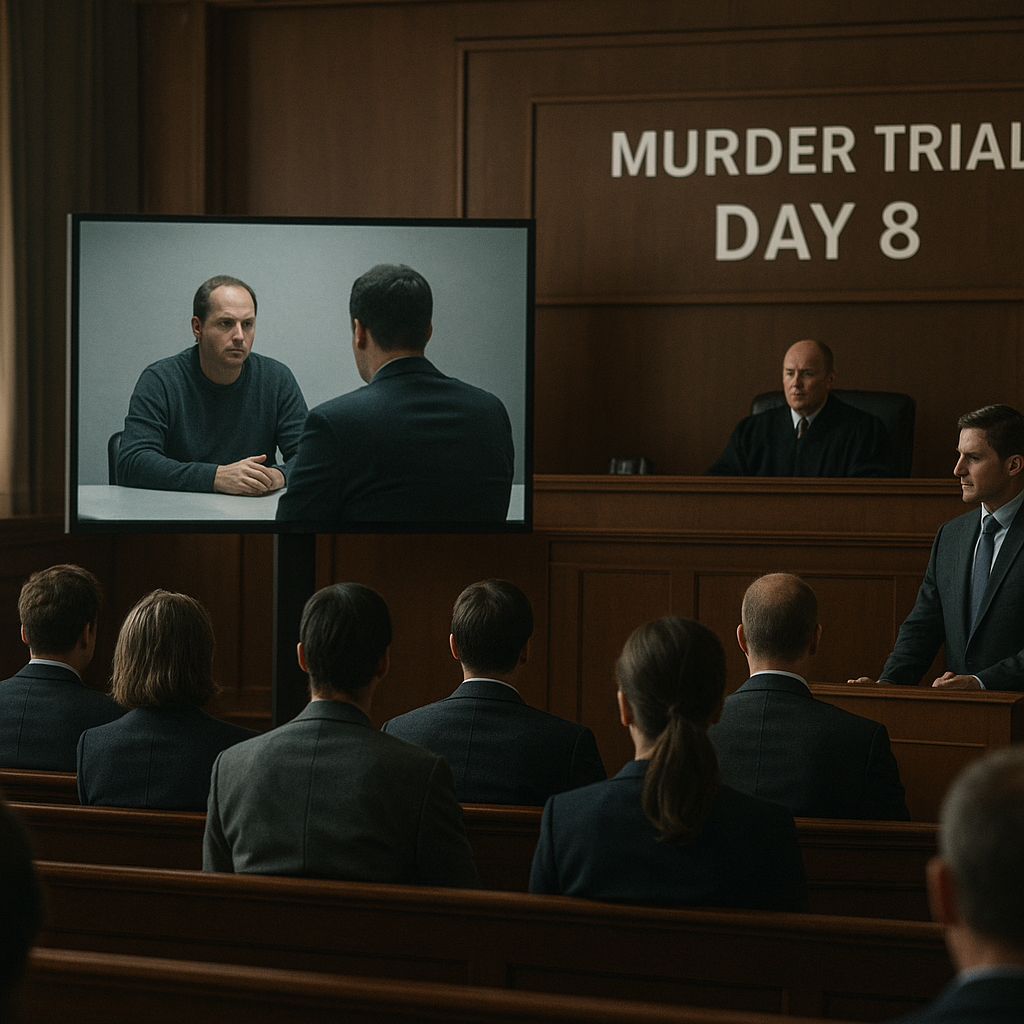
The murder trial of former "American Idol" contestant Caleb Flynn entered its eighth day as prosecutors continued presenting evidence tied to the death of his wife, with jurors shown videos of Flynn’s initial police interviews after her death.
Key Takeaways:- Prosecutors used Flynn’s recorded police interviews to challenge his account of events.
- The case remains focused on what Flynn told investigators and how that lines up with other evidence.
- The trial is drawing attention because of Flynn’s public profile, but the case will turn on forensic, witness, and interview evidence.
- The proceedings are ongoing, and the jury has not reached a verdict.
The latest courtroom session centered on recordings from Flynn’s earliest encounters with investigators, a stage in many homicide cases where jurors can compare a suspect’s first statements with later testimony and physical evidence. In this case, prosecutors are using those interviews to argue that Flynn’s version of events does not match the evidence they say points to a homicide.
The trial is being closely watched in part because Flynn once appeared on a national singing competition, but the celebrity angle is not what will decide the case. What matters in court is whether the state can prove beyond a reasonable doubt that Flynn killed his wife and whether the defense can undermine that theory. That is the basic structure of any homicide trial, whether the defendant is a private citizen or a recognizable public figure.
For readers following broader courtroom issues, this case sits alongside other major criminal proceedings in which recorded statements, forensic evidence, and credibility disputes shape the outcome. Similar themes have appeared in recent Courts coverage, as well as in ongoing Investigations and Law Enforcement reporting involving homicide probes and disputed narratives.
What happened
Prosecutors spent Day Eight showing the jury video from Flynn’s first police interviews after his wife died. Those early interviews matter because they preserve a suspect’s statements before a defense strategy has fully taken shape and before public scrutiny intensifies. Jurors often pay close attention to tone, timing, and any differences between what a suspect first told police and what later emerged in the investigation.
In homicide cases, those recordings can serve several functions. They may show whether a defendant was cooperative or evasive. They may reveal inconsistencies. They may also support the defense if the suspect sounded distraught, consistently denied wrongdoing, or gave an account that appears plausible. The impact depends on what is actually said and how it fits with the broader evidence.
The prosecution’s decision to play the interviews suggests it believes the recordings help tell a story of deception or contradiction. In murder trials, that can be a powerful tactic. Jurors tend to remember a defendant’s own words. Even when a statement is not a confession, prosecutors can argue it reflects consciousness of guilt if they believe the account changes over time or conflicts with objective evidence.
The defense, meanwhile, will likely argue that initial interviews are imperfect evidence. People questioned soon after a traumatic death can be confused, emotional, exhausted, or in shock. That is especially true when the person being interviewed is a spouse who has just lost a partner and is also under immediate suspicion. Defense lawyers often emphasize that stress can affect memory and communication.
The significance of the interviews will depend on the full sequence of evidence presented at trial. That may include forensic findings, scene reconstruction, phone records, witness testimony, timelines, and any statements by first responders. Prosecutors rarely rely on one piece of evidence alone in a murder case. They build a narrative, then ask jurors to see how each element reinforces the others.
The case has also become part of a larger public conversation about how homicide investigations begin. When someone close to a victim becomes a suspect, the first hours and days of the investigation are often the most important. Detectives try to lock down witness accounts, secure physical evidence, and document statements before memories shift. That is why initial interviews often matter so much later at trial.
For more background on how such cases are handled, readers can see related coverage in Crime, where early investigative decisions and scene evidence often shape the rest of a case.
Legal context and charges or proceedings
Flynn is charged with his wife’s murder, and the state carries the burden of proving each required element of the offense beyond a reasonable doubt. In practical terms, that means prosecutors must persuade the jury not only that the death was unlawful, but that Flynn was responsible under the legal theory charged in the case.
Murder prosecutions usually turn on a combination of intent, causation, and identity. Depending on the jurisdiction and charge, the state may need to prove premeditation, malice, or another mental state associated with the killing. Even when the exact legal language varies, the core challenge is the same: linking the defendant to the death with enough certainty to satisfy the criminal standard of proof.
That burden is substantial. A defendant does not have to prove innocence. The defense can win if jurors think there is a reasonable doubt about the state’s theory. That doubt may come from inconsistent witness statements, gaps in the timeline, alternative explanations, or weakness in the forensic proof.
The use of Flynn’s police interview videos fits squarely within standard criminal procedure. Recorded statements can be admitted when they are legally obtained and relevant to issues in the case. If the defense believes the interviews were unfairly handled, coerced, or incomplete, it may challenge their weight or admissibility, depending on the circumstances and any pretrial rulings.
This kind of evidence also raises a recurring issue in homicide cases: how much jurors should rely on demeanor. A suspect’s calmness can be framed by prosecutors as suspicious, while the defense may argue the person was in shock, traumatized, or simply responding to questioning in a strained setting. Courts generally allow jurors to make those judgments, but judges instruct them to consider the evidence as a whole.
The trial is also a reminder that celebrity defendants do not receive a different standard of proof. They may draw more attention, and their statements may spread faster in the public realm, but the legal framework remains the same. Jurors are told to decide the case on the evidence and the law, not on fame or notoriety.
In that sense, the Flynn trial resembles other high-profile homicide cases that move through the courts with intense public interest but ordinary legal rules. The public can follow the drama, but the jury must focus on proof, not personality.
Law enforcement or court response
The courtroom presentation on Day Eight shows prosecutors continuing a methodical evidence buildup. That is typical in trials where the state wants to demonstrate a progression from the first police response to the broader investigative record. Early interview videos help prosecutors establish what investigators knew at the beginning and how Flynn responded when confronted with questions about his wife’s death.
Courtroom observers often watch for how a judge manages this kind of evidence. If a recording is played in open court, the judge may need to resolve objections about relevance, hearsay, or the risk of unfair prejudice. Even when the material is admissible, the court must ensure the jury can see and hear it clearly and that the parties have a fair chance to argue over what it means.
Police interviews are rarely neutral events. Detectives are trained to ask questions that test a suspect’s account, and the suspect may not know what evidence investigators already possess. In that setting, discrepancies can emerge quickly. Prosecutors may later use those discrepancies to argue the defendant was not truthful. The defense may say the inconsistencies are explainable and do not prove guilt.
The broader law enforcement response in a case like this usually includes homicide detectives, forensic analysts, evidence technicians, and prosecutors working closely together. Each contributes a different part of the record. Detectives focus on interviews and scene work. Forensics can narrow the timeline. Prosecutors decide how to present the evidence to the jury in a way that supports the legal theory.
Media attention also shapes how such trials are perceived, though not how they are supposed to be decided. CBS News’ Lana Zak has been reporting the latest developments, which is another sign of the case’s public profile. High-interest trials can attract viewers who are curious about the defendant’s past fame, but the jurors in the courtroom are instructed to set aside outside coverage.
That instruction matters because pretrial publicity can affect public perception before a single witness is sworn. Courts take steps to limit unfair prejudice, but they cannot stop public discussion entirely. The justice system instead relies on voir dire, jury instructions, and evidentiary rules to preserve fairness.
For readers interested in how police work feeds criminal trials, this case connects to ongoing Law Enforcement reporting and related Investigations coverage on homicide probes, interview strategy, and evidence preservation.
Community and policy implications
Cases like this can leave communities with a difficult mix of grief, suspicion, and attention. When the victim is a spouse and the defendant is a public figure, the emotional toll often extends beyond the immediate family. Friends, neighbors, and local residents may follow each development closely, especially if the death was sudden and the early facts were disputed.
The policy lesson is less about celebrity and more about process. Homicide cases turn on the quality of early investigation, the preservation of evidence, and the reliability of statements collected under pressure. When those pieces are handled carefully, the courtroom process is more likely to produce a reliable result. When they are mishandled, both wrongful conviction and wrongful acquittal risks increase.
That is why homicide investigations draw so much attention from criminal justice reform advocates. They see a familiar pattern: the first interview can become a centerpiece at trial, but only if officers document it properly and prosecutors can connect it to the rest of the case. In the wrong hands, early interviews can be overread or misunderstood. In the right hands, they can clarify what happened.
There is also a broader civil liberties dimension. The use of police interviews in court underscores the importance of Miranda rights, access to counsel, and recording practices that protect both the accused and the integrity of the investigation. Some jurisdictions require or strongly encourage recording custodial interviews because the record is more reliable than officer recollection alone. That practice can help resolve disputes about tone, coercion, and exact wording.
From a policy standpoint, public interest in cases like Flynn’s can fuel debate about trial transparency and media coverage. The public wants to know what happened, but the justice system must avoid turning criminal proceedings into entertainment. That tension is especially visible when the defendant has a recognizable name.
It also raises the issue of how much weight juries should give to first statements versus later expert analysis. Prosecutors may trust the immediate interview because it preserves a fresh account. Defense lawyers may argue that a rushed early narrative can be misleading if investigators had not yet completed their work. The balance between early evidence and later corroboration is a recurring theme in criminal justice policy.
If you are following similar justice-policy questions, related analysis appears in Civil Rights and Policy coverage, where recording rules, interrogation standards, and trial fairness are often part of the broader debate.
Frequently Asked Questions
Why were Caleb Flynn’s police interviews shown to the jury?
Prosecutors likely introduced the recordings to compare Flynn’s first account with the rest of the evidence and to test his credibility.
Do police interviews automatically prove guilt?
No. They are one piece of evidence. Jurors must consider them alongside forensic, witness, and timeline evidence.
Why do early interviews matter so much in homicide cases?
They preserve a suspect’s initial account before memories, strategies, or outside influences can change how the story is told.
Can the defense challenge recorded interviews?
Yes. Defense lawyers can question how the interviews were conducted, whether they were fairly obtained, and how much weight the jury should give them.
Has the jury reached a verdict in Flynn’s case?
No. The trial is ongoing, and the jury has not yet reached a verdict.
The Flynn trial will continue to turn on a central question common to many homicide prosecutions: does the state’s evidence prove guilt beyond a reasonable doubt, or do gaps in the record leave room for reasonable doubt? The answer will depend on what the jurors make of the interviews, the forensic record, and the rest of the case presented in court.
As high-profile as the defendant’s past may be, the outcome will rest on ordinary criminal procedure. That is how the justice system is supposed to work. The public may be watching for the celebrity angle, but the courtroom is focused on proof.