Black Sea Mine and Drone Threats Put NATO Maritime Security Under Strain
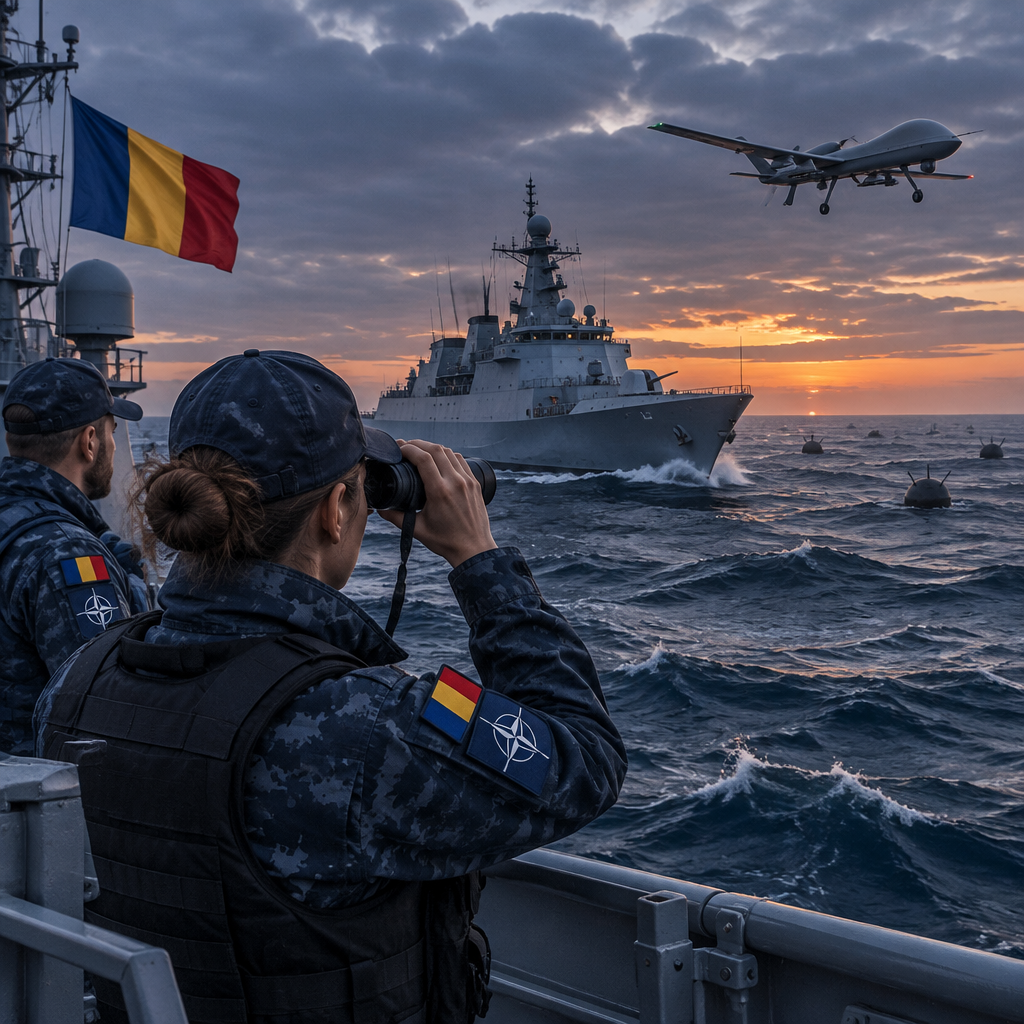
Romanian Navy divers and underwater drones are searching the Black Sea for unexploded weapons as incidents involving drones, mines and commercial vessels rise sharply, according to NATO military spokesperson Col. Martin O’Donnell. He told CBS News that the alliance recorded fewer than 50 incidents in 2025, compared with roughly 400 to 500 in the current year at the time of his interview. The increase puts mariners, shipping routes and nearby NATO members on alert, but the reported figures do not establish that every incident was an attack or that the alliance faces an imminent military confrontation.
What happened
The Black Sea has become a dangerous operating area for commercial shipping as Russia’s war against Ukraine continues. The Romanian Navy’s challenge is not simply to watch a clearly marked border. As Romanian Navy Captain Mihai Iordache told CBS News, there is no fence on the water to show where one country’s boundary ends and another begins. Mines, drone debris and damaged vessels can move with currents, while ships and aircraft may operate across a large area shared by six coastal states.
O’Donnell’s comparison—from fewer than 50 reported incidents in 2025 to about 400 or 500 in the current year—signals a marked change in the scale of concern described by NATO. But the numbers need careful reading. The account does not provide the interview date, the exact cut-off for the current-year count, the data collection method or a formal definition of an incident. It also does not say how many reports involved mines, drones, commercial ships or other events. The total should not be read as a count of confirmed attacks, casualties or violations of NATO territory.
The same caution applies to a comparison with the Strait of Hormuz. O’Donnell said the Black Sea may be at least as important to global trade, while the International Maritime Organization was cited as recording 25 sailor deaths in the strait during the relevant period. The International Transport Workers’ Federation was cited as reporting at least 40 deaths in the Black Sea. Those figures indicate severe danger, but they come from different organizations, and the account does not explain whether their collection rules, time windows or classifications match. Nor does it give a risk rate per voyage or per seafarer. A higher raw fatality count is not, on its own, a precise measure of comparative risk.
The danger is not limited to the Black Sea. Ukraine said over the weekend that it had struck an advanced Russian warship and a cargo vessel. The cargo ship then drifted while on fire into waters belonging to NATO member Finland, according to the account. Ukraine also said on Sunday that it sank a Russian warship docked in Libya. The available reporting does not identify the dates, exact locations, weapons used, damage assessments or Finnish authorities’ response. The claims are attributed to Ukraine; independent verification is not reported.
Finland is a NATO member, but it does not border the Black Sea. The reported drift into Finnish waters illustrates how maritime hazards and the consequences of attacks can move beyond the area where an operation began. It should not be confused with an incident inside the Black Sea or treated as proof that NATO waters were deliberately targeted. The account provides no finding about intent.
Romania, Bulgaria and Turkey are the three NATO members among the six countries bordering the Black Sea. The others are Ukraine, Russia and Georgia. Their proximity to a war zone puts allied coastlines and shipping routes near military activity, while the sea’s open geography makes surveillance and recovery difficult. A floating mine or unexploded weapon can remain dangerous after the event that released it has ended. A damaged ship, meanwhile, can create a separate threat through fire, pollution or loss of control, though the account does not report those consequences in the Finnish incident.
The account also describes a separate allegation by Poland. On a Friday, Polish officials accused Russia of intentional provocation after Russian cruise missiles landed in the country’s southeast. The date, circumstances and further details are not given. That report concerns a land-border incident, not a Black Sea maritime event. It contributes to the wider security concerns facing NATO’s eastern members, but the two episodes should not be merged or assumed to be connected.
Legal context and charges or proceedings
The reported events are military and maritime security developments, not a criminal case described in court documents. No arrest, indictment, criminal charge, prosecutor’s statement or judicial proceeding appears in the account. That distinction matters: a military strike, the discovery of an explosive device, a vessel drifting into another state’s waters and a criminal offense are not interchangeable categories. Determining criminal responsibility would require evidence about the act, the people involved, intent, jurisdiction and applicable law. None of those findings is reported here.
The law of the sea offers a framework for assessing where an incident occurred and what authority a coastal state may exercise. Under the United Nations Convention on the Law of the Sea, a coastal state’s territorial sea may extend up to 12 nautical miles from its baselines, subject to the convention’s rules. A state’s sovereignty is not identical across every maritime zone: territorial waters, an exclusive economic zone and the high seas carry different legal consequences. The account says the damaged cargo ship entered Finnish waters but does not give coordinates or specify the maritime zone. It is therefore not possible to draw a legal conclusion about the precise location or jurisdiction from that description alone.
The distinction between an accidental hazard and an intentional act is equally important. A mine drifting into a coastal state’s waters could require urgent protective action without establishing who placed it, when it was released or whether anyone intended it to reach that location. A vessel entering those waters while damaged does not, by itself, prove that its movement was deliberate. The reported facts do not establish whether the Finnish episode involved an attack on Finland, a navigation emergency or another circumstance.
NATO’s collective-defense clause is not an automatic switch activated by every military incident, debris field or vessel crossing a maritime boundary. Article 5 of the North Atlantic Treaty treats an armed attack against one or more allies as an attack against them all, while each member takes the action it considers necessary. NATO’s own explanation describes collective defense as a political and legal commitment that must be assessed in context. Article 4 separately provides for consultations when an ally believes its territorial integrity, political independence or security is threatened. The account does not say that Finland invoked Article 4 or that NATO invoked Article 5 over the reported ship or mine incidents.
The laws governing armed conflict also matter when states use force, but the available details are too limited to assess the legality of any particular strike. A legal review would need reliable information about the target, the circumstances, expected civilian harm and precautions taken. The same principle applies to claims about attacks on warships and cargo vessels: a vessel’s status and use can affect the legal analysis, but a public statement that it was struck is not enough to settle the question. No legal ruling or independent investigation is reported.
Law enforcement or court response
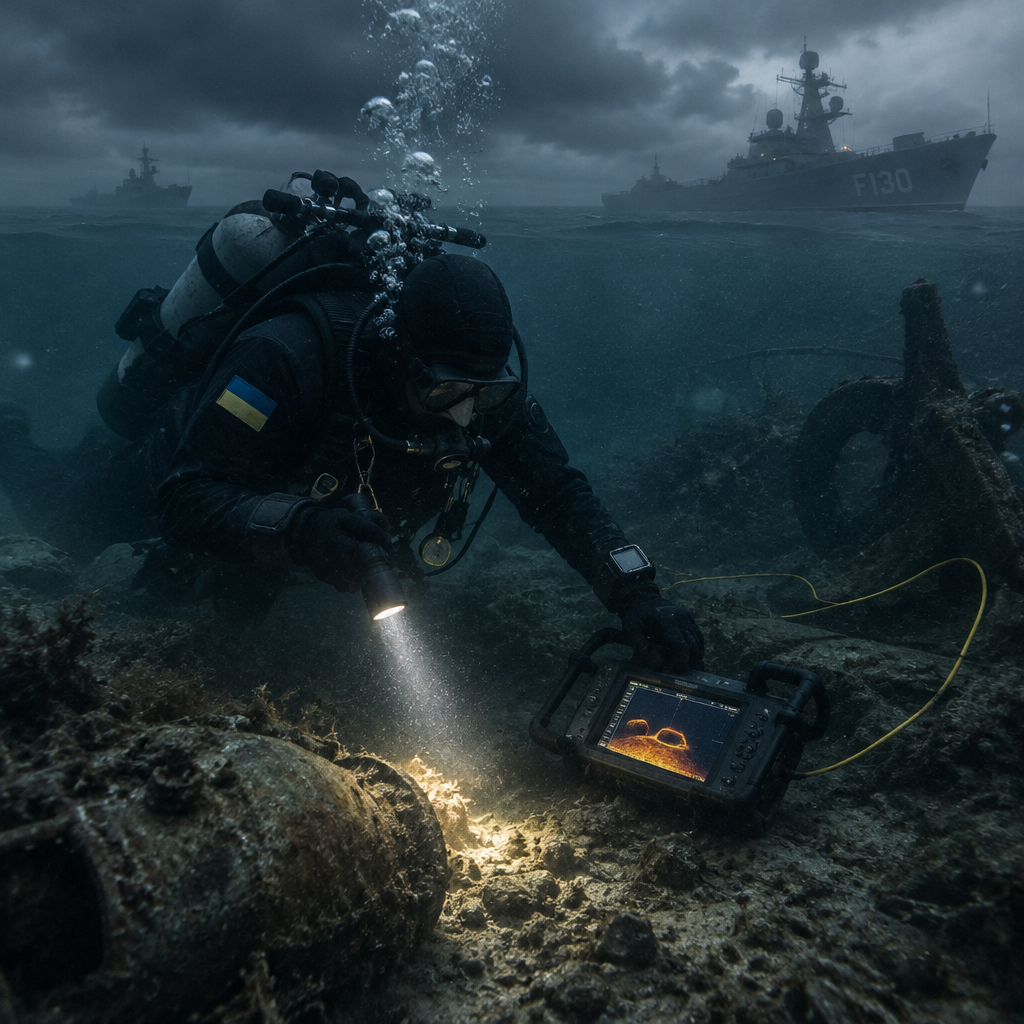
The response described is principally naval and defensive. Romania is deploying specialist divers and underwater drones to search for unexploded weapons, according to the account. The tools serve different purposes: divers can inspect or handle objects in conditions suitable for human operations, while remotely operated or autonomous systems can help locate and examine hazards without immediately putting personnel in the water. The account does not identify the equipment, the sites searched, the number of devices recovered or whether any were destroyed.
Mine-countermeasure work is often painstaking. Teams must establish what an object is, assess the danger and decide whether it can be removed safely or must be neutralized in place. The work can require coordination among naval units, coastal authorities and commercial operators so that vessels are warned away from a hazardous area. Those are general features of maritime safety operations; the account does not say which procedures Romania used in any particular search or whether a specific shipping warning was issued.
NATO’s incident count, as described by O’Donnell, frames the problem as an alliance-wide security concern. It does not show which member state handled each report or whether NATO forces took part in individual responses. The account also gives no direct response from the Romanian government, the Finnish government or Russia to the specific claims. Ukraine’s statements about strikes are identified as Ukrainian claims, not as findings by a court or an independent monitoring body.
There is no reported police investigation or courtroom process tied to the incidents. That absence does not mean no government is collecting information or conducting military inquiries; it means those steps are not described in the account. Publicly available facts are not sufficient to assign criminal responsibility, establish a chain of command or determine whether any vessel’s movement violated domestic or international law. A careful assessment must keep those unanswered questions separate from the immediate need to protect people at sea.
Community and policy implications
The first concern is the safety of people who work at sea. Commercial seafarers may encounter mines, debris, damaged ships or sudden changes in access to ports and routes while carrying food, fuel and other cargo. The reported death totals underscore the human cost, but the account does not identify the victims, the circumstances of their deaths or the share attributable to mines, drone attacks or other causes. Those details matter for families, safety investigations and any later effort to hold responsible parties accountable.
The Black Sea is an important channel for grain and fuel shipments. O’Donnell warned that interruptions in food and energy flows can have consequences well beyond the region, including for the United States. The account supplies no freight-rate data, insurance figures, port-closure notices or measures of delayed cargo. It therefore supports a warning about potential economic effects, not a claim that a particular price increase or shortage has already occurred. Governments and shipping companies need current information before changing routes or making public claims about disruption.
The operational problem is also one of communication. At sea, a coastal boundary is a line on a chart rather than a physical barrier. Reliable location data, timely warnings and clear channels for reporting a drifting object can help distinguish a navigational emergency from a deliberate military act. If public incident totals are to guide policy, officials should explain what is counted, how reports are checked and whether the figures include events with no confirmed damage. Without those details, a steep rise can signal a real increase in activity while still leaving the scale and character of the threat uncertain.
For NATO, the policy challenge is to protect member territory without treating every dangerous event as an act of war. A mine or damaged ship can create serious danger and call for an immediate response; attribution and decisions about collective defense require a separate assessment. The alliance’s treaty provisions provide mechanisms for consultation and collective action, but the account does not report that those mechanisms were invoked for the incidents described. Careful public language helps preserve that distinction and reduce the risk that unverified claims are mistaken for established facts.
The events also show why maritime preparedness cannot rely on patrols alone. Navies need trained clearance teams, underwater sensors, safe procedures for unexploded weapons and coordination with civilian shipping. Coastal communities need practical alerts when navigation areas are restricted. Governments can also publish clearer information about casualties and hazards while protecting operational details that could compromise safety. The account confirms Romanian deployments of divers and drones; it does not provide a broader inventory of Romanian or NATO capabilities or say whether additional measures have been approved.
The comparison with the Strait of Hormuz is a reminder that global trade depends on multiple vulnerable routes, not a single chokepoint. But broad comparisons should be supported by transparent, comparable data. A sound assessment would distinguish the number of incidents from the number of attacks, casualties from missing persons, and raw totals from rates adjusted for traffic and exposure. Until such information is available, the reported figures should be treated as a warning about risk rather than a complete accounting of it.
Frequently Asked Questions
What does NATO’s reported increase in Black Sea incidents mean?
O’Donnell told CBS News that NATO saw fewer than 50 incidents in 2025 and about 400 to 500 in the current year at the time of his interview. The account does not define an incident, provide a precise reporting period or say how many cases were independently verified. It is evidence of a sharp rise in reported events, not proof that every event was an attack.
Does a drifting mine or damaged ship automatically trigger NATO Article 5?
No. Article 5 concerns an armed attack against one or more NATO members, and a specific event requires assessment of its circumstances and location. A dangerous object or vessel may prompt protective measures or consultations without automatically amounting to an armed attack. The account does not report an Article 5 invocation over these incidents.
Why is Romania using divers and underwater drones?
They can help locate and inspect unexploded weapons while limiting the immediate exposure of personnel. Specialized teams may then determine whether an object can be recovered or must be neutralized. The account says Romania is deploying divers and drones but does not report the exact equipment, operations or recovery results.
Have criminal charges or court proceedings been reported?
No. The account describes military claims, maritime hazards and naval searches, but does not report arrests, charges, prosecutions or court rulings. Responsibility and legality cannot be established from the reported claims alone.
Final thought
The Black Sea’s rising incident count is a serious warning for mariners and the countries around the region, but the numbers are not a legal verdict or a complete measure of danger. Romanian Navy teams are confronting a practical problem: hazards at sea do not respect political boundaries, and their origin may be unclear even when the risk is immediate. Better-defined data, credible attribution and steady coordination will be essential to protect shipping while avoiding assumptions that turn uncertainty into escalation.