A school shooting in Bangkok, Thailand, left at least seven people dead, according to BBC News reporting by Jonathan Head. The shooting has prompted an urgent...
Bangkok School Shooting Leaves at Least Seven Dead as Police Probe Motive and Security Failures
A school shooting in Bangkok, Thailand, left at least seven people dead, according to BBC News reporting by Jonathan Head. The shooting has prompted an urgent police investigation, raised fresh questions about school security, and renewed debate about how authorities respond when violence erupts in a place meant to protect children.
Key Takeaways:- At least seven people were killed in the Bangkok school shooting.
- Thai police are investigating the shooter’s motive and how the attack unfolded.
- The case has put school security, emergency response, and public safety policy under scrutiny.
- Authorities are expected to examine both criminal responsibility and institutional failures.
What happened
The attack in Bangkok was swift, deadly, and deeply disruptive. A school, ordinarily defined by routine and supervision, became the scene of a mass-casualty crime. BBC News’ Jonathan Head reported that at least seven people died, though early casualty counts in fast-moving incidents can change as authorities confirm identities and injuries.
What stands out in cases like this is not only the violence itself, but the setting. Schools are not just buildings. They are sites of trust. Parents send children there expecting layered protection: controlled entry, staff awareness, emergency planning, and quick contact with police if danger appears. When a shooting occurs inside or near a school, that trust is shattered immediately.
In the hours after such an incident, investigators typically work to establish a basic sequence: who the shooter was, how the weapon was obtained, whether the attacker acted alone, and how long the violence lasted before it was stopped. Those facts can take time to verify. Early reports often include confusion, especially when witnesses are frightened, phone video is incomplete, and emergency services are still securing the scene.
The Bangkok case appears to fit that pattern of urgency and uncertainty. But one fact is already clear: multiple lives were lost, and the school community will carry the consequences long after the police tape comes down.
For readers following similar developments, related coverage on public safety and mass casualty response, school security policy, and criminal investigations can help explain how authorities typically respond to attacks of this kind.
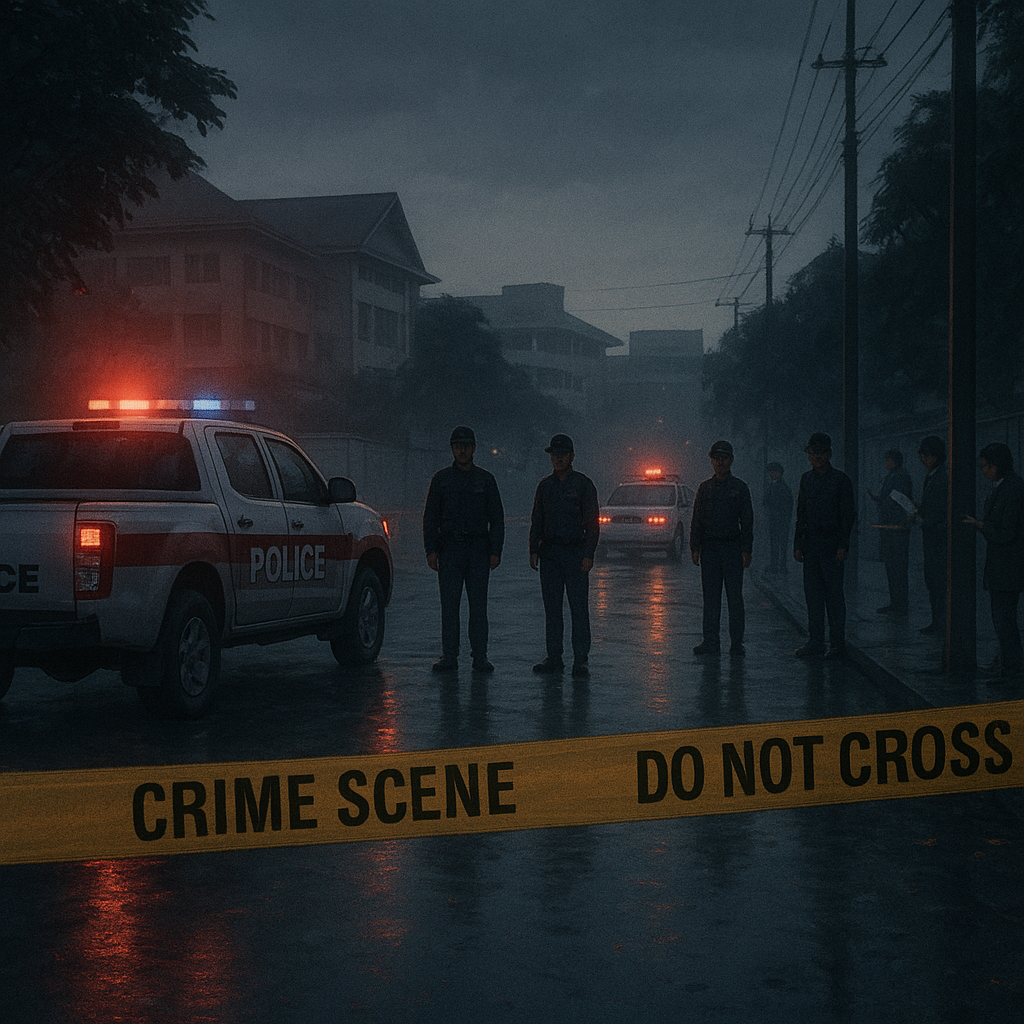
The immediate aftermath of a school shooting usually brings three parallel efforts. First, rescue workers focus on the wounded and the dead. Second, police secure the area and try to prevent further harm. Third, investigators preserve evidence that may be critical in any later prosecution or in understanding the attacker’s planning.
That third effort matters. In violent crimes, evidence is often fragile. Shell casings, surveillance footage, witness statements, digital messages, and the weapon itself can all help reconstruct the event. If investigators lose that evidence or collect it poorly, they may struggle later to explain motive, intent, or premeditation.
Legal context and charges or proceedings
A school shooting is not only a tragedy; it is also a criminal case. Thai authorities will have to determine what charges apply based on the facts they confirm. In a deadly attack of this kind, prosecutors may consider homicide, attempted homicide, illegal weapons possession, and any related offenses tied to planning or endangering the public.
If the suspect survives, the legal process can move quickly but still face practical limits. Police first need to identify the shooter formally and assess whether the person is fit for questioning. If mental health issues are raised, investigators and prosecutors may need medical evaluations to determine whether they affect competence, criminal intent, or later sentencing. That does not erase responsibility, but it can influence how a case proceeds.
If the suspect dies, the criminal case ends differently. Authorities may still publish findings, recover motive evidence, and examine any systemic failures, but there would be no trial. Families and the public often still want answers, which is why official reporting after mass violence matters so much.
Thailand has its own criminal statutes and procedures, and they may differ from those in the United States, Europe, or other jurisdictions. But the core issues are familiar: unlawful killing, weapon access, public safety, and the state’s duty to investigate. The law also has to confront the broader question of foreseeability. Could this attack have been prevented? Were there warning signs? Did school officials or police have prior information and, if so, how did they act on it?
Those are not just policy questions. They can become legal ones if evidence suggests negligence, prior threats, or failures in mandated safety procedures. A serious event like the Bangkok shooting could trigger internal reviews, prosecutorial decisions, and perhaps inquiries into whether any institution ignored warning signs.
In many countries, mass shootings also lead to civil claims. Families may seek accountability from schools, security contractors, or government bodies if they believe reasonable precautions were not taken. Whether such claims are available depends on local law, state immunity rules, and the facts of the case. Still, once the criminal investigation begins, lawyers on all sides start thinking beyond the headline count.
For more on how criminal cases are assembled after major violence, see our coverage of law enforcement investigations, court proceedings, and justice policy responses.
Law enforcement or court response
Police response in a school shooting must be both immediate and disciplined. The first objective is saving lives. The second is containment. The third is investigation.
In Bangkok, law enforcement officers are likely reviewing witness accounts, building access points, the timeline of the attack, and any communication between school staff and emergency services. They will also examine whether the attacker had ties to the school, whether there were prior disputes, and whether the weapon was acquired legally or illegally. These details matter because they can shape both charges and broader prevention efforts.
If there is a surviving suspect, prosecutors may seek pretrial detention while they assemble the case. Courts then face familiar questions: Is there sufficient evidence to hold the accused? Is there risk of flight? Could the suspect interfere with witnesses? In violent-crime cases, especially those involving multiple victims, courts often allow longer investigative periods before final charging decisions are made.
Judges may also need to rule on whether certain statements can be used in court. That includes confessions, interviews, and digital communications. Defense attorneys often scrutinize whether police respected due process, particularly if a suspect was questioned while injured, sedated, or under emotional distress.

A mass-casualty case can also test coordination across agencies. In many jurisdictions, police, forensic teams, emergency medicine personnel, and prosecutors all need to work from the same facts. If communication breaks down, evidence can be lost and the public receives mixed messages. That is especially damaging when the public is already anxious and grieving.
The court response, if the case reaches that stage, will likely focus on a straightforward but difficult question: what criminal liability attaches to someone who committed such an attack? Depending on the evidence, prosecutors may pursue the most serious charges available under Thai law. Sentencing, if a conviction results, could be severe. But victims’ families often say the legal result cannot restore what was taken.
This is also the stage when investigators often release only limited details. That restraint can frustrate the public, but it is usually intended to protect the integrity of the case. Premature speculation can distort witness memory and complicate later proceedings. In a high-profile shooting, every public statement becomes part of the record, even if it is later corrected.
Community and policy implications
The Bangkok school shooting will likely reverberate beyond the criminal case itself. Schools, parents, and policymakers are now forced to consider how to prevent a similar attack. That discussion usually moves in three directions: physical security, behavioral intervention, and firearm regulation.
Physical security includes controlled entry systems, trained security staff, clear lockdown procedures, and communications that let teachers and students respond quickly. But security alone is never enough. A locked gate does not stop every threat, and too much visible fortification can alter the character of a school. Communities often struggle to balance safety with the open, supportive environment schools are supposed to provide.
Behavioral intervention is the second piece. Many mass shooters show warning signs before violence. Those signs may include threats, fixation on weapons, social withdrawal, bullying, grievance sharing online, or escalating conflict. The hard part is distinguishing ordinary adolescent turmoil from credible danger. Schools can overreact, but they can also miss the signals that matter most. Better threat assessment systems, school counselors, and information-sharing protocols are often central to policy reviews after an attack.
Firearm access is the third issue, and it is often the most politically sensitive. Any investigation into how the shooter obtained a weapon will likely prompt debate over licensing, storage, background checks, and enforcement. If the firearm came from a family member or another adult, investigators may also consider whether the owner failed to secure it properly. In some jurisdictions, careless storage can be a criminal issue in itself.
Thailand, like many countries, has seen public concern about weapons, violent crime, and the adequacy of preventive controls. One attack in a school can sharpen those debates overnight. Lawmakers may demand stronger screening, tighter restrictions, or more funding for mental health and school safety. But as with similar crises elsewhere, policy change often moves slower than public anger.
The community impact is not limited to grief. Survivors may face trauma that lasts for years. Teachers can lose confidence in their own classrooms. Parents may keep children home or demand transfers. Local hospitals, counselors, and religious leaders often become part of the response whether they are prepared or not.
Civil rights concerns also matter. Security measures that are rushed or overly broad can create new harms. Increased policing in schools may make some students feel safer, but it can also lead to harsher discipline, discriminatory enforcement, or unnecessary criminalization of youth behavior. The challenge is to prevent violence without turning schools into permanent sites of surveillance.
That tension is familiar to criminal justice reporters because it sits at the intersection of civil rights, policy, and public safety. Emergency response should be fast. Accountability should be real. But reforms should still be measured, transparent, and grounded in evidence.
For families in Bangkok, though, the policy debate will come second to loss. The first public demand is usually simple: explain what happened, identify who is responsible, and show how the next tragedy will be avoided.
Frequently Asked Questions
How many people died in the Bangkok school shooting?
BBC News reported that at least seven people were killed. The number could change if officials later confirm additional deaths or revise early counts.
Is the shooter in custody?
That detail depends on the latest police updates. In fast-developing incidents, authorities often withhold confirmation until the scene is secure and the suspect’s status is clear.
What charges could follow in a case like this?
Possible charges can include homicide, attempted homicide, weapons offenses, and any other crimes tied to planning or carrying out the attack. Exact charges depend on Thai law and the evidence police gather.
Why do school shootings trigger immediate policy debates?
Because they expose gaps in prevention, emergency response, and weapon control. They also raise difficult questions about school security, threat assessment, and how to protect students without over-policing them.
Will there be a trial?
That depends on whether a suspect survives, is formally charged, and whether prosecutors decide the evidence supports a court case. If the suspect is dead, there would be no criminal trial, though authorities may still publish investigative findings.
The tragedy in Bangkok is now both a criminal investigation and a public reckoning. Police will pursue the facts. Courts may later assess criminal responsibility. Families will ask whether anything could have been done sooner. And policymakers will face the uncomfortable work of deciding what prevention looks like before the next emergency siren sounds.
What follows should not be a rushed display of outrage. It should be careful fact-finding, honest accountability, and a sober look at the conditions that allow a school to become a crime scene.