A federal appeals court has temporarily halted the U.S. Army’s plan to destroy several tons of unstable lead azide at the Iowa Army Ammunition Plant, pausing...
Appeals Court Pauses Army Plan to Detonate Unstable Lead Azide in Iowa
A federal appeals court has temporarily halted the U.S. Army’s plan to destroy several tons of unstable lead azide at the Iowa Army Ammunition Plant, pausing two planned controlled detonations after environmental groups sued over the risk that lead particles could spread in an explosive dust plume. The order from the 8th U.S. Circuit Court of Appeals stops the scheduled operation for now; it does not, by itself, settle whether the Army’s plan was lawful or what method should ultimately be used.
What happened
The Army had planned two controlled explosions at noon Friday at the Iowa Army Ammunition Plant, outside Middletown, a rural community reported to have about 360 residents. The site is roughly four hours from Chicago. The Army later postponed the operation until Monday, before the appeals court intervened and suspended the plan. The account of the case does not identify the exact calendar date, the boundaries of the planned evacuation area or the number of people who were expected to leave.
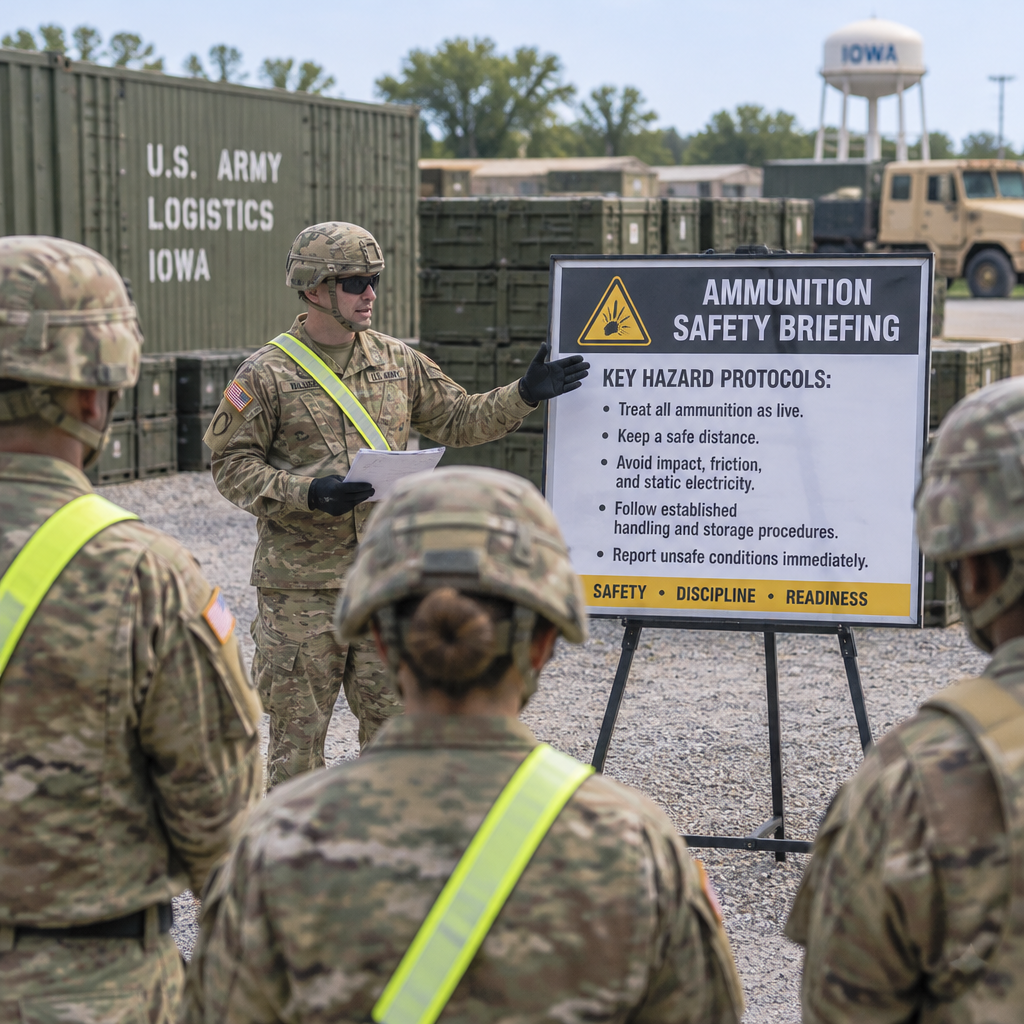
The Army said in March that it had found 68 drums of lead azide at the plant showing signs of “recrystallization.” The material was stored in bunkers at the facility, which was built in 1941 and produces medium- and large-caliber munitions. The Army has described the material as unsafe to move. The amount held in each drum and the precise condition of the contents have not been reported.
Lead azide is a highly sensitive primary initiating explosive. The Army’s description and the information reported about the material emphasize the danger of accidental ignition from relatively minor external triggers. Recrystallization can make the material especially unstable, and the U.S. Environmental Protection Agency has described the resulting situation as dangerous because of the possibility of spontaneous explosion. Army officials have also warned that cold weather could increase the risk of accidental detonation.
The Army says it evaluated four ways to neutralize the chemicals and determined that controlled detonation presented the lowest immediate risk to the public. The alternatives and the analysis behind that conclusion have not been publicly described in the account of the case. Acting Secretary of the Army Adam Telle said the controlled blast was “the option that posed the lowest risk to the public in the immediate and surrounding area.” That is the Army’s stated risk assessment, not a court finding or an independent conclusion about the environmental consequences.
Military officials said they had been planning the operation since March and were coordinating with the Department of Health and Human Services and the EPA. In a statement, the Army said agencies were prepared to take “the most extreme mitigation measures available” to protect the public and minimize disruption. The specific measures, their expected effectiveness and the information provided to nearby residents have not been reported in detail.
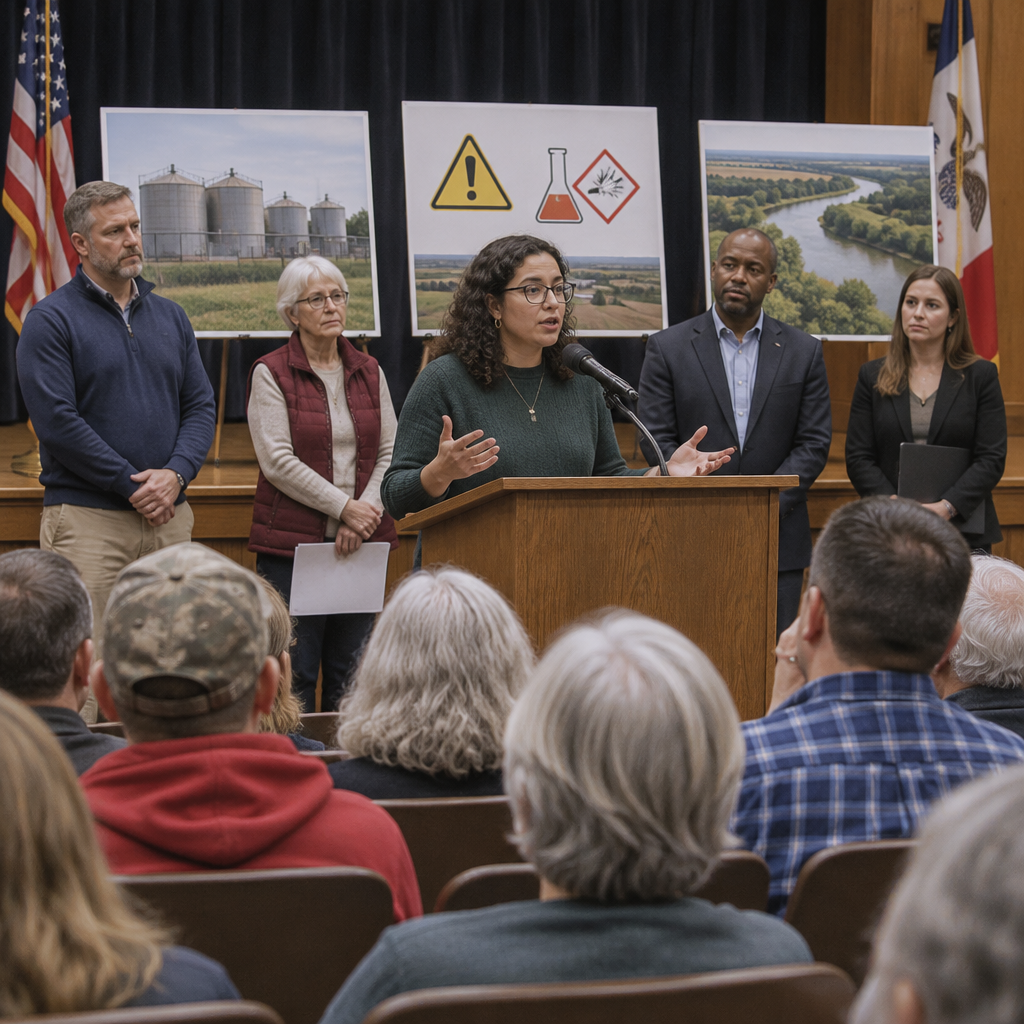
The timing became a source of dispute. The Army said it had consulted stakeholders and the public about the approved plan. Critics said they learned that a detonation was planned only days before the original date. That gap matters in a case where people may have to decide whether to evacuate, protect children and pets, or ask questions about wells, gardens and outdoor spaces. The account does not specify when each community received notice, what materials were shared or whether public meetings were held.
Legal context and proceedings
The 8th Circuit granted an emergency motion filed after environmental groups brought a lawsuit. The order suspends the proposed demolition while the legal dispute proceeds. The names of the organizations, the case number, the precise claims and the court’s written reasoning are not reported. Without those details, it is not possible to say whether the court focused on public notice, environmental review, the adequacy of the Army’s risk analysis or another issue.
A temporary pause should not be read as a ruling that the Army’s plan is illegal. Nor does it establish that a detonation would necessarily release dangerous quantities of lead. It preserves time for the court process while the planned action is on hold. The order’s exact duration, whether it requires further filings or a hearing, and what conditions might allow the Army to proceed are not reported.
That distinction is important. A court considering an emergency request may be asked to prevent an action from happening before it can review the legal dispute. The decision to pause an operation is different from a final decision on the underlying claims. Until the court explains its reasoning or issues a merits ruling, the Army’s assertion that controlled detonation is the lowest-risk option and the environmental groups’ objections remain positions in a contested matter, not final judicial findings.
Federal projects can, depending on the circumstances and the claims raised, be subject to environmental review requirements. The National Environmental Policy Act, for example, establishes a framework for federal agencies to consider environmental effects in relevant decisions. But the complaint’s legal theories are not reported, so it would be premature to say that the case turns on NEPA or any other particular statute. The EPA’s overview of NEPA provides general background, not evidence about what the Army did in this specific case.
The public record that becomes available will matter as much as the broad legal labels. Residents and the court may need to understand what the Army modeled, what assumptions it used, what each of the four alternatives involved, how it estimated the chance of accidental detonation, and how it assessed the possibility of airborne lead. Those questions do not establish that the Army’s analysis is deficient. They identify the information needed to evaluate competing claims rather than relying only on assurances or fears.
The distinction between immediate safety and longer-term environmental impact is also central. A method might reduce the near-term danger of an accidental explosion while still raising questions about dust, deposition and post-operation cleanup. Conversely, the prospect of lead contamination does not establish that contamination will occur. A court reviewing the dispute could consider the record and the applicable law; it cannot replace the technical work needed to measure actual exposure.
Law enforcement and court response
The Army’s public position has been that the material is too unstable to relocate and that it considered multiple methods before choosing a controlled detonation. Telle’s statement framed the decision as a comparison of risks, with the proposed blast selected as the option posing the lowest risk to people nearby. Army Sustainment Command public affairs specialist Justine Barati told CBS News Chicago that colder weather increases the chance of accidental detonation. Those statements explain the military’s stated urgency, but the available account does not provide the underlying technical reports or a detailed timetable for the material’s safe management.
The Army also said it was working with HHS and the EPA. Their participation is relevant, but the fact of coordination alone does not show what advice each agency provided, what monitoring they planned or whether any independent assessment of the Army’s modeling was completed. Those details are not reported. The agencies’ roles should not be assumed to be identical: public-health advice, environmental expertise and the Army’s responsibility for the ammunition plant may involve different functions.
The court’s immediate action was to grant the emergency motion and suspend the planned demolition. No additional court response, hearing date or schedule for written arguments is reported. The order does not resolve the practical problem identified by the Army: officials say the explosive material remains unstable and unsafe to move. A pause therefore delays the proposed solution without, on the information reported, answering how the material will be kept safe while the case proceeds.
Local officials have criticized the federal communication process. Iowa Gov.-elect Rob Sand said the “lack of communication and clarity” had left residents “understandably concerned and angry.” He said the safety of Iowans, now and in the future, should be the government’s top concern. Local politicians have said the key decisions were made at the federal level. The public account does not identify specific state or county authorities responsible for emergency planning or say whether they have issued separate instructions.
Community and policy implications
The main health concern is whether lead particles could be carried in the dust plume created by a blast and then settle on land, buildings or water. University of Iowa professor David Cwiertny, who directs the university’s Environmental Policy Research Program, described lead as a difficult contaminant. He said it could be released into the air and then disperse with the wind, or settle on the ground. He expected airborne material to dissipate fairly quickly as it moved, but that observation does not answer how much lead might be released, where particles could settle or whether people could be exposed.
Lead exposure can occur through contaminated food or water, or by inhaling or swallowing dust and fumes. The CDC’s lead-prevention information explains that young children are particularly vulnerable because their bodies and brains are still developing. Lead exposure can harm the brain and nervous system and contribute to developmental and learning problems. Adults can also be harmed. The EPA’s lead information provides further public-health context. These general risks explain residents’ concern; they do not establish that the planned operation would cause a particular exposure in Middletown or elsewhere.
An airborne plume and contamination of groundwater are related but distinct questions. Dust that settles on the ground may create a route for exposure, while whether lead reaches a private well or other groundwater source depends on local conditions and requires testing. The account does not report a predicted plume direction, estimated lead concentration, monitoring radius, baseline readings or a groundwater assessment. It also does not report whether the Army had planned to collect soil, air or water samples before or after a detonation.
Residents were told to evacuate the immediate area before the planned explosion. Evacuation can reduce the risk of people being present close to a blast, but it cannot, by itself, establish whether deposited particles pose a later risk. The evacuation boundary, the length of time people would have to stay away and the procedure for determining when they could return are not reported. Nor is it reported what guidance would have been offered to people who rely on private wells, grow food at home or care for young children.
The court pause gives residents and officials additional time to seek answers, but it does not itself produce environmental data. Any decision about the next step would be clearer if agencies explained, in plain language, the expected risks of each alternative and the assumptions behind those estimates. Public access to the four-option analysis, the proposed safety measures and the reasoning for ruling out relocation would allow people to distinguish between a risk that is theoretical, a risk that can be measured and a risk that remains uncertain.
Monitoring is another practical issue. A transparent plan could set out where air samples would be collected, how soil and water would be tested, what laboratory methods and detection limits would be used, and when results would be shared. It could also explain how readings would be compared with pre-operation conditions and what action would follow a concerning result. These are questions and possible safeguards, not measures that the Army has been reported to have adopted. Any sampling plan would need to account for wind and for the possibility that particles settle beyond the immediate blast area.
Clear communication is particularly important in a small rural community and in a situation that could affect areas across state lines. A brief notice may not give residents enough time to understand a technical plan, ask about evacuation or seek advice about children and private wells. Iowa and Illinois officials may need reliable, coordinated information if the area of concern crosses jurisdictional boundaries. The account does not report a predicted impact zone or a specific cross-state public-notification plan, so the extent of any such coordination remains unknown.
The case also illustrates the tension faced by agencies managing dangerous materials at older industrial and military sites. Officials may confront an immediate hazard that cannot safely be moved, while nearby residents bear the consequences of uncertainty about a proposed remedy. Explaining urgency does not replace an explanation of environmental safeguards. In turn, demands for more information must be considered alongside the Army’s stated concern that waiting, especially in colder weather, could increase the chance of accidental detonation.
A credible public process would put both risks in view: the danger of leaving unstable explosives in storage and the potential effects of destroying them in place. That means identifying what is known, what remains uncertain and who will be responsible for verifying results. It also means avoiding absolute assurances that no risk exists when no monitoring results are available, and avoiding claims that contamination is inevitable when no exposure measurements have been reported.
Frequently Asked Questions
Why did the Army plan to detonate the lead azide?
The Army said 68 drums at the Iowa Army Ammunition Plant had begun recrystallizing, making the material highly unstable and at risk of accidental detonation. Officials said moving it was unsafe. After modeling four ways to neutralize the chemicals, the Army said controlled detonation posed the lowest immediate risk. The details of the four alternatives have not been reported.
What did the appeals court decide?
The 8th U.S. Circuit Court of Appeals granted an emergency motion to pause the planned demolition. The order stops the operation for now, but it is not reported as a final decision on the lawsuit or a finding that the Army’s plan is unlawful. The order’s duration and further court schedule are not reported.
Could lead from the blast affect nearby residents?
Lead particles could, in principle, travel in air or settle on surfaces, which is why residents raised concerns. But the reported information does not provide a plume forecast, exposure estimate or post-blast test results. The possibility of contamination should not be confused with proof that contamination occurred.
Is groundwater contamination confirmed?
No groundwater contamination is reported as confirmed. Whether lead reaches groundwater would require site-specific assessment and testing. The information available does not identify a planned sampling area, private-well testing program or results.
What should residents rely on while the case is pending?
Residents should look to current instructions from local emergency-management and public-health officials. The reported account does not set out the court order’s full terms, a revised operation date or specific guidance on re-entry, wells or cleanup. Residents should not treat general information about lead as a substitute for local, site-specific instructions.
The court’s pause prevents an immediate decision from being carried out while the legal challenge proceeds, but it leaves a difficult safety problem unresolved. The public needs a clear account of both the danger the Army says it is trying to prevent and the safeguards intended to limit environmental harm. A decision that affects residents across a rural community should be supported by accessible evidence, timely notice and a way to verify what happens next.